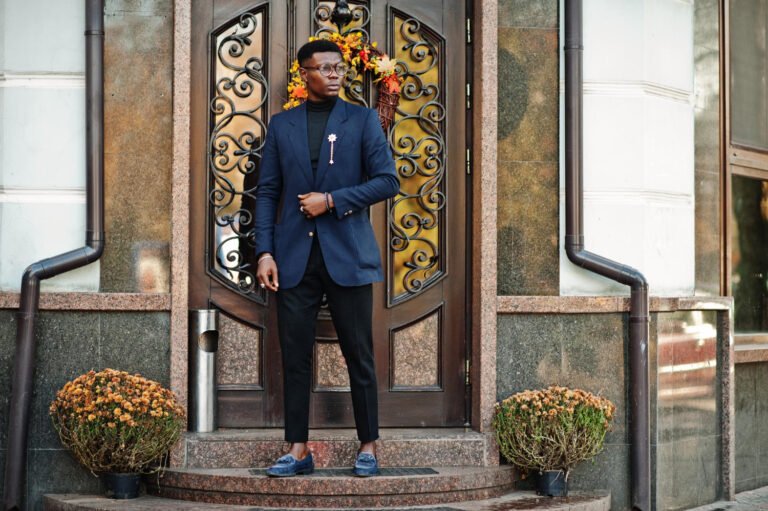
Denim 101: Selecting the Right Jeans for Your Body

The right jeans for your body come down to matching three variables to your shape: rise (where the waistband sits), leg cut (how much room runs from thigh to ankle), and stretch percentage (how much the denim gives).
Most men choose jeans by silhouette trend alone — skinny, straight, relaxed — without checking whether that cut actually suits their proportions, which is why so many jeans end up unworn after a few tries.
Below is how to match denim to your actual shape, read denim terminology correctly, and avoid the fit mistakes that make jeans look cheap regardless of price.
Key Takeaways
- Three variables determine fit: rise, leg cut, and stretch percentage — get these three right and the specific brand or wash matters far less.
- Rise matters more than most men realize — a low rise on a body with a longer torso creates a “sagging” look regardless of waist size; a high rise on a shorter torso can look ill-proportioned in the opposite direction.
- Stretch denim (elastane) is easier to wear day one but wears out faster — under 2% elastane holds its shape significantly longer than 3%+ blends, which bag out at the knee within months of regular wear.
- Straight leg is the most universally flattering cut across body types — skinny and relaxed both work well only for specific proportions, while straight adapts to more shapes with minimal downside.
- The single most common mistake: buying jeans based on how they look on a hanger or a model rather than checking fit against your own waist-to-hip ratio and leg proportion.
Why Denim Fit Is Harder to Get Right Than Other Trousers
Jeans behave differently from dress trousers or chinos because raw or minimally-stretch denim actually changes shape with wear — it stretches slightly at the knee and seat through a break-in period, then holds that shape for the rest of the garment’s life.
This means a pair of jeans that fits snugly on day one is often correctly sized, while a pair that already feels loose in the store will become genuinely baggy within weeks. Most men don’t know this and end up sizing jeans the way they’d size a t-shirt, which is part of why so many pairs get abandoned early.
Denim’s stiffness also masks fit problems that softer fabrics reveal immediately — a rigid, low-stretch denim can look acceptable in the store while creating a stiff, board-like fit that only becomes uncomfortable after actually sitting, walking, or bending for an extended period.
The Original Framework: The Three-Variable Match
Rather than shopping by cut name alone (skinny, straight, slim, relaxed — terms that vary meaningfully between brands), match jeans using three specific variables against your body:
1. Rise (Where the Waistband Sits)
- Low rise (sits below the natural waist, closer to the hip): works best on a shorter torso relative to leg length, since it visually lengthens the torso; tends to sag and gap at the back on longer-torso builds.
- Mid rise (sits at or just below the natural waist): the safest default for most body types and the modern standard cut across most denim brands.
- High rise (sits at or above the natural waist): works well on a longer torso relative to leg length, since it visually lengthens the leg; can look boxy or overly formal on a shorter-torso build if the rise is too extreme.
2. Leg Cut (Thigh-to-Ankle Volume)
- Skinny: closest fit throughout the leg. Works best on leaner, straighter-leg builds; on muscular or wider thighs, skinny cuts strain visibly at the thigh and create an unflattering taper.
- Slim/slim-straight: closer through the thigh, straightens slightly from knee to ankle. The most broadly flattering cut for athletic and average builds, since it shows shape without clinging.
- Straight: consistent width from thigh to ankle, no taper. Works across the widest range of body types, since it doesn’t emphasize or minimize thigh width the way skinny or relaxed cuts do.
- Relaxed/wide: significant room throughout. Works well on leaner builds looking for a more casual, oversized silhouette; can overwhelm a shorter frame or read sloppy on a fuller build where it adds visual bulk rather than removing it.
3. Stretch Percentage
- 0% (rigid/raw denim): holds its shape longest, molds to your body over months of wear, but has a genuine break-in period of stiffness and discomfort.
- 1-2% elastane: the sweet spot for most men — enough give for comfort and movement without the fabric losing structural integrity quickly.
- 3%+ elastane: most comfortable immediately, but the fabric bags out at the knee and seat fastest, often within a few months of regular wear, since higher elastane content breaks down faster than pure cotton denim under repeated stress.
Matching Denim to Body Type
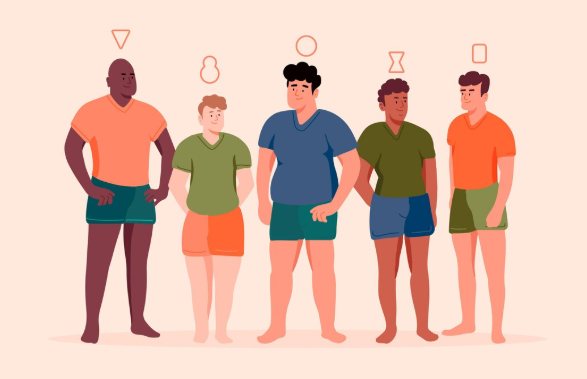
Trapezoid (Athletic V-Shape)
- Best fit: mid-rise, slim or slim-straight leg. The natural taper from chest to waist means a slim-straight cut through the leg maintains proportional balance without needing extra volume anywhere.
- Avoid: skinny cuts if your thighs are developed from training, since they’ll strain at the thigh even when the waist fits correctly.
Rectangle (Balanced Proportions)
- Best fit: mid-rise, straight leg. Since this build doesn’t have strong natural waist definition, a straight leg avoids drawing attention to the lack of taper the way a skinny cut (which needs a defined waist to look intentional) would.
- Avoid: relaxed or wide cuts, which can read as shapeless rather than intentionally casual on a build that’s already fairly linear.
Triangle (Narrower Shoulders, Wider Hips/Thighs)
- Best fit: mid-to-high rise, straight leg, darker wash. A straight leg in a dark, low-contrast wash reads slimmer through the hip and thigh than a lighter wash or a tapered cut that narrows sharply at the ankle, which can make the hip area look comparatively wider by contrast.
- Avoid: skinny cuts, which emphasize the width differential between a narrower waist/shoulder and wider hip/thigh rather than balancing it; very low rise, which tends to sit at the widest part of the hip on this build and can look tight or straining even when the actual waist measurement fits.
Read also: A Beginner’s Guide to Building a Suit Collection
Inverted Triangle (Broad Shoulders, Narrower Hips)
- Best fit: mid-rise, straight or slightly wider leg, lighter wash acceptable. Adding a bit of volume through the leg helps balance a broader upper body, and a lighter wash on the bottom half can help visually balance a darker top.
- Avoid: skinny jeans, which exaggerate the top-heavy silhouette by making the bottom half look disproportionately narrow next to broader shoulders.
Oval (Fuller Through the Midsection)
- Best fit: mid-rise (not low, which can create an uncomfortable overhang effect; not high, which can dig in at the widest point), straight leg with 1-2% stretch for comfort through the seat and thigh without excess bagging.
- Avoid: skinny or heavily tapered cuts, which will pull uncomfortably at the thigh; extremely low rise, which sits at the widest point of the torso and tends to create visible bunching or discomfort when seated.
Comparison Table: Rise and Cut by Body Type
| Body Type | Best Rise | Best Leg Cut | Best Wash Choice |
|---|---|---|---|
| Trapezoid | Mid | Slim-straight | Any, dealer’s choice |
| Rectangle | Mid | Straight | Mid to dark wash |
| Triangle | Mid-to-high | Straight | Dark wash |
| Inverted triangle | Mid | Straight to slightly wide | Light to mid wash |
| Oval | Mid | Straight | Mid wash |
Understanding Denim Terminology (Weight, Wash, and Selvedge)
A few terms worth knowing, since they affect both fit and how the jeans age:
- Ounces (oz): denim’s weight per square yard. Lighter denim (under 12oz) is more comfortable in warm climates and breaks in faster; heavier denim (14oz+) holds structure longer and develops more pronounced fading over time, but takes longer to feel broken-in.
- Selvedge: a tightly woven edge (visible when the cuff is rolled) that indicates the denim was woven on a narrower, older-style loom. It’s a quality and craftsmanship signal but doesn’t inherently affect fit — don’t pay a premium for selvedge if fit is the priority and budget is limited.
- Wash: the treatment applied after weaving — raw/unwashed denim is stiffest and darkest; stonewashed or acid-washed denim is pre-softened and lighter. Darker, less-treated washes generally read as more versatile and dress up more easily than heavily distressed or light washes.
- Sanforized vs. unsanforized: sanforized denim is pre-shrunk during manufacturing and will hold close to its purchased size; unsanforized (common in raw denim) can shrink significantly (up to 10%) in the first wash, which needs to be accounted for when choosing initial size.
A Real Scenario: The Rise Misdiagnosis
A client of mine kept buying jeans in his correct waist measurement that still looked like they were sagging by the end of the day. The issue wasn’t the waist size — it was rise. He has a longer torso relative to his legs, and the low-rise cut he’d defaulted to for years (because it was the dominant trend when he started buying jeans) sat below where his natural waist actually curves inward, so the waistband had nothing to hold onto and slowly slid down through normal movement.
Switching to a mid-rise cut in the same waist measurement solved the sagging completely without changing the size at all — the lesson being that a persistent fit complaint that survives multiple pairs and sizes is often a rise or cut issue, not a sizing issue.
Fit Checkpoints to Check Before Buying
- Waistband gap test: sit down in the jeans — if the waistband gaps noticeably away from your body when seated, the rise or cut doesn’t match your proportions, and going up or down a size won’t reliably fix it.
- Knee room: with legs bent (as if sitting), there should be no uncomfortable pulling or strain behind the knee — jeans that fit fine standing but restrict movement when bent are cut too close through the leg for your build.
- Seat check: turn and check the back in a mirror — visible horizontal stress lines across the seat indicate the jeans are too tight through the hip/seat area regardless of how the waist and thigh measurements feel.
- Break-in allowance: for low-stretch or raw denim specifically, expect the jeans to loosen slightly (a half-inch or so at the waist) after a few wears — buying them very slightly snug rather than perfectly comfortable on day one accounts for this natural stretch.
Common Mistakes When Choosing Jeans
- Buying based on trend cut rather than body proportion — skinny jeans looked universally popular for a period regardless of build, which led plenty of men into a cut that didn’t actually suit their proportions simply because it was what stores stocked most.
- Ignoring rise entirely and only checking waist size — as the real scenario above shows, a persistent sagging or gapping problem is very often a rise mismatch, not a size mismatch, and re-buying the same rise in a different size won’t fix it.
- Choosing high stretch percentage for comfort without understanding the trade-off — 3%+ elastane jeans feel great on day one but bag out at the knee and seat significantly faster than low-stretch denim, meaning more frequent replacement.
- Not accounting for shrinkage on unsanforized/raw denim — buying true-to-size on raw denim without knowing it will shrink in the first wash results in jeans that are noticeably tighter than expected once washed.
- Over-prioritizing selvedge or brand prestige over fit — a well-known selvedge denim brand that doesn’t match your rise and cut needs will still look and feel wrong, regardless of the weaving craftsmanship behind it.
FAQ
What’s the difference between rise and cut on jeans? Rise refers to where the waistband sits relative to your natural waist (low, mid, or high), while cut refers to how much room runs from thigh to ankle (skinny, slim, straight, or relaxed) — both need to match your body independently for the jeans to fit well overall.
What jean cut is most flattering for most body types? A straight leg at mid-rise is the most broadly flattering starting point, since it doesn’t emphasize or minimize thigh and hip width the way skinny or relaxed cuts do, making it a safer default across a wider range of builds.
Why do my jeans sag even though they’re my correct waist size? This is very often a rise mismatch rather than a sizing issue — a low rise on a longer-torso build, for example, sits below where your natural waist curves inward and has nothing to hold onto through normal movement.
Should I size up or down for raw or unsanforized denim? Buy true to size or very slightly snug, since unsanforized denim can shrink up to around 10% in the first wash and will also stretch slightly with wear afterward, evening out closer to a standard fit.
How much stretch should jeans have? 1-2% elastane offers the best balance of comfort and shape retention for most men; anything above 3% feels more comfortable immediately but tends to bag out at the knee and seat within a few months of regular wear.
Does selvedge denim fit differently than regular denim? Not inherently — selvedge refers to the weaving process and edge finishing, which is a craftsmanship and durability signal, not a fit indicator, so it shouldn’t be the deciding factor if the rise or cut doesn’t otherwise match your body.
Read also: