A Beginner’s Guide to Building a Suit Collection
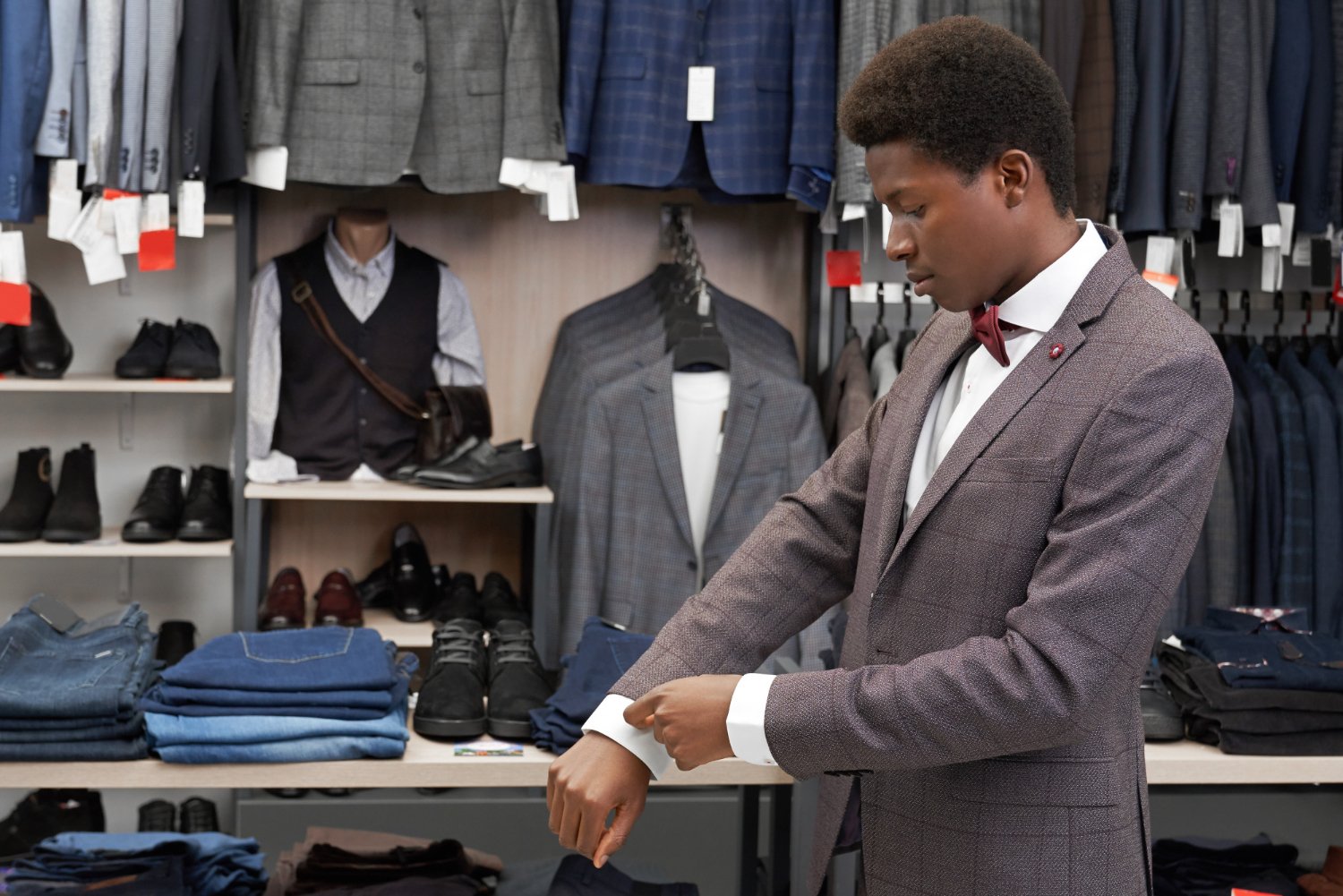
A beginner’s suit collection should start with one versatile navy or charcoal suit, add a second neutral color next, then expand into pattern and seasonal fabric weight only after the first two are solidly established.
Most men make the mistake of buying suits based on individual events rather than building toward a collection that works together — this guide covers the correct buying order, real fit checkpoints, and how to avoid the most expensive beginner mistakes.
Key Takeaways
- Buy navy first, charcoal second — these two colors alone cover roughly 80% of the situations a working man’s suit collection needs to handle.
- Fit matters more than fabric quality for a first suit — a $400 suit that’s properly tailored will look better than an $1,800 suit that doesn’t fit.
- The jacket shoulder seam is the checkpoint that matters most — it’s the one flaw that alterations generally cannot fix.
- Build in this order: solid navy → solid charcoal → a third neutral or subtle pattern → seasonal fabric weights → occasion-specific pieces (tuxedo, linen suit, etc.).
- Budget $400-$800 per suit at mid-tier quality including basic alterations; premium made-to-measure runs $1,200-$2,500+ per suit but lasts significantly longer with proper care.
Why Most Beginner Suit Collections Go Wrong
The most common mistake isn’t buying poor-quality suits — it’s buying suits in the wrong order. A man attending a wedding buys a specific navy suit with a wedding-appropriate pattern; a man starting a new job buys a charcoal suit that doesn’t quite match the first; a man invited to a black-tie event buys a tuxedo before he owns a single well-fitted business suit.
Three or four years later, he owns four suits that don’t share fabric weight, don’t mix and match with each other’s separates, and don’t actually cover his most common recurring needs.
The fix is treating suit-buying like the capsule wardrobe approach: build a small, deliberately sequenced collection where every piece earns its place, rather than reactively buying for whatever event is coming up next.
The Original Framework: The Interchange Test
Before buying any suit beyond your first, apply what I call the interchange test: could the jacket and trousers from this new suit be worn separately with pieces you already own, and could this new suit’s trousers work under a jacket you already have? If the answer to both is no, you’re building four separate two-piece outfits instead of one flexible collection.
This matters because a genuinely well-built suit collection of three suits, bought in colors that pass the interchange test, functions closer to six or seven distinct outfits once you account for jacket-trouser separations for business casual days, plus the standard suit combinations for formal days. A poorly sequenced collection of the same three suits, bought without this in mind, functions as exactly three outfits and nothing more.
The Buying Order (And Why It Matters)
Suit 1: Solid Navy, Year-Round Weight
Navy is the correct starting point over black or charcoal because it reads appropriately for both business and semi-formal social events (a black suit, by contrast, can read as slightly funeral-adjacent or overly formal for a regular workday, depending on your industry). A year-round fabric weight, roughly 9-11oz, avoids the problem of a suit that’s only wearable for four months of the year.
- What to look for: a super 100s to super 120s wool (this number refers to fiber fineness, not quality directly — higher numbers feel softer but are also more delicate and wrinkle-prone, so super 100-120 hits a durability sweet spot for a first suit worn often).
- Construction: half-canvas construction is the right starting point for most beginners — it offers better drape and longevity than fully fused (glued) construction without the cost of full canvas, which is a meaningful step up in price for a marginal difference most beginners won’t notice.
Suit 2: Solid Charcoal, Year-Round Weight
Charcoal is the second suit specifically because it passes the interchange test with the navy suit — a charcoal jacket works with the navy suit’s trousers in a pinch (for business casual, not for anything requiring a matched suit), and vice versa, in a way that a patterned or brightly colored second suit would not.
- What to look for: the same fabric weight and construction guidance as the navy suit, so the two pieces feel consistent in formality and drape when worn as separates.
- Why not black second: black suits are more occasion-specific (formal evening events, some funerals) than charcoal, which works comfortably in daytime business contexts where black can read as slightly too severe.
Suit 3: A Third Neutral or Subtle Pattern
Once navy and charcoal are established, the third suit is where you can introduce either a third neutral (a mid-grey, which is more versatile day-to-day than it sounds) or a subtle pattern (a fine pinstripe or a subtle windowpane check in navy or grey) for a small amount of visual variety without sacrificing versatility.
- What to avoid: bold patterns, unusual colors (burgundy, bright blue), or anything that reads as a “statement” suit at this stage — those pieces are worth adding much later, once the working core of the collection is solid and you have a specific context (a creative industry, a specific event) that calls for it.
Suits 4+: Seasonal and Occasion-Specific
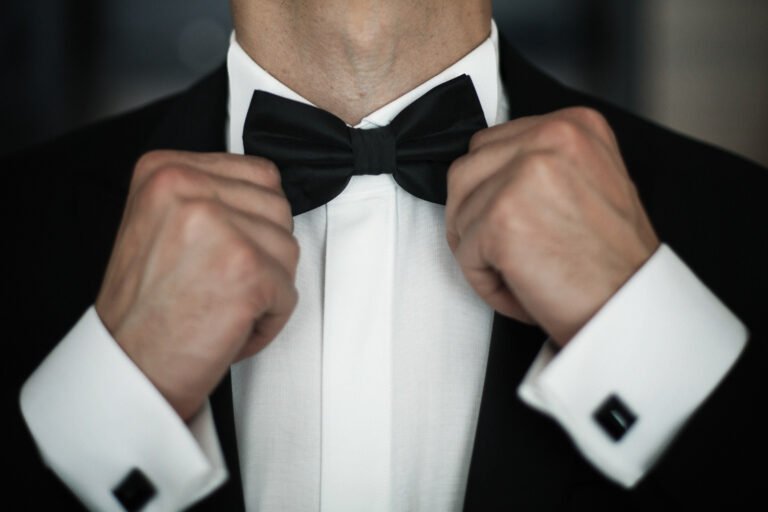
Only after the first three are established does it make sense to add fabric-weight variations (a lighter, roughly 7oz tropical wool for genuinely hot climates or summer events) or occasion-specific pieces (a tuxedo for black-tie events, a linen or cotton-blend suit for casual summer weddings). Buying these earlier means owning specialized pieces before owning the fundamentals that get worn ten times more often.
Read also: 15 Black Jeans Outfit Ideas for Men
Fit Checkpoints for Suit Jackets
Fit is the single biggest quality signal in a suit, more so than fabric or price point. Four checkpoints, in order of how expensive they are to get wrong:
- Shoulder seam: should sit exactly at the edge of your shoulder bone. This is the hardest flaw to alter — a seam sitting too far out or too far in generally requires deconstructing the jacket’s shoulder construction, which costs more than most off-the-rack suits themselves. Get this right before evaluating anything else.
- Chest: with the jacket buttoned, you should be able to comfortably fit a flat hand between the lapel and your chest — enough room to move and sit without straining the button, but not so much that the jacket looks boxy.
- Sleeve length: a quarter to half an inch of dress shirt cuff should show beyond the jacket sleeve when your arms hang naturally. This is a low-cost, high-impact alteration ($20-40) that most off-the-rack jackets need regardless of how well everything else fits.
- Jacket length: with arms relaxed at your sides, your fingers should roughly reach the bottom hem of the jacket. A jacket noticeably shorter or longer than this is likely cut for a different torso proportion, independent of chest size.
Fit Checkpoints for Suit Trousers
- Rise: should sit at or just below your natural waist for a modern fit — trousers that sit low on the hip both look dated with a suit jacket and tend to gap at the waistband when seated.
- Break: aim for no break to a slight break, where the hem just touches the top of the shoe rather than pooling on top of it — this is one of the cheapest tailoring fixes in the entire suit ($10-20 for a hem) and instantly modernizes the look.
- Seat: should skim without pulling — visible horizontal stress lines across the seat are the clearest sign the trousers need to be taken out or sized up, which a good tailor can usually do within an inch or two of the original size.
Comparison Table: Suit Buying Priority
| Suit | Color | Fabric Weight | Buy Priority | Mid-Tier Price |
|---|---|---|---|---|
| Suit 1 | Navy | Year-round (9-11oz) | 1st | $400-700 |
| Suit 2 | Charcoal | Year-round (9-11oz) | 2nd | $400-700 |
| Suit 3 | Mid-grey or subtle pattern | Year-round (9-11oz) | 3rd | $450-750 |
| Suit 4 | Navy or grey, lighter weight | Summer (6-8oz) | 4th (seasonal) | $450-800 |
| Suit 5 | Black (tuxedo) | Occasion-specific | 5th (as needed) | $500-900 |
A Real Scenario: The Reactive Buying Trap
A client of mine owned five suits after four years of professional life — a navy suit bought for a friend’s wedding with a bold check pattern, a slim-fit black suit bought quickly for a funeral, a charcoal suit from his first job’s dress-code requirement, a lightweight grey suit bought for a summer event, and a tuxedo bought for a formal work gala.
None of the trousers or jackets interchanged with each other; each suit only functioned as its original single outfit. We built a genuine three-suit core (replacing the patterned wedding suit and the slim funeral suit with a solid navy and solid charcoal, both cut consistently) and kept the tuxedo and lightweight grey as the legitimate occasion-specific additions they were always meant to be.
The total suit count barely changed, but the functional versatility roughly tripled, because the core three could now be mixed as separates for business casual days in a way the original five never could.
Budgeting for a Beginner Suit Collection
A realistic phased budget, assuming mid-tier quality with basic alterations included:
- Suit 1 (navy): $400-700, plus $50-100 in alterations (sleeve, waist, hem) if buying off-the-rack rather than made-to-measure.
- Suit 2 (charcoal): $400-700, plus similar alteration costs — often cheaper the second time since you already know your measurements and which brand’s cut works for your build.
- Suit 3 (third neutral or pattern): $450-750, following the same alteration pattern.
- Total for a working three-suit core: roughly $1,400-$2,300 including alterations, spread over however many months or years makes sense for your budget — there’s no requirement to buy all three in a short window, and spacing purchases out gives you time to confirm the first suit’s cut and fit actually work well before repeating it.
Made-to-measure is worth considering starting with suit two or three, once you know your body’s specific fit challenges (a shoulder that needs extra room, a shorter-than-average torso) from experience with the first off-the-rack purchase — going custom immediately on suit one without that baseline knowledge often means paying a premium to correct fit issues you didn’t yet know to ask about.
Common Mistakes When Building a Suit Collection
- Buying based on a single upcoming event — a wedding-specific or funeral-specific suit rarely integrates well with a broader collection, since event-driven purchases prioritize a look for one day over versatility across years.
- Skipping alterations to save money — an off-the-rack suit that fits at the shoulder but needs sleeve or waist adjustment will look meaningfully worse unaltered than a properly tailored version of the same suit, and the alteration cost is almost always smaller than the price difference to a better-fitting size.
- Prioritizing fabric name-dropping over fit — a suit made from an expensive Italian mill’s fabric that doesn’t fit at the shoulder will look worse than a mid-tier fabric suit that’s properly tailored; fit is the dominant visual factor, not fabric origin.
- Buying three suits in the same color — this feels safe but doesn’t add real versatility once you already own one navy suit; the second and third purchases should deliberately diversify color or pattern within the neutral framework described above.
- Ignoring seasonal fabric weight — wearing a heavy, 12oz+ wool suit through a hot summer (or a lightweight tropical wool through a cold winter) is uncomfortable enough to actively shorten how often you’re willing to wear an otherwise good suit, which defeats the purpose of owning it.
FAQ
What color suit should a beginner buy first? Navy — it reads appropriately for both business and semi-formal social contexts in a way that black (often read as too formal or funeral-adjacent) and charcoal (slightly more corporate-specific) don’t match as broadly.
How many suits does a beginner actually need? A working three-suit core (navy, charcoal, and one additional neutral or subtle pattern) covers the vast majority of situations; additional suits should be added only for genuine seasonal or occasion-specific needs like a tuxedo or a lightweight summer fabric.
Is it worth paying more for a better fabric on a first suit? Generally no — fit has a bigger visual impact than fabric quality on a first suit, so prioritizing proper tailoring over a premium fabric name is the better use of a limited budget when starting out.
Should I buy a suit off-the-rack or made-to-measure as a beginner? Off-the-rack with basic alterations is the more practical starting point, since it lets you learn your specific fit challenges (shoulder width, torso length) at a lower cost before considering made-to-measure for later purchases.
What’s the biggest mistake beginners make when building a suit collection? Buying suits reactively for individual events rather than sequencing purchases so each new suit’s separates can interchange with what’s already owned — this produces a collection that functions as several unrelated outfits rather than a flexible wardrobe.
How much should a beginner budget for their first three suits? Roughly $1,400-$2,300 total at mid-tier quality including basic alterations, though this can be spread across months or years rather than purchased all at once.
Read also: