Black Tie vs. Semi-Formal: The Real Difference (2026)
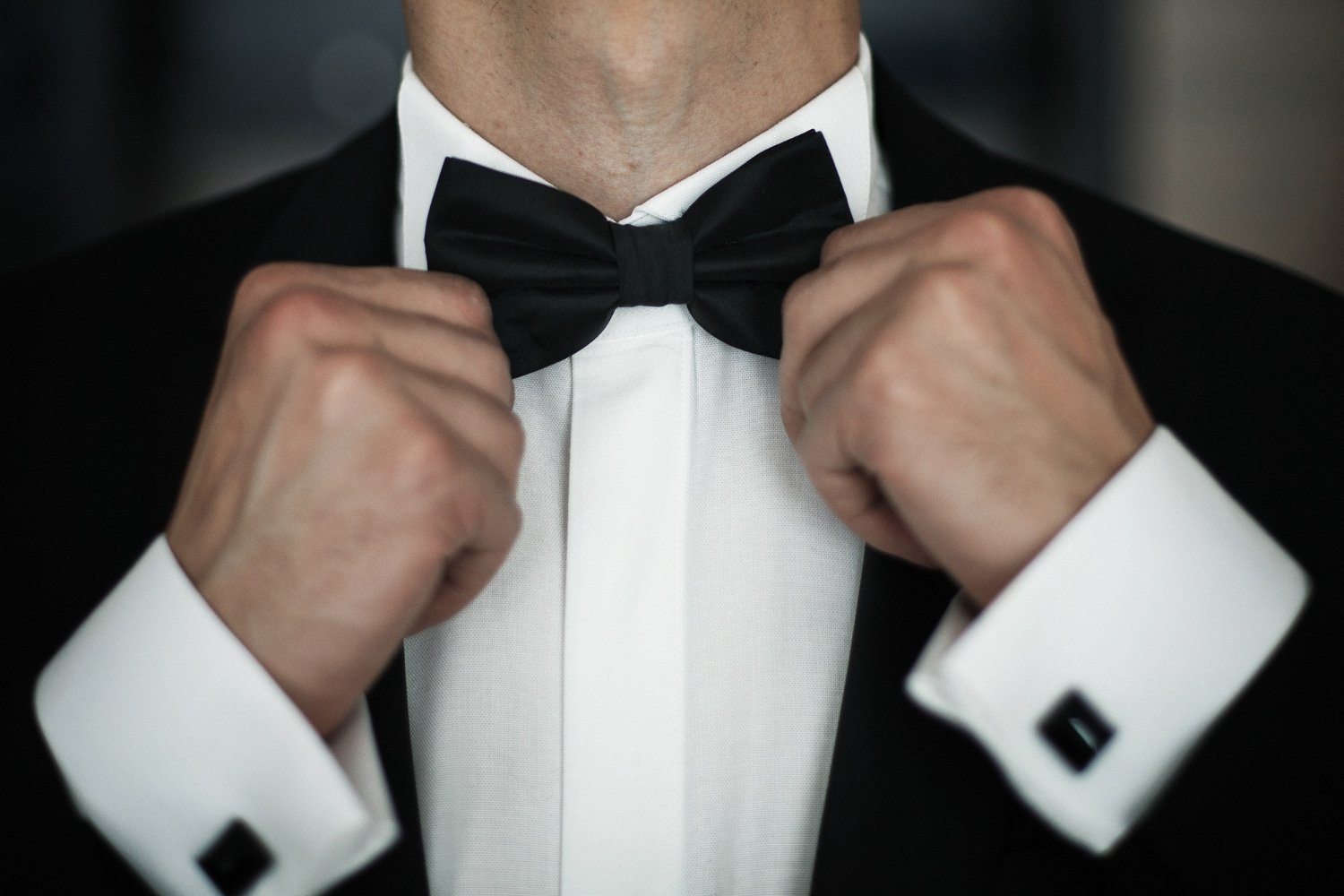
Black tie requires a tuxedo — a black (or midnight navy) dinner jacket with satin lapels, matching trousers with a satin stripe, a formal shirt, and a bow tie. Semi-formal is one full step down: a dark suit (not a tuxedo) with a dress shirt and a tie is correct, and a tuxedo would actually be overdressed.
The confusion between the two costs more men an embarrassing evening than almost any other dress code mix-up, because the invitation wording often looks nearly identical.
I’ve dressed grooms, groomsmen, and gala attendees for both codes for over a decade, and the single most common panicked text I get is some version of: “the invite says semi-formal but my buddy’s wearing a tux, do I need one too?” The short answer is no — and understanding why will save you money and prevent you from standing out for the wrong reason.
Key Takeaways
- Black tie is a tuxedo, full stop. There is no “black tie” version that swaps in a regular dark suit.
- Semi-formal means a dark suit, not a tuxedo. Wearing a tuxedo to a semi-formal event is a real, visible mistake — not a safe “overdressed but fine” move like people assume.
- The bow tie vs. necktie distinction is one of the clearest tells: bow ties belong to black tie; long neckties belong to semi-formal.
- Shoe choice matters more than most guides admit — patent leather signals black tie, while polished plain-toe leather signals semi-formal.
- When an invitation says “black tie optional,” treat it as black tie unless you have a specific reason not to; “optional” refers to the host’s flexibility, not an invitation for you to under-dress.
What Is Black Tie, Exactly?
Black tie is a formal evening dress code built entirely around the tuxedo: a jacket with satin or grosgrain lapels (peak, shawl, or notch — shawl is the most traditionally correct), matching trousers with a single satin stripe down the outer seam, a white or ivory formal shirt (pleated front or a plain marcella bib), a black bow tie, and black patent or highly polished plain leather shoes.
The defining feature is the satin: it’s what separates a tuxedo jacket from a regular black suit jacket, and it’s the detail most men get wrong when they try to “make do” with a black suit for a black tie event. A black suit, no matter how sharp, is not black tie — the missing satin lapel is immediately visible to anyone who knows what they’re looking at, and at a black tie event, most attendees will know.
Black tie also traditionally excludes:
- A long necktie (the bow tie is not optional within true black tie)
- Brown shoes of any shade
- A patterned or colored dress shirt
- A suit jacket without satin-faced lapels
What Does Semi-Formal Actually Mean?
Semi-formal is a dressed-down step from black tie: a dark suit in navy, charcoal, or black (a regular suit, not a tuxedo), a white or light-colored dress shirt, a conservative tie, and polished leather dress shoes — typically oxfords or derbies in black or dark brown.
This is where most confusion sets in, because “semi-formal” sounds close enough to “formal” that people assume it means “black tie, but a little relaxed.” It doesn’t. Semi-formal removes the tuxedo requirement entirely and replaces it with what most men already own: a well-fitted business suit.
The formality comes from fit, fabric, and polish — a crisp, well-tailored navy suit with a silk tie reads exactly right, while the same suit worn wrinkled with a loosened tie reads underdressed even though the pieces are technically correct.
A useful way to think about it: semi-formal is the most dressed-up version of a suit you’d wear to work, while black tie is a category of clothing (the tuxedo) that doesn’t exist in a business wardrobe at all.
Read also: 15 Joggers Outfit Ideas for Men
Black Tie vs. Semi-Formal: Side-by-Side Comparison
| Element | Black Tie | Semi-Formal |
|---|---|---|
| Jacket | Tuxedo jacket with satin/grosgrain lapels | Regular suit jacket, no satin |
| Trousers | Matching tux trousers with satin side stripe | Matching suit trousers, no stripe |
| Shirt | Formal white/ivory shirt, marcella or pleated front | Standard dress shirt, white or light color |
| Neckwear | Black bow tie (self-tie preferred over pre-tied) | Long necktie, conservative pattern or solid |
| Shoes | Patent leather or high-shine plain leather, black | Polished oxfords or derbies, black or dark brown |
| Color range | Black or midnight navy only | Navy, charcoal, or black suit acceptable |
| Typical events | Galas, formal weddings, opera opening night, awards dinners | Evening weddings, upscale dinners, holiday parties |
Why “Black Tie Optional” Confuses Everyone
“Black tie optional” is the single most misread phrase on any invitation. It does not mean “black tie or casual, your choice.” It means the host is giving guests permission to wear a very dark, formal suit instead of a full tuxedo — but a tuxedo remains the more correct, more welcome choice, and a suit worn under this phrasing should still be treated as close to black tie as possible: a black or charcoal suit, white shirt, dark tie, and polished black shoes.
If you don’t own a tuxedo and the invitation says “black tie optional,” a rental is usually still the safer call for a wedding or gala where you’ll be photographed and where guests will skew toward tuxedos. Save the suit-as-substitute reading for less formal optional-black-tie events, like a company holiday party.
Common Mistakes at Black Tie and Semi-Formal Events
- Wearing a black suit to a black tie event, thinking it’s “close enough.” It isn’t. The satin lapel is the entire visual signal of a tuxedo, and its absence reads immediately, even to guests who couldn’t articulate why the outfit looks off.
- Wearing a tuxedo to a semi-formal event. This is the mistake nobody warns you about. Showing up in a full tux when the room is in suits doesn’t read as “extra effort” — it reads as either not having read the invitation or assuming the event was more important than it was.
- Pairing a bow tie with a semi-formal suit. A bow tie is a strong visual signal of black tie. Wearing one with a plain business suit looks like a costume mismatch rather than a stylistic choice, unless you’re intentionally going for a distinct, non-traditional look you’ve thought through.
- Choosing brown shoes for black tie. Brown, in any shade, has no place in true black tie. It’s a smart, versatile choice for semi-formal, but it will look out of place next to a room of tuxedos.
- Renting a tuxedo that doesn’t fit through the shoulders. Off-the-rack rental tuxedos are cut generously through the shoulder by default. Ask the rental shop specifically about their in-house alteration turnaround — most offer free minor alterations, and shoulder fit is worth insisting on.
How to Check Tuxedo Fit (The Details Rental Shops Won’t Volunteer)
Renting or buying a tuxedo, these three checkpoints matter more than anything else in the fitting room:
- Jacket length: The jacket hem should end roughly where your thumb knuckle sits when your arm hangs naturally at your side — noticeably longer than a modern slim suit jacket, since tuxedo proportions are traditionally a touch more classic.
- Lapel width matched to your build: A peak or shawl lapel between 3 and 3.75 inches wide suits most builds; go narrower only if you’re notably slim, since an overly narrow lapel on a broader frame reads undersized rather than modern.
- Trouser break with no belt loops: Tuxedo trousers are traditionally worn with suspenders (braces), not a belt — if the pair you’re trying on has belt loops, it’s a lower-quality rental grade, and you should ask what else is available.
What About Cocktail Attire — Where Does That Fit?
Cocktail attire sits between semi-formal and business casual, and it’s worth mentioning because it’s often confused with both. For men, cocktail attire means a suit — often in a lighter or more expressive color than semi-formal calls for, like a deep green or patterned fabric — worn with or without a tie, and it explicitly does not require the more conservative navy/charcoal/black restriction that semi-formal implies. If you’re ever deciding between semi-formal and cocktail attire for the same event, semi-formal is the more conservative, safer read.
A Simple Decision Rule for Ambiguous Invitations
When an invitation’s dress code isn’t crystal clear, I give clients this rule: check the venue and time before you check the wording. A 7 p.m.-or-later event at a hotel ballroom, historic venue, or private club skews toward black tie regardless of exact phrasing. A restaurant private room or a home address, even for the same stated dress code, skews toward semi-formal. Venue and start time are better predictors of actual guest behavior than the invitation’s chosen adjective, because hosts are often inconsistent with formal dress code terminology themselves.
Building a Black Tie Kit Without Overspending
If you attend black tie events more than once every few years, buying is usually cheaper than repeated rentals within about three uses. Realistic price ranges:
- Rental: $150–250 per event through a national chain, including jacket, trousers, shirt, and bow tie — the fastest option but the least reliable fit.
- Budget purchase ($250–450): A basic notch or shawl-lapel tuxedo from a mainstream retailer. Fine for occasional use once properly tailored.
- Mid-tier purchase ($450–900): Better wool-blend fabric, a cleaner drape, and a house tailoring program that gets the shoulder and sleeve length genuinely correct rather than approximate.
A self-tie bow tie is worth the small learning curve over a pre-tied one — it sits more naturally and doesn’t have the slightly-too-symmetrical look that gives pre-tied ties away up close.
Frequently Asked Questions
Can I wear a black suit instead of a tuxedo to a black tie event? No. A black suit lacks the satin lapel and trouser stripe that define a tuxedo, and the difference is visible even from a distance. If you don’t own or want to rent a tuxedo, it’s better to confirm with the host whether a dark suit is genuinely acceptable rather than assume.
Is a bow tie required for semi-formal? No. Semi-formal calls for a standard long necktie, not a bow tie. A bow tie signals black tie and can look like a mismatched or costume-like choice with a regular business suit.
What does “black tie optional” really mean? It means guests may wear a very dark, formal suit instead of a tuxedo, but a tuxedo is still the more correct and more common choice at these events. Treat it as leaning black tie rather than as a genuine choice between formal and casual.
Can I wear brown shoes to a semi-formal event? Yes, dark brown leather oxfords or derbies are acceptable and common at semi-formal events. Brown shoes should be avoided at true black tie events, where black patent or high-shine black leather is expected.
What’s the difference between semi-formal and cocktail attire? Semi-formal restricts men to navy, charcoal, or black suits, while cocktail attire allows more expressive colors and patterns. Semi-formal is the more conservative of the two and is the safer default when an invitation’s exact expectations are unclear.
Do I need suspenders with a tuxedo? Traditionally, yes — tuxedo trousers are cut for suspenders (braces) rather than a belt, and proper tuxedo trousers typically don’t include belt loops at all. If your rental pair has belt loops, it’s worth asking the shop whether a more traditional pair is available.
Read also: