The Only 5 Pairs of Shoes a Man Really Needs
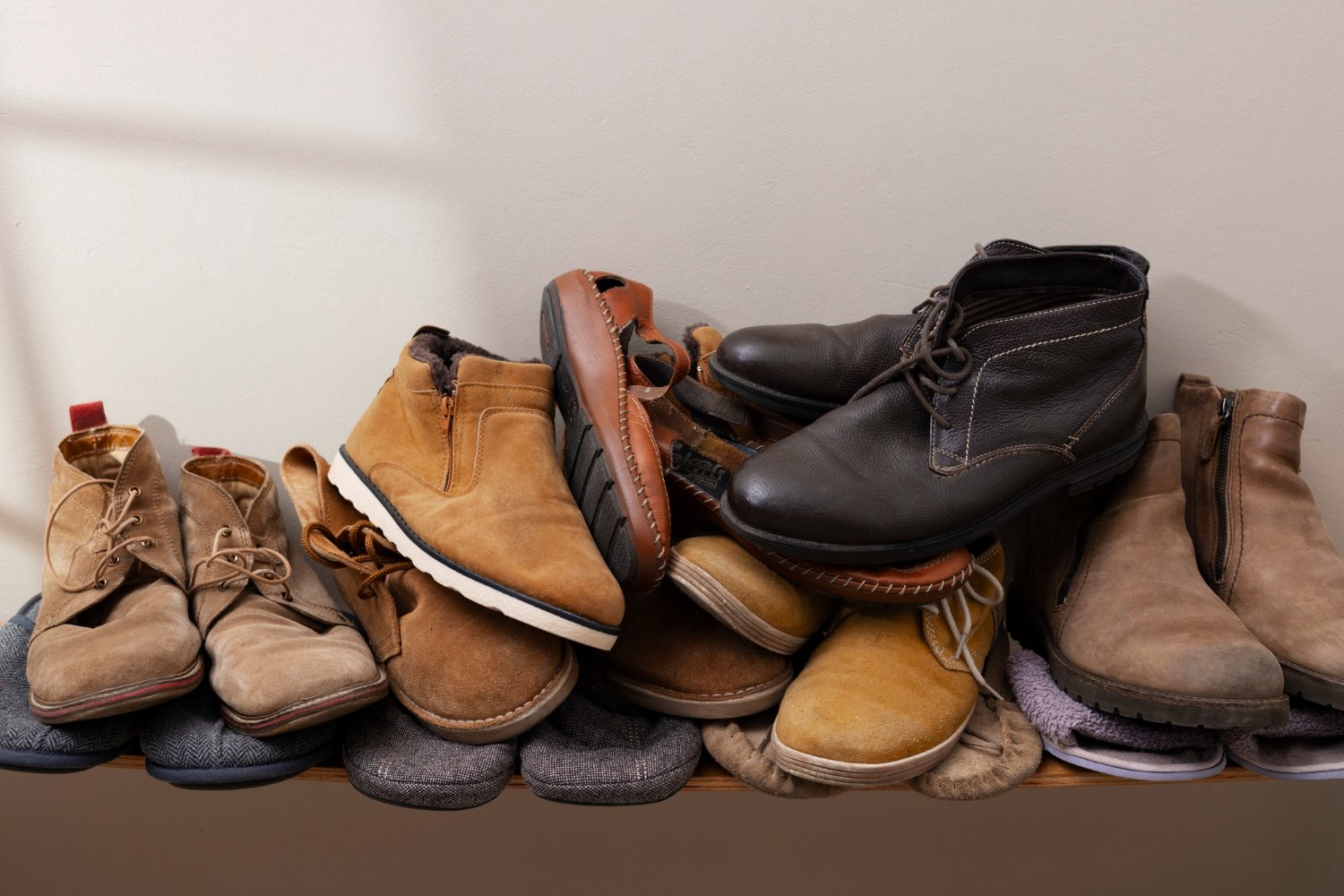
Five pairs of shoes cover nearly every occasion a man encounters: white leather sneakers for casual daily wear, brown derbies or chukkas for business casual, black or dark brown oxfords for formal events, a leather boot for cold weather and rugged wear, and one athletic or performance shoe for actual exercise.
Beyond these five, additional pairs mostly duplicate function rather than add real versatility. Below is how to choose each one, in what order to buy them, and the fit checkpoints that separate a shoe that lasts five years from one that falls apart in one.
Key Takeaways
- 5 shoe categories cover formal, business casual, everyday casual, cold weather/rugged, and athletic use — almost nothing else earns its closet space.
- Buy in this order: white sneakers first (most worn), then a brown derby/chukka, then boots, then formal oxfords, then a dedicated athletic shoe.
- Full-grain leather outperforms “genuine leather” despite the confusing name — genuine leather is a lower split-layer grade, not a mark of quality.
- Budget $400-$700 total for a mid-tier five-shoe rotation; premium leather goods with resoling potential run $1,200+ but last significantly longer per pair.
- The single biggest mistake: buying a sixth or seventh “just in case” shoe that duplicates an existing pair’s function instead of investing that money into higher quality on the five that matter.
Why Five Pairs Is the Right Number
Shoes are the most expensive-per-item category in most men’s wardrobes relative to how infrequently they’re replaced, which makes the temptation to buy narrow, occasion-specific pairs (wedding shoes, boat shoes, a specific “date night” shoe) expensive without adding real versatility.
Five categories, chosen deliberately, cover essentially every context: a workday, a formal event, a weekend, cold or wet weather, and a workout. Anything beyond that is usually solving for a very specific occasion that comes up rarely enough not to justify a dedicated pair.
There’s also a rotation argument most guides skip: wearing the same pair of leather shoes on consecutive days doesn’t let the leather and insole fully dry out and recover between wears, which shortens the shoe’s lifespan noticeably.
Five pairs in genuine rotation, worn roughly two days a week each, last measurably longer than two pairs worn constantly — durability comes as much from rest as from build quality.
The Original Framework: The Occasion-Frequency Matrix
Most shoe guides list categories without explaining how to prioritize spend across them. The method I use with clients is simple: rank your five shoe categories by how often you’ll actually wear each one in a typical month, then allocate your budget in that same order — spend the most on your highest-frequency shoe, not your most exciting one.
For most working men, the frequency order looks like this:
- White sneakers — worn 3-5 days a week for casual contexts.
- Brown derby/chukka — worn 2-3 days a week for business casual.
- Boots — worn seasonally but heavily during cold or wet months.
- Formal oxfords — worn a handful of times a year for specific events.
- Athletic shoe — worn based on actual workout frequency, which varies most person to person.
This reframes a common mistake: many men spend their biggest shoe budget on the formal oxford (because it “feels important”) while wearing cheap, poorly-constructed sneakers daily — meaning the shoe getting the most wear and the most foot-health impact gets the least investment. Flip that ratio and both your feet and your wardrobe’s longevity improve.
The Five Essential Pairs
1. White Leather Sneakers
The highest-utility shoe in almost any modern wardrobe — it pairs with jeans, chinos, shorts, and even works under a blazer for smart-casual settings where a formal shoe would feel like overkill.
- What to look for: full-grain or top-grain leather upper, a low-profile sole (avoid chunky “dad shoe” silhouettes if you want maximum outfit versatility), minimal visible branding or logos.
- Fit check: a thumb’s width of space between your longest toe and the shoe’s front when standing, and no pinching at the widest part of your foot — width matters more than length for long-term comfort, since it’s far harder to stretch.
- Price tiers: Budget ($60-90): Uniqlo, Vans low-tops in leather. Mid ($100-180): Common Projects-adjacent brands, Clarks. Premium ($200+): Common Projects, Koio.
- Care note: leather sneakers need occasional cleaning with a leather-specific cleaner and a light conditioning to prevent cracking, which most men skip entirely and then wonder why the shoe looks worn out within a year.
2. Brown Derby or Chukka Boot
The default business-casual shoe, and arguably the second-most-worn pair in a working man’s rotation after sneakers. Derbies (open lacing, where the eyelet tabs sit on top of the vamp) are more forgiving for higher-instep feet than oxfords, which use closed lacing sewn into the shoe body.
- What to look for: a medium-brown leather (versatile with both navy and grey trousers), a leather or rubber sole depending on how much daily walking you do, and a slightly rounded or plain toe rather than an aggressively pointed one.
- Fit check: heel should sit snugly with minimal slipping when walking (a small amount is normal before full break-in, but persistent slipping after several wears means the wrong size); the derby’s open lacing should close with roughly a half-inch to inch of gap remaining, giving room to tighten further as the leather breaks in and relaxes slightly.
- Price tiers: Budget ($80-120): Clarks Desert Boot (chukka), Cole Haan. Mid ($150-250): Allen Edmonds entry lines, Meermin. Premium ($350+): Alden, Crockett & Jones.
- Care note: this shoe benefits most from cedar shoe trees between wears — they absorb moisture and hold the shoe’s shape, which matters more here than on sneakers because leather dress shoes are more prone to creasing and warping without them.
3. Leather Boots (Chelsea or Work Boot)
Covers cold weather, wet weather, and rugged-casual contexts that dress shoes and sneakers both handle poorly. Chelsea boots (elastic side panels, no laces) read dressier and slip on faster; leather work boots (typically lace-up, thicker sole) read more rugged and handle harsher conditions better.
- What to look for: a leather or Vibram lug sole for actual traction in snow or wet pavement — a smooth leather sole looks classic but is genuinely dangerous on ice and wears through faster on rough terrain.
- Fit check: boots should accommodate a slightly thicker sock than your dress shoes without feeling tight — buying your exact dress-shoe size in a boot often results in a fit that’s too snug once you’re wearing them with weather-appropriate socks.
- Price tiers: Budget ($90-140): Thursday Boot Co., Dr. Martens. Mid ($180-280): Red Wing entry lines, Blundstone. Premium ($350+): Red Wing Iron Ranger, Alden.
- Care note: if you live somewhere with road salt in winter, a waterproofing treatment applied before the season starts (not after the first salt exposure) meaningfully extends the leather’s life — salt is one of the most corrosive substances leather regularly encounters.
4. Formal Oxfords
The shoe worn least often but that carries the most consequence when it’s wrong — weddings, interviews, funerals, and black-tie-adjacent events. A cap-toe or plain-toe oxford in a matte black or dark brown finish covers essentially every formal dress code you’re likely to encounter.
- What to look for: closed lacing (the defining feature of an oxford, as opposed to a derby), a matte rather than glossy patent finish for versatility across both business and semi-formal events, and a leather sole for proper formal occasions (rubber soles read more casual and are generally considered a step down for black-tie or formal business contexts).
- Fit check: because oxfords are worn less frequently, err toward a true-to-size or very slightly snug fit rather than sizing up “for comfort” — a slightly loose formal shoe both looks sloppy and is more prone to heel slip during a full day of standing at an event.
- Price tiers: Budget ($100-150): Cole Haan, Florsheim. Mid ($250-400): Allen Edmonds Park Avenue. Premium ($450+): Crockett & Jones, Edward Green.
- Care note: because this pair sits unworn for long stretches, store it with shoe trees inserted and check every few months for any leather drying or cracking — a shoe that sits neglected in a closet for a year can develop problems a frequently-worn shoe wouldn’t, simply from lack of handling and conditioning.
5. Athletic or Performance Shoe
The one category where function should override style entirely — buying a stylish-but-unsupportive sneaker and trying to use it for actual exercise is a common and avoidable mistake that leads to real physical discomfort or injury over time.
- What to look for: match the shoe to your actual activity — a running shoe (more cushioning, heel-to-toe drop suited to a running gait) is not interchangeable with a cross-training shoe (flatter, more stable for lateral movement and lifting) despite both being marketed broadly as “athletic.”
- Fit check: athletic shoes generally fit best with slightly more room at the toe than dress shoes or sneakers — a thumb’s width minimum, since feet swell during exercise and a too-snug fit causes blistering or black toenails over repeated use.
- Price tiers: Budget ($60-90): Brooks or Asics entry lines. Mid ($100-150): New Balance, Nike running lines. Premium ($150+): specialized fits from a running-store gait analysis, which is worth doing once if you run regularly and deal with recurring foot or knee discomfort.
- Care note: this is the one shoe category where quality doesn’t need to be premium — replace running shoes roughly every 300-500 miles regardless of how they look externally, since cushioning breaks down internally well before visible wear appears.
Read also: 15 Black Jeans Outfit Ideas for Men
Comparison Table: The Five Shoes at a Glance
| Shoe | Primary Occasion | Sole Type | Buy Priority | Mid-Tier Price |
|---|---|---|---|---|
| White sneakers | Daily casual | Rubber, low-profile | 1st | $100-180 |
| Brown derby/chukka | Business casual | Leather or rubber | 2nd | $150-250 |
| Leather boots | Cold/wet weather, rugged | Vibram lug or leather | 3rd | $180-280 |
| Formal oxfords | Weddings, interviews, formal events | Leather | 4th | $250-400 |
| Athletic shoe | Exercise, sport-specific | Foam/performance sole | 5th (as needed) | $100-150 |
A Real Scenario: The Over-Buying Trap
A client of mine owned nine pairs of shoes, including three separate brown dress-casual pairs that were nearly indistinguishable in a photo — different brands, all purchased at different times without a plan, each roughly filling the same “business casual brown shoe” role.
Meanwhile, his one pair of white sneakers was two years old, visibly yellowed, and falling apart at the sole from daily wear with zero rotation.
We consolidated: kept the best-constructed of the three brown pairs, donated the other two, and redirected that budget into a quality daily sneaker and a proper pair of boots he didn’t yet own. The total shoe count went down; the actual coverage of occasions went up.
This is the pattern worth checking your own closet against — count genuinely distinct categories, not total pairs.
Fit Checkpoints That Apply Across All Five
- Try shoes on in the afternoon or evening, not first thing in the morning — feet swell slightly throughout the day, and a shoe that fits perfectly at 8 a.m. can feel tight by 4 p.m.
- Always try both shoes, not just one — most people have a slightly larger foot on one side, and fitting to the larger foot prevents a persistent minor discomfort in the smaller-footed shoe.
- Walk on a hard surface in the store, not just the carpeted fitting area — carpet masks sole flex and cushioning quality that only becomes apparent on a hard floor.
- Check width, not just length — a shoe that’s the right length but too narrow will cause more long-term discomfort (and is harder to fix) than one that’s slightly too long, which at least allows room to add an insole.
Common Mistakes When Building a Five-Shoe Rotation
- Buying “genuine leather” thinking it’s a quality signal — despite the name, genuine leather is a lower-grade split layer with the top grain sanded off; full-grain or top-grain leather is the actual quality marker to look for on the product description.
- Skipping shoe trees on leather dress shoes and boots — this single $15-25 accessory does more to extend a leather shoe’s lifespan than almost any other maintenance habit, since it prevents creasing and absorbs moisture between wears.
- Wearing the same pair on consecutive days — leather needs 24-48 hours to fully dry out and recover its shape after a day of wear; skipping rotation is one of the most common reasons leather shoes break down faster than their construction quality would suggest.
- Using an athletic shoe as an everyday casual shoe — this blurs the line between the sneaker and athletic categories and often results in a shoe that’s neither stylish enough for daily wear nor performing well for its intended athletic purpose once it’s logged significant casual mileage.
- Ignoring resoling as an option — a well-constructed leather shoe (particularly Goodyear-welted construction) can often be resoled for $40-80 rather than replaced entirely, which is both more economical and more sustainable than most men realize when the upper leather is still in good shape.
FAQ
What are the 5 essential pairs of shoes every man needs? White leather sneakers, brown derbies or chukkas, leather boots, formal black or dark brown oxfords, and a dedicated athletic shoe — together these cover casual, business casual, cold weather, formal events, and exercise.
Should I buy formal oxfords in black or brown? Black is the safer first purchase since it works for the widest range of formal dress codes, including black-tie-adjacent events where brown would be considered too casual; add a dark brown pair second if your formal event calendar is frequent enough to justify it.
How much should I spend on a five-shoe rotation? A mid-tier rotation across all five categories typically runs $600-900 total; prioritizing full-grain leather and resoleable construction on the most-worn pairs (sneakers and derbies) is a better use of a limited budget than spreading it evenly across all five.
Do I really need a separate boot if I already have sneakers and dress shoes? Yes, if you experience real cold or wet weather seasonally — neither sneakers nor leather dress shoes handle snow, slush, or heavy rain well, and using them in those conditions damages the leather and shortens the shoe’s lifespan significantly.
How often should shoes be replaced? Well-constructed leather shoes (sneakers, derbies, boots, oxfords) can last 5-10+ years with proper rotation, conditioning, and occasional resoling; athletic shoes should be replaced roughly every 300-500 miles of use regardless of external appearance, since internal cushioning breaks down before visible wear shows.
Is it worth buying “genuine leather” shoes if they’re cheaper? Generally no for anything you plan to wear regularly — genuine leather is a lower-grade split layer that wears out and cracks faster than full-grain or top-grain leather, so the lower upfront cost is usually offset by needing to replace the shoe sooner.
Read also: