Wedding Guest Attire for Men: Dos and Don’ts
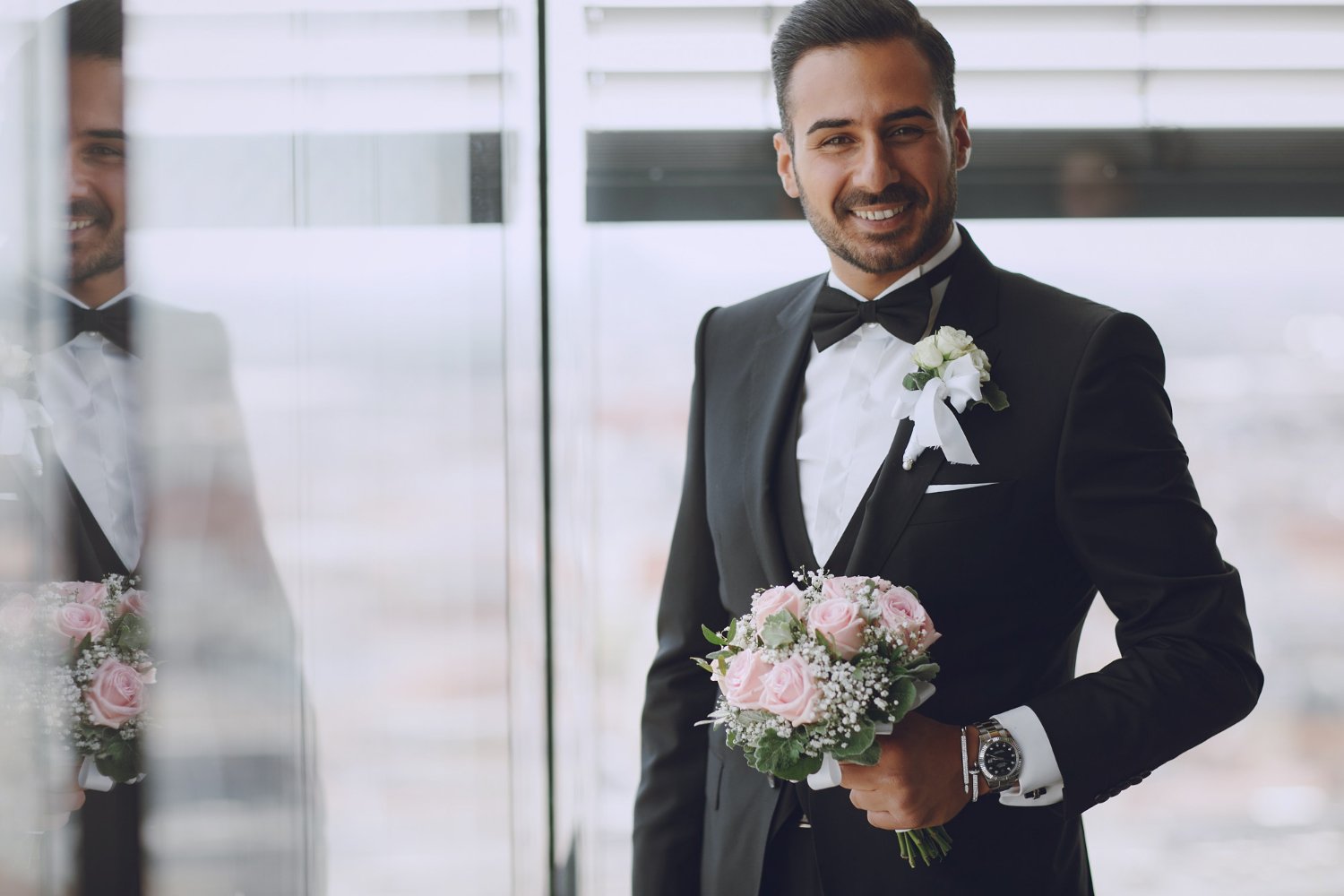
The fastest way to get wedding guest attire right is to treat the dress code on the invitation as a literal instruction, not a suggestion, and then adjust for the venue and time of day.
Most guest attire mistakes come from either ignoring the stated dress code entirely or from misreading vague terms like “semi-formal” and “cocktail attire,” which have specific, learnable meanings rather than being open to interpretation.
Key Takeaways
- The dress code on the invitation is the primary instruction; the venue and time of day are secondary adjustments, not replacements for it.
- Never wear all black, all white, or anything that could compete with the wedding party’s colors — this is the single most consistent rule across every dress code.
- Daytime weddings call for lighter fabrics and colors; evening weddings call for darker, richer tones, regardless of season.
- “Cocktail attire” and “semi-formal” are not interchangeable with “business casual” — they specifically call for a suit, not separates.
- When a dress code isn’t stated at all, default one notch more formal than you think is necessary; it’s a smaller social cost than being underdressed.
What Do Wedding Dress Codes Actually Mean?
Wedding invitations use a small set of standard terms, and each one maps to a specific, well-understood outfit. Guessing at these gets men into trouble more than any other part of wedding attire, because the terms sound similar but call for meaningfully different outfits.
| Dress Code | What It Means | Typical Outfit |
|---|---|---|
| Casual / Beach Casual | Relaxed but still put-together, never athletic wear | Linen or cotton pants, short-sleeve button-up or polo, loafers |
| Smart Casual | A step up from casual, no tie required | Chinos or dress trousers, button-up shirt, blazer optional, leather shoes |
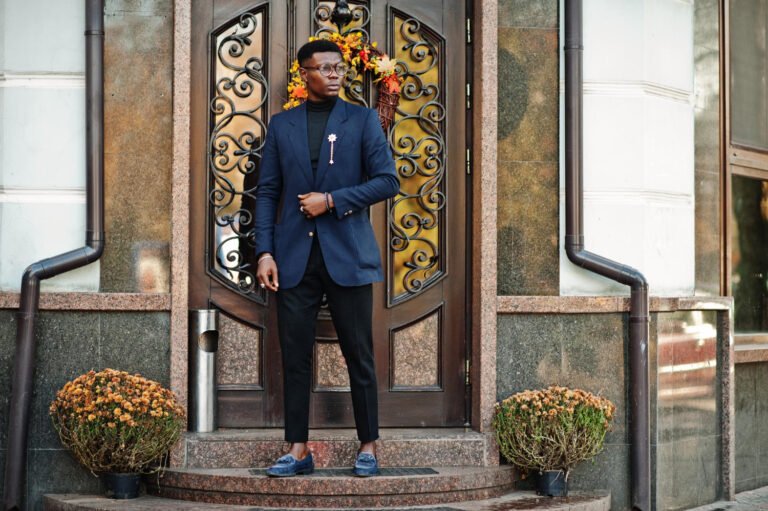
| Cocktail Attire | A suit is expected, tie optional depending on region | Suit in a mid-to-dark tone, dress shirt, optional tie, leather dress shoes |
| Semi-Formal | Functionally similar to cocktail attire, slightly more conservative | Dark suit, dress shirt, tie usually expected |
| Black-Tie Optional | A tuxedo is welcome but a very dark, formal suit is acceptable | Tuxedo or a black/charcoal suit with a white shirt and dark tie |
| Black Tie | Tuxedo required, no substitutions | Black tuxedo, white dress shirt, black bow tie, patent leather shoes |
The most common misreading is treating “smart casual” and “cocktail attire” as the same thing. Smart casual explicitly allows you to skip a full suit; cocktail attire does not. Showing up to a cocktail-attire wedding in chinos and a blazer reads as underdressed even though the same outfit would be correct at a smart-casual event.
The Formality Ladder: An Original Framework for Reading Ambiguous Invitations
When an invitation gives no dress code at all, or uses a vague phrase like “dressy casual,” most guides tell you to “use your best judgment,” which isn’t useful advice. Instead, I use a five-step ladder with clients, and the rule is simple: identify the two closest rungs the wording could mean, and pick the more formal one.
- Backyard or beach casual — linen shirt, chinos, loafers, no tie.
- Smart casual — blazer optional, collared shirt, chinos or dress trousers.
- Cocktail / semi-formal — full suit, dress shirt, tie in most regions.
- Black-tie optional — dark suit or tuxedo.
- Black tie — tuxedo only.
If an invitation says “dressy casual,” that phrase sits ambiguously between rungs 2 and 3 — go with rung 3. If it says “garden party attire,” that typically sits between rungs 1 and 2 for a daytime event — go with rung 2. Defaulting up the ladder costs you nothing (a suit at a smart-casual wedding still looks intentional), while defaulting down reads as not having made an effort.
Read also: White T-Shirts: Why Quality Matters
Colors You Should Never Wear as a Wedding Guest
- All white or ivory. This is the most universally recognized rule in wedding guest attire and applies regardless of dress code, because it visually competes with the bride. A white dress shirt under a suit is fine; a white suit or all-white outfit is not.
- All black at a daytime or celebratory wedding. Black is appropriate for evening and formal weddings but can read as funeral-adjacent at a bright, casual daytime event. Save all-black for evening cocktail or black-tie events specifically.
- Any color that matches the stated wedding party colors. If the invitation or wedding website mentions a color scheme (increasingly common), avoid wearing that exact color as your primary outfit color, since it can visually blend you into the wedding party from a distance in photos.
- Overly loud patterns or novelty prints. A subtle pattern (pin dot, small check, textured weave) reads as intentional; a large novelty print pulls focus in a way that undercuts the outfit’s formality regardless of how well it fits.
Fabric and Fit by Season
Summer and daytime weddings: Choose linen, linen-cotton blends, or lightweight wool (Super 100s-120s, roughly 7-9 oz). Lighter colors — tan, light grey, soft blue — read appropriately for daylight and warm weather. A fully lined wool suit in July is a common discomfort mistake; look for a half-lined or unlined suit jacket instead, which breathes significantly better.
Fall and evening weddings: Mid-weight wool (Super 100s-130s, 10-13 oz) in charcoal, navy, or deep green holds up better in cooler venues and photographs well under evening lighting. This is also where texture — flannel, tweed accents in accessories — becomes appropriate in a way it isn’t for a bright summer wedding.
Winter weddings: Heavier wool (13-16 oz) in charcoal or navy, with an overcoat if the ceremony or reception involves any outdoor time. A guest without an overcoat at an outdoor winter wedding photo is a visible and avoidable gap in an otherwise correct outfit.
Situational Examples
Beach wedding, casual dress code, 5’10” average build: Linen trousers in tan or light grey, a short-sleeve linen or cotton shirt in white or pale blue, and leather loafers with no socks. Skip the tie and blazer entirely — adding one actively overdresses relative to the setting, which is its own kind of mismatch.
Barn or rustic venue, semi-formal dress code, evening: A navy or medium-grey suit with a subtle texture like a birdseye or nailhead weave, brown leather dress shoes (not black, which reads too corporate for the setting), and a tie in a muted tone. The venue is casual in setting but the dress code is still formal — don’t let the barn setting talk you down a rung on the ladder.
Black-tie optional, evening, hotel ballroom: A tuxedo is the safer and more correct choice when the option is explicitly offered; a very dark charcoal or black suit with a white shirt and dark silk tie is the acceptable alternative if you don’t own or want to rent a tuxedo. A navy suit, however sharp, falls short of this dress code’s expectation.
Fit Checkpoints That Matter Most for Suits
- Jacket shoulder seam: Should sit at the edge of your shoulder bone exactly — this is the hardest thing to alter after purchase, so prioritize it when choosing or renting a suit.
- Trouser break: For a wedding, a slight or no break (trouser hem just grazing the top of the shoe) looks more current and more formal than a full break pooling at the ankle.
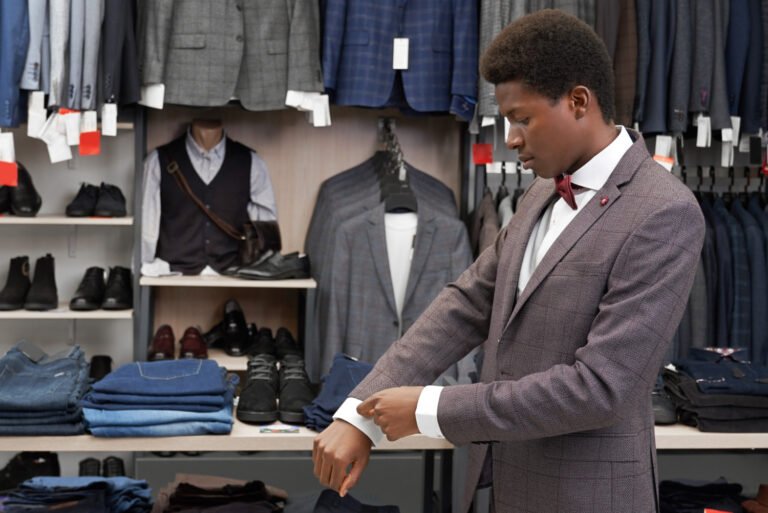
- Sleeve length: A quarter to half inch of dress shirt cuff should show past the jacket sleeve when your arms hang naturally — no shirt cuff showing reads as a jacket that’s too large or a shirt that’s too short.
- Jacket length: Your fingertips, with arms relaxed at your sides, should land roughly at the bottom hem of the jacket. Shorter reads dated in a cropped way; longer starts to look borrowed.
Common Dos and Don’ts
Do:
- Check the wedding website in addition to the invitation — many couples list specific color palettes or additional context (indoor/outdoor, time of day) that refines the dress code.
- Bring a light layer (blazer or cardigan) even to a casual daytime wedding, since outdoor venues cool down quickly after sunset.
- Match your belt and shoe leather color and finish — this small detail is one of the fastest tells of an intentional versus thrown-together outfit.
Don’t:
- Wear a tuxedo to anything below black-tie optional — it overshoots the dress code as clearly as jeans undershoot it.
- Assume “no dress code listed” means anything goes. It usually means the couple expects guests to read the venue and time correctly on their own, which calls for slightly more formality, not less.
- Choose novelty ties, socks, or accessories as a way to “stand out.” A wedding is not the occasion for attention-pulling personal branding — save distinctive pieces for events where you’re not a supporting presence in someone else’s photos.
FAQ
What does “cocktail attire” mean for men specifically? A suit is required, typically in a mid-to-dark tone like navy, charcoal, or grey, paired with a dress shirt. A tie is expected in most regions and contexts, though some warmer-climate or daytime cocktail events allow an open collar — when in doubt, bring a tie and decide on arrival based on other guests.
Can I wear a black suit to a daytime wedding? It’s acceptable but not ideal for a bright, casual daytime event, where it can read as overly somber. A charcoal, navy, or mid-grey suit is generally a better daytime choice, with black reserved for evening or explicitly formal dress codes.
Is it ever okay to wear jeans to a wedding? Only if the invitation explicitly states a casual or “come as you are” dress code, and even then, dark, unripped jeans paired with a collared shirt and leather shoes is the correct execution — not jeans as part of an otherwise athletic or streetwear outfit.
What should I wear if the invitation gives no dress code at all? Default one notch more formal than the venue suggests — for most weddings without a stated code, this means a suit. It’s a smaller social cost to be slightly overdressed than to be visibly underdressed in wedding photos that will exist permanently.
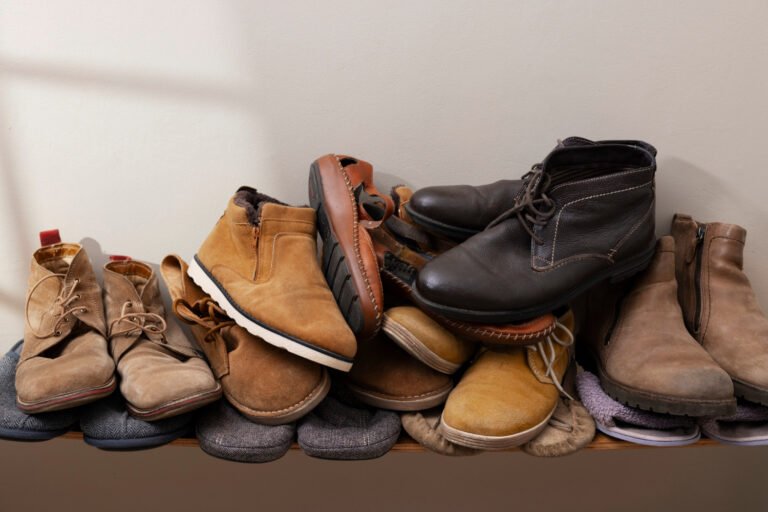
Do I need different shoes for a beach wedding versus a ballroom wedding? Yes — leather loafers or suede shoes suit a beach or outdoor casual wedding, while polished leather oxfords or derbies suit a ballroom or formal indoor event. Wearing formal leather dress shoes on sand is also a practical problem, not just a style mismatch.
Is it disrespectful to wear a color close to the wedding party’s colors? It’s not disrespectful, but it can create an odd visual effect in photos where you appear to blend into the wedding party from a distance. If the couple has shared a color scheme, it’s a simple and low-cost adjustment to avoid wearing that specific color as your outfit’s dominant tone.
Read also: