Dressing for Your Body Type: A Men’s Guide
Dressing for your body type means choosing cuts, proportions, and details that balance your natural shoulder-to-waist-to-hip ratio, rather than following generic sizing.
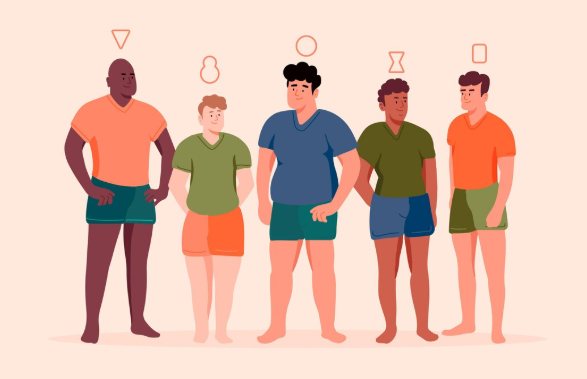
Most men fall into one of five broad shapes — trapezoid, rectangle, triangle, inverted triangle, or oval — and each responds to different cuts, rises, and layering choices.
Below is how to identify yours accurately and the specific adjustments that make the biggest visible difference.
Key Takeaways
- Body type is about proportion, not size or fitness level — a lean man and a heavier man can share the same shape and need the same fit adjustments.
- The two measurements that matter most: shoulder-to-waist ratio and waist-to-hip ratio. Everything else follows from these two numbers.
- Trapezoid (athletic V-shape): the easiest shape to dress; most off-the-rack cuts work with minor tailoring.
- Rectangle (similar shoulder/waist/hip): needs visual definition added at the waist through layering and structured jackets.
- Triangle (narrower shoulders, wider waist/hips): benefits from structured shoulders and darker, straight-leg bottoms.
- Inverted triangle (broad shoulders, narrower hips): needs volume added at the bottom half to balance the top.
- Oval (fuller through the midsection): benefits from vertical lines, open layering, and avoiding anything that clings at the waist.
- Fit at the shoulder and waist matters more than the size label — a “medium” from one brand can fit like a “large” from another.
Why Body Type Matters More Than Size
Two men can wear the same size medium jacket and look completely different in it — one sharp, one boxy — because size only accounts for volume, not where that volume sits on the frame.
A jacket cut for a trapezoid build (broader shoulders tapering to a narrower waist) will hang differently on a rectangle build (shoulders, waist, and hips roughly aligned), even if both men measure the same chest circumference.
This is the piece most style content skips: fit adjustments should target your ratio, not your size. A tailor doesn’t ask “what size are you” first — they ask where the garment gaps, pulls, or bunches, because those tension points reveal your actual shape regardless of what’s printed on the tag.
Read also: Men’s Capsule Wardrobe: 20 Essential Pieces (2026)
The Original Framework: The Two-Ratio Method
Rather than trying to match yourself to a body-type illustration (which rarely reflects real proportions), use two measurements you can take with a soft tape measure in under two minutes:
- Shoulder-to-waist ratio: measure across your shoulders (widest point, back to back) and your natural waist (narrowest point of your torso, usually just above the navel). Divide shoulder measurement by waist measurement.
- Waist-to-hip ratio: measure your waist and your hips at the widest point (usually across the seat). Divide waist by hip measurement.
Here’s how to read the results:
- Shoulder/waist ratio above 1.15: you likely have a trapezoid or inverted-triangle build — shoulders lead the silhouette.
- Shoulder/waist ratio close to 1.0: shoulders and waist are similar — likely rectangle or oval, depending on where the hip measurement lands.
- Waist/hip ratio above 1.0: waist is wider than hips — this points toward an oval or a fuller rectangle build.
- Waist/hip ratio below 0.9 with a low shoulder/waist ratio: hips are the widest point — this is the classic triangle shape.
This two-number method is more reliable than eyeballing a mirror because clothing you already own visually distorts your perception of your own proportions — a slightly-too-big shirt can make a trapezoid build look rectangular, and vice versa.
The Five Body Types and How to Dress Each
Trapezoid (Athletic V-Shape)
Shoulders noticeably broader than the waist, with a relatively defined midsection. This is the shape most ready-to-wear clothing is drafted for, which is why trapezoid builds often have the easiest time shopping off-the-rack.
- What works: classic or slim-classic cuts in jackets; a slightly tapered waist on dress shirts; straight-leg trousers and jeans that don’t fight the leg’s natural taper.
- What to avoid: oversized or boxy cuts that hide the shoulder-to-waist taper you already have — this is the one build where “bigger looks safer” is actively the wrong instinct.
- Fit check: a jacket should nip in slightly at the waist without pulling at the button — if it hangs straight from shoulder to hem, it’s cut for a different shape and needs a tailor to take in the sides.
Rectangle (Balanced, Minimal Taper)
Shoulders, waist, and hips fall within a similar range, with limited natural waist definition. This is an extremely common build and one of the more forgiving shapes to dress once you understand the one adjustment it actually needs: added visual structure at the waist, since the body won’t provide it on its own.
- What works: structured blazers with a defined waist seam (this creates the taper your torso doesn’t), a belt worn at the true waist rather than low on the hip, and layering (a sweater over a shirt, a jacket over a sweater) to build visual dimension.
- What to avoid: fully unstructured or oversized outerwear, which reads as shapeless rather than relaxed on a rectangle build specifically — the same jacket that looks effortlessly casual on a trapezoid build can look like it’s simply the wrong size on a rectangle build.
- Fit check: try a jacket on and check the waist seam — if it sits flat against your torso with no visible curve inward, ask about a half-canvas construction with a more shaped waist, which most menswear brands offer as an alternate cut.
Triangle (Narrower Shoulders, Wider Waist/Hips)
Shoulders are the narrowest point, with more volume through the waist, hips, or thighs. This build benefits the most from strategic shoulder structure, since adding visual width at the top balances the proportion without needing to change anything about the bottom half.
- What works: jackets with a structured or lightly padded shoulder (not exaggerated, just enough to square the shoulder line); horizontal details at the chest and shoulder (a chest pocket, a two-button placement higher on the torso); straight-leg, darker-wash trousers and jeans on the bottom, which read slimmer than lighter washes or tapered-to-nothing hems.
- What to avoid: skinny-fit trousers, which will emphasize the width differential between shoulder and hip rather than minimizing it; unstructured, sloped-shoulder jackets, which do the opposite of what this build needs.
- Fit check: the jacket shoulder seam should sit at the edge of your natural shoulder bone (not before it) — for a triangle build specifically, a seam that sits slightly past the shoulder edge, by no more than half an inch, can actually help square the frame, which is the one case where the standard “seam at the bone” rule bends slightly.
Inverted Triangle (Broad Shoulders, Narrower Hips)
Shoulders and chest are the widest point, tapering down to a noticeably narrower waist and hip. Swimmers and men who train upper-body-heavy often fall into this category.
- What works: adding visual volume at the bottom half — slightly wider-leg trousers (not skinny or tapered), straight-cut jeans, and lighter washes on the bottom to balance a darker top; V-neck or open-collar tops rather than crewnecks, which soften the shoulder line slightly.
- What to avoid: skinny or tapered trousers, which exaggerate the top-heavy silhouette rather than balancing it; heavily structured, padded-shoulder jackets, which add width where you already have plenty.
- Fit check: trousers should sit cleanly at the hip without gapping at the waistband when you have a shirt tucked in — inverted-triangle builds often need a slightly larger trouser size at the waist relative to their jacket size, which is completely normal and not a sign you’re buying the wrong size overall.
Oval (Fuller Through the Midsection)
Waist is the widest point, with shoulders and hips narrower by comparison. This build gets the least useful advice in most style content, which tends to default to “wear black” — a genuinely unhelpful oversimplification.
- What works: vertical lines (a shirt with a subtle vertical texture or a jacket with peak lapels, which draw the eye upward), open or unbuttoned layering rather than anything that clings at the waist, and a slightly longer jacket length that skims over the midsection rather than stopping abruptly at the widest point.
- What to avoid: anything slim-fit through the torso, which will pull and gap at the buttons; horizontal stripes or patterns at the waist, which do genuinely add visual width at exactly the point you’re trying to minimize; belts worn too tight, which create a visible line right at the widest part of the silhouette.
- Fit check: sit down in a buttoned dress shirt — if it pulls or gaps between buttons at the waist while seated, size up and have the shoulders and sleeves taken in instead of sizing down and living with the button strain, which is both uncomfortable and the single most visible fit failure across any body type.
A Real Scenario: When Two Body Types Overlap
A client of mine, mid-30s, had a trapezoid upper body from years of strength training but had put on weight through the midsection over a couple of years — effectively a trapezoid-oval hybrid. The instinct was to keep buying the athletic-cut shirts that fit his shoulders, but they pulled visibly at the waist buttons. The fix wasn’t sizing up across the board (which would have made the shoulders swim) — it was switching to a shirt brand offering a separate “athletic taper” cut with more room through the body while keeping the shoulder seam tight, plus having a tailor add a half-inch of room at the waist on his existing jackets. The lesson: when your shape shifts, the first fix is usually a different cut within the same size, not a different size entirely.
Fit Checkpoints That Apply Across Every Body Type
Regardless of shape, three universal checkpoints catch the majority of fit problems:
- Shoulder seam placement: for most builds, it should sit at the exact edge of your shoulder bone. This is the hardest flaw for a tailor to fix, since it requires deconstructing the jacket, so get this right before evaluating anything else about the fit.
- Sleeve length: with arms relaxed, jacket sleeves should end at the wrist bone, showing a quarter to half an inch of shirt cuff. This is a low-cost, high-impact tailoring fix that most off-the-rack jackets need regardless of body type.
- Trouser rise: a rise that sits at or just below your natural waist (not low on the hip) will hold its line better and prevent the “sagging” look that happens when trousers are cut for a different waist-to-hip ratio than yours.
Comparison Table: Body Type at a Glance
| Body Type | Key Proportion | Priority Fix | Best Jacket Style | Best Trouser Cut |
|---|---|---|---|---|
| Trapezoid | Shoulders > waist | Maintain natural taper | Classic or slim-classic | Straight leg |
| Rectangle | Shoulders ≈ waist ≈ hips | Add structure at waist | Structured, defined waist seam | Straight leg with belt at true waist |
| Triangle | Hips > shoulders | Add shoulder structure | Structured shoulder, chest pocket | Straight, darker wash |
| Inverted Triangle | Shoulders > hips | Add volume below waist | Softer shoulder, V-neck layers | Wider leg, lighter wash |
| Oval | Waist is widest point | Elongate with vertical lines | Longer length, peak lapel | Straight, mid-rise, no cling |
Common Mistakes When Dressing for Body Type
- Assuming body type is fixed for life — strength training, weight changes, and aging all shift proportions over years, which is why the two-ratio measurement is worth repeating annually rather than assuming your shape at 25 still applies at 35.
- Buying one size up “to be safe” regardless of shape — this helps an oval build but actively hurts a trapezoid or inverted-triangle build by hiding the shoulder line that’s doing the visual work.
- Chasing size labels instead of measurements — brand sizing is inconsistent enough that a “large” jacket from one label can measure smaller through the shoulder than a “medium” from another; always check the brand’s actual measurement chart, not just the size name.
- Ignoring seated fit — a shirt or jacket that looks fine standing in a mirror can pull uncomfortably when seated at a desk for eight hours, which matters more for daily wearability than how it photographs standing still.
- Treating tailoring as a last resort instead of a first step — a $20-30 waist or sleeve adjustment on an otherwise well-made jacket almost always outperforms buying a new jacket in a different size and hoping it fits better everywhere at once.
FAQ
How do I know my body type without professional measurements? Use a soft tape measure to get your shoulder, waist, and hip circumference, then calculate the shoulder-to-waist and waist-to-hip ratios described above — this takes about two minutes and is more reliable than visual comparison to a body-type chart.
Can my body type change over time? Yes — weight changes, strength training, and aging all shift shoulder-to-waist and waist-to-hip ratios, so it’s worth re-measuring roughly once a year rather than assuming your proportions are fixed.
What’s the biggest mistake men make when dressing for their body type? Sizing up or down uniformly instead of addressing the specific ratio that’s off — this fixes one part of the fit while making another part worse, since most body types need a different cut, not just a different size.
Do body type rules apply the same way to casual and formal clothing? The underlying principles (shoulder structure, waist definition, trouser rise) apply to both, but casual clothing gives more room for error since unstructured fabrics like cotton and denim are more forgiving of proportion mismatches than structured wool.
Is it worth paying for tailoring on off-the-rack clothing? Almost always yes for jackets and trousers specifically — a $20-40 alteration on the shoulder, waist, or hem typically does more for how a garment looks than upgrading to a more expensive version of the same ill-fitting cut.
Can two men with the same body type still need different fits? Yes — height, torso-to-leg ratio, and personal proportion within the same broad shape (for example, a short-torso vs. long-torso rectangle build) will still need different rise heights and jacket lengths, so treat body type as a starting point, not a complete answer.
Read also: