20 Best Watches for Men Under $500 in 2026
If you’ve spent any time shopping in this price bracket, you already know the problem: type “best watch under $500” into Google, and you get twelve nearly identical lists, half of them clearly written by someone who has never actually worn the watches they’re recommending.
Prices are outdated.
Specs are copy-pasted from press releases.
And somehow every single list claims its top pick is “the best value in horology,” which can’t possibly be true twelve times over.
I’ve worn most of the watches on this list myself, and researched current pricing and specs on the rest as of mid-2026. This isn’t a popularity contest. It’s a practical buying guide built around one question: what actually gives you the most watch for your money right now, and who is each one really for?
Here’s what’s changed in the last few years that makes this price range more interesting than it used to be: sapphire crystal, once a $1,000+ feature, now shows up regularly under $400. Genuine Swiss automatic movements — not quartz dressed up to look mechanical — are available for less than $500 from brands like Tissot and Citizen’s Swiss-adjacent competitors. And Japanese manufacturers like Seiko and Orient continue to build serviceable, in-house automatic calibers that outlast the watches around them.
In this guide, you’ll get 20 specific recommendations spanning dive watches, field watches, dress pieces, chronographs, and one genuinely excellent GMT — organized so you can find the right watch for your wrist, your budget tier, and your lifestyle.
I’ll also cover the buying mistakes that trip up first-time automatic watch buyers, how to think about movement types, and what questions actually matter when you’re comparing two watches that look similar in photos but wear completely differently in real life.
What $500 Actually Buys You in 2026
Before the list, it’s worth setting expectations, because “under $500” covers a lot of ground.
At the low end ($70–$200), you’re mostly looking at quartz movements, mineral or Hardlex crystal instead of sapphire, and resin or basic steel construction. That’s not a knock — some of the best-selling, most beloved watches in the world live in this tier, because reliability and simplicity are underrated.
In the middle ($200–$350), genuine automatic movements become the norm, usually Seiko’s 4R36 or NH35, Citizen’s Miyota-based calibers, or Orient’s in-house F6922. Sapphire crystal starts appearing on select models. This is the sweet spot for a first mechanical watch.
At the top ($350–$500), you start finding real Swiss engineering: Tissot’s Powermatic 80 movement (built on an ETA base), sapphire crystal as standard, and finishing that would have cost twice as much a decade ago. This is also where you’ll find the most versatile all-rounders — watches genuinely nice enough for a wedding but tough enough for a Tuesday hike.
The honest truth is that the jump from $200 to $500 buys you refinement, brand pedigree, and material upgrades more than it buys you fundamentally better timekeeping. A $250 Seiko and a $475 Tissot will both keep reasonably accurate time.
What changes is how the watch feels on your wrist, how it’s finished under close inspection, and what it signals to people who know watches.
What matters more to you — the story behind the brand, or the raw specs on paper? Keep that question in mind as you read, because it’ll steer you toward very different watches on this list.
Quick Comparison Table
| Watch | Style | Movement | Case Size | Water Resistance | Price Range |
|---|---|---|---|---|---|
| Seiko 5 Sports SRPD | Sport diver | Automatic (4R36) | 42.5mm | 100m | $230–$300 |
| Seiko 5 Sports GMT | GMT/travel | Automatic (4R34) | 42.5mm | 100m | $400–$475 |
| Seiko Presage Cocktail Time | Dress | Automatic (4R35) | 40.5mm | 30m | $400–$450 |
| Seiko Turtle SRPE93 | Dive | Automatic (4R36) | 45mm | 200m | $400–$460 |
| Orient Bambino | Dress | Automatic (in-house) | 40.5mm | 30m | $200–$270 |
| Orient Kamasu | Dive | Automatic (F6922) | 41.8mm | 200m | $290–$330 |
| Citizen Tsuyosa | Sport-luxury | Automatic (Cal. 8210) | 40mm | 50m | $290–$475 |
| Citizen Eco-Drive Weekender | Field | Solar quartz | 42mm | 100m | $200–$250 |
| Citizen Eco-Drive Chandler Chrono | Chronograph | Solar quartz | 42mm | 100m | $220–$260 |
| Citizen Zenshin | Sport | Automatic | 39mm | 50m | $300–$375 |
| Tissot PRX Quartz 40mm | Sport-luxury | Swiss quartz | 40mm | 100m | $375–$425 |
| Tissot Seastar 1000 | Dive | Automatic (Powermatic 80) | 43mm | 300m | $495–$575 |
| Casio G-Shock GM-2100 | Tool/casual | Quartz | 45.4mm | 200m | $150–$180 |
| Casio G-Shock GA-2100 | Tool/casual | Quartz | 45.4mm | 200m | $100–$130 |
| Casio MDV106 (Duro) | Dive | Quartz | 44mm | 200m | $70–$90 |
| Praesidus A-11 | Field | Quartz | 38mm | 50m | $220–$260 |
| Bulova Marine Star | Sport | Quartz chronograph | 43mm | 100m | $275–$350 |
| Timex Marlin Automatic | Dress/vintage | Automatic (Miyota) | 40mm | 30m | $210–$250 |
| Vaer C5 Field Automatic | Field | Automatic (Miyota 8215) | 39mm | 100m | $250–$300 |
| Victorinox Fieldforce Mechanical | Field | Automatic | 40mm | 100m | $325–$400 |
Prices fluctuate with retailer promotions, so treat these as realistic street-price ranges rather than fixed numbers.
The 20 Best Watches for Men Under $500
1. Seiko 5 Sports SRPD Series — Best Overall Automatic
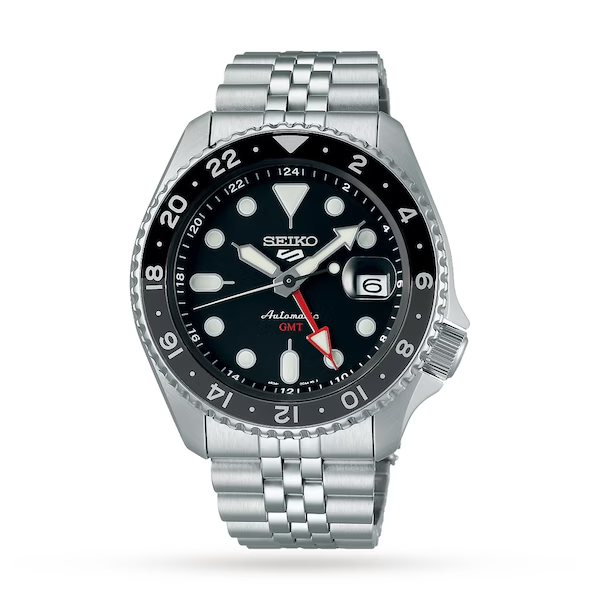
The SRPD line is the modern successor to the beloved (and discontinued) SKX, and it remains the single most-recommended automatic watch under $500 for good reason.
The 42.5mm stainless steel case houses Seiko’s proven 4R36 caliber, which offers roughly 41 hours of power reserve, hacking (the ability to stop the seconds hand for precise time-setting), and hand-winding capability.
Despite the 42.5mm diameter, the lug-to-lug measurement sits around 46mm, so it wears comfortably on wrists smaller than you’d expect.
Why I recommend it: It’s the most complete introduction to mechanical watches available. You get a day-date display, a unidirectional bezel, 100m water resistance, and Seiko’s LumiBrite lume, all backed by a movement that’s been refined for decades and can be serviced by nearly any watchmaker on earth.
Pros: Genuinely reliable movement, huge range of dial colors and bezel combinations, excellent parts availability, and comfortable case shape despite the large diameter.
Cons: Hardlex crystal instead of sapphire will show hairline scratches over time. No screw-down crown, so it’s water-resistant rather than dive-rated in practice. Finishing is basic — brushed surfaces with minimal polish.
Ideal buyer: Anyone buying their first automatic watch, or anyone who wants a rugged daily-wear piece they won’t baby.
Movement: Automatic Caliber 4R36, 24 jewels, 21,600 vph, ~41-hour power reserve
Case size: 42.5mm, 13.4mm thick
Water resistance: 100m
Price range: $230–$300
Styling advice: Wears best with casual and smart-casual outfits — jeans, chinos, a field jacket. Not the pick for a suit.
Value rating: 9.5/10
2. Seiko 5 Sports GMT (“Blueberry”) — Best Affordable GMT
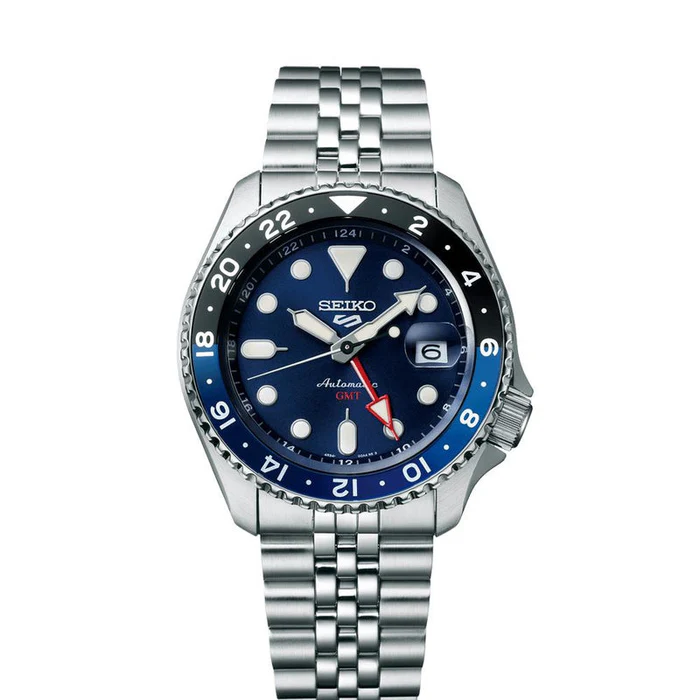
When Seiko introduced the SSK series, it put a real dual-timezone complication into an affordable automatic for the first time.
The nickname “Blueberry” references a blue dial, jubilee-style bracelet, and the 4R34 caliber — a caller GMT movement, meaning the GMT hand jumps independently while the main hands stay put, which is the more useful implementation for frequent flyers tracking a home time zone.
Why I recommend it: True GMT function at this price simply didn’t exist a few years ago. If you travel regularly, do business across time zones, or just love the aesthetic of a GMT hand, this is the entry point.
Pros: Legitimate travel complication, striking blue dial with LumiBrite lume, jubilee bracelet feels more premium than the price suggests.
Cons: At 42.5mm with a busier dial, it can look large and cluttered on smaller wrists. Hardlex crystal again, not sapphire. Some buyers find the GMT hand fiddly to set correctly on the first try.
Ideal buyer: Frequent travelers, remote workers coordinating across time zones, or GMT enthusiasts who don’t want to spend luxury money.
Movement: Automatic Caliber 4R34, 24 jewels, 21,600 vph, ~41-hour power reserve
Case size: 42.5mm
Water resistance: 100m
Price range: $400–$475
Styling advice: Casual to business-casual. The blue dial pairs especially well with navy and gray.
Value rating: 9/10
Read also: 15 Luxury Watch Brands That Are Actually Worth the Investment
3. Seiko Presage Cocktail Time — Best Dress Watch Under $500
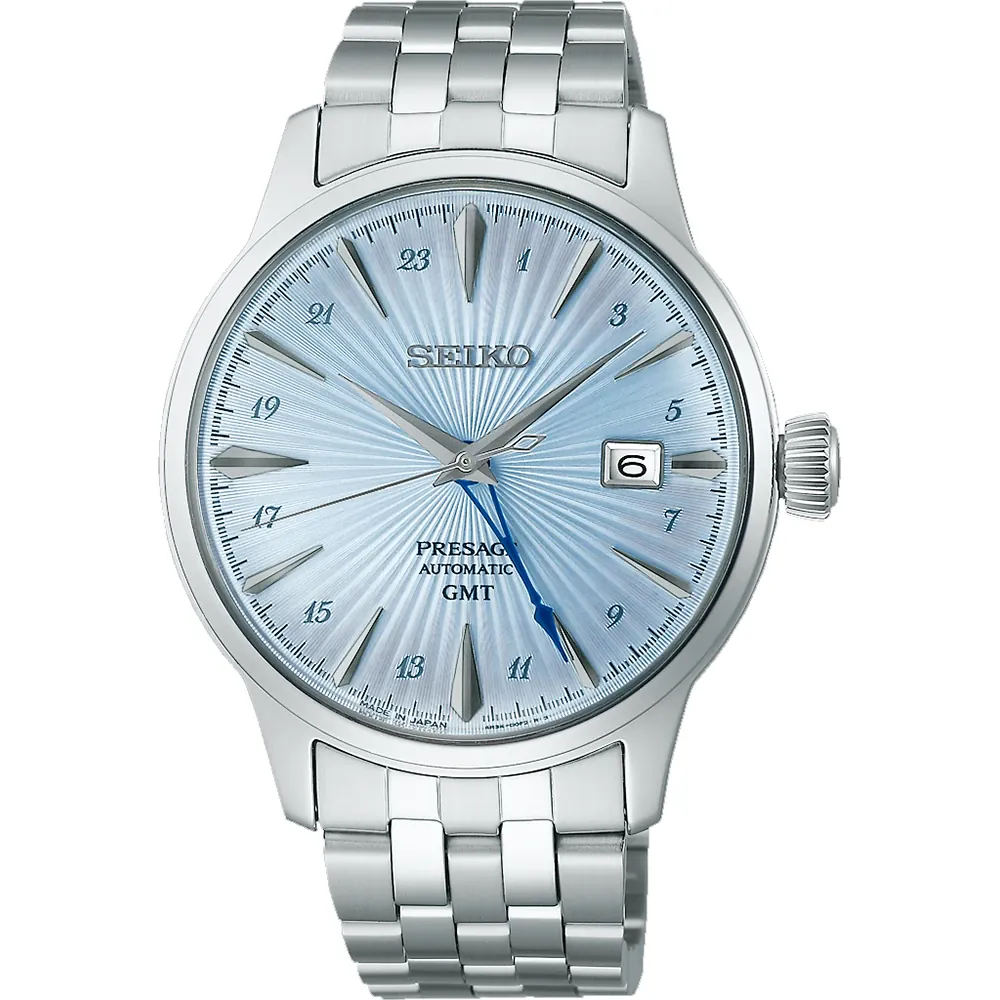
The Presage line is where Seiko applies its artisan-dial expertise to genuinely elegant watches, and the Cocktail Time is the standout. Named for its dial finishing techniques inspired by Japanese bartending culture, it has a domed, sunburst dial that shifts color and texture as it catches light — something no photo fully captures.
Why I recommend it: Nothing else on this list looks as intentionally dressy. It’s the watch for a wedding, a dinner reservation, or an office that expects a bit of polish.
Pros: Genuinely elegant dial work rarely seen below $1,000, day-date function, exhibition caseback showing the movement.
Cons: Only 30m water resistance — this is not a watch for the pool or the shower. The 40.5mm case with a domed crystal can be a bit tall for slim-cuff shirts.
Ideal buyer: Someone who wants one genuinely elegant piece and already owns a tool watch for everything else.
Movement: Automatic Caliber 4R35, 23 jewels, ~41-hour power reserve
Case size: 40.5mm
Water resistance: 30m
Price range: $400–$450
Styling advice: Suits, sport coats, and anything requiring a leather strap. Skip it for the gym or beach.
Value rating: 8.5/10
4. Seiko Turtle SRPE93 — Best Vintage-Inspired Dive Watch
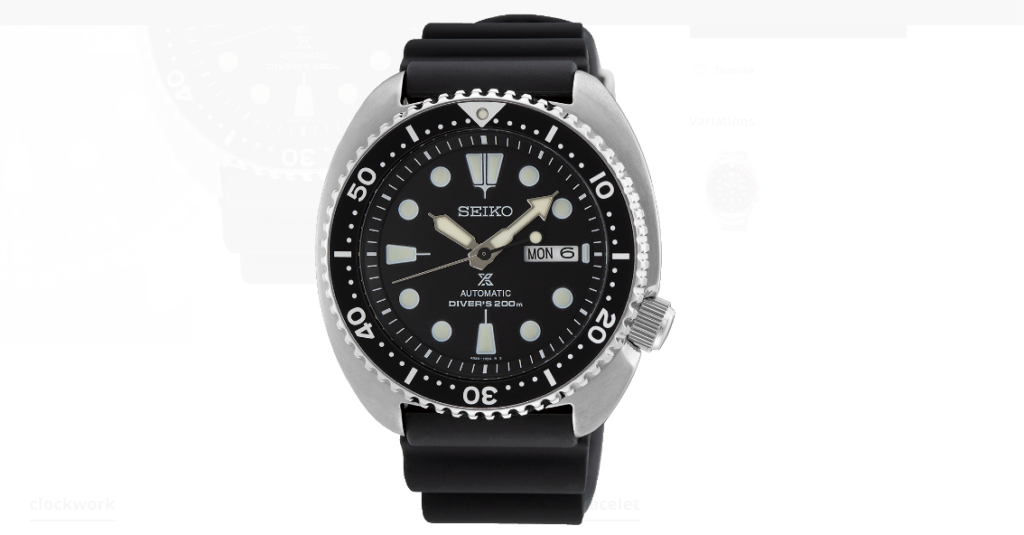
The “Turtle” nickname comes from the cushion-shaped case that made the original 1970s Seiko divers legendary. The modern SRPE93 keeps that unmistakable silhouette while bringing genuinely useful upgrades: a screw-down crown, 200m water resistance, and Seiko’s tsunami-motif solid caseback.
Why I recommend it: It’s the most historically grounded dive watch on this list, tracing its design directly to watches actually worn in the ocean decades before “dive watch” became a fashion category.
Pros: Real 200m water resistance with a screw-down crown, unmistakable design heritage, comfortable despite the large 45mm case thanks to the cushion shape.
Cons: 45mm plus a thick case will overwhelm smaller wrists. Hardlex crystal, not sapphire.
Ideal buyer: Dive watch enthusiasts and anyone with a 7-inch-plus wrist who wants a genuine tool watch with vintage character.
Movement: Automatic Caliber 4R36, 21,600 vph, ~41-hour power reserve
Case size: 45mm
Water resistance: 200m
Price range: $400–$460
Styling advice: Weekend and outdoor wear. It’s a tool watch first, everything else second.
Value rating: 8/10
5. Orient Bambino — Best Classic Dress Watch Value
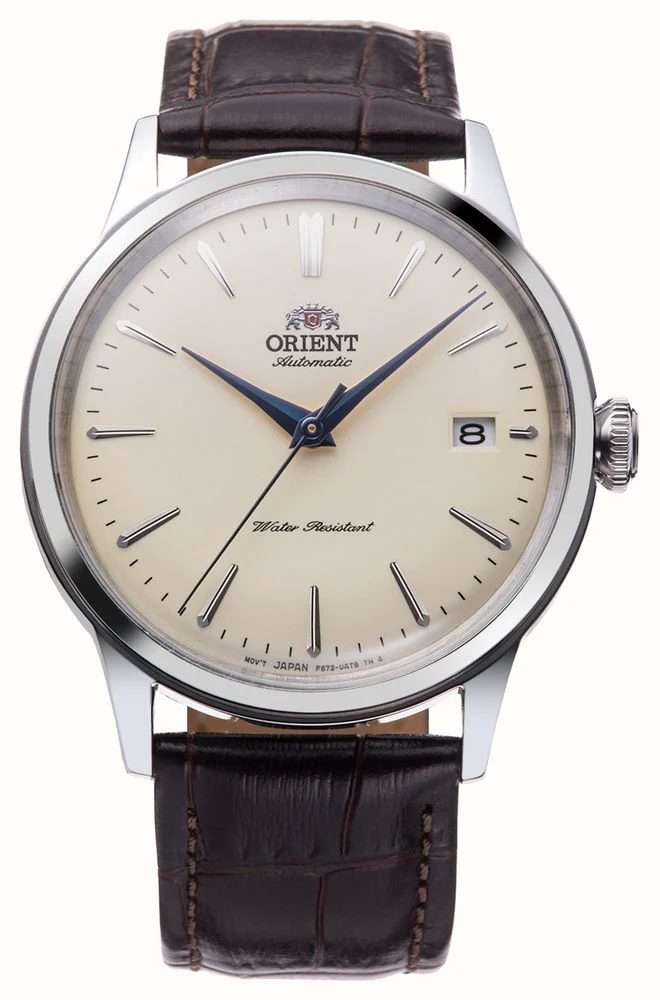
If Seiko’s Presage feels like a stretch, the Orient Bambino is the budget-friendly answer to the same itch. Orient (owned by Seiko Epson, though it operates independently) builds its own in-house automatic movements, and the Bambino wraps one in a genuinely handsome, domed-crystal dress case.
Why I recommend it: It’s hard to find a better-looking automatic dress watch for the money. The visible movement through the caseback and the vintage-domed crystal both feel like details from a much pricier watch.
Pros: In-house movement, excellent price-to-looks ratio, comfortable 40.5mm case that suits most wrists.
Cons: Only 30m water resistance, and accuracy on Orient’s movements tends to run a bit looser than Seiko’s — expect ±15-25 seconds a day rather than a tighter spec.
Ideal buyer: Someone buying their first dress watch on a tight budget, or anyone building a rotation who needs an affordable formal option.
Movement: Automatic, in-house caliber, hand-winding capable
Case size: 40.5mm
Water resistance: 30m
Price range: $200–$270
Styling advice: Business and formal wear. Pairs beautifully with a leather strap and a suit.
Value rating: 9/10
6. Orient Kamasu (Mako 3) — Best Budget Dive Watch
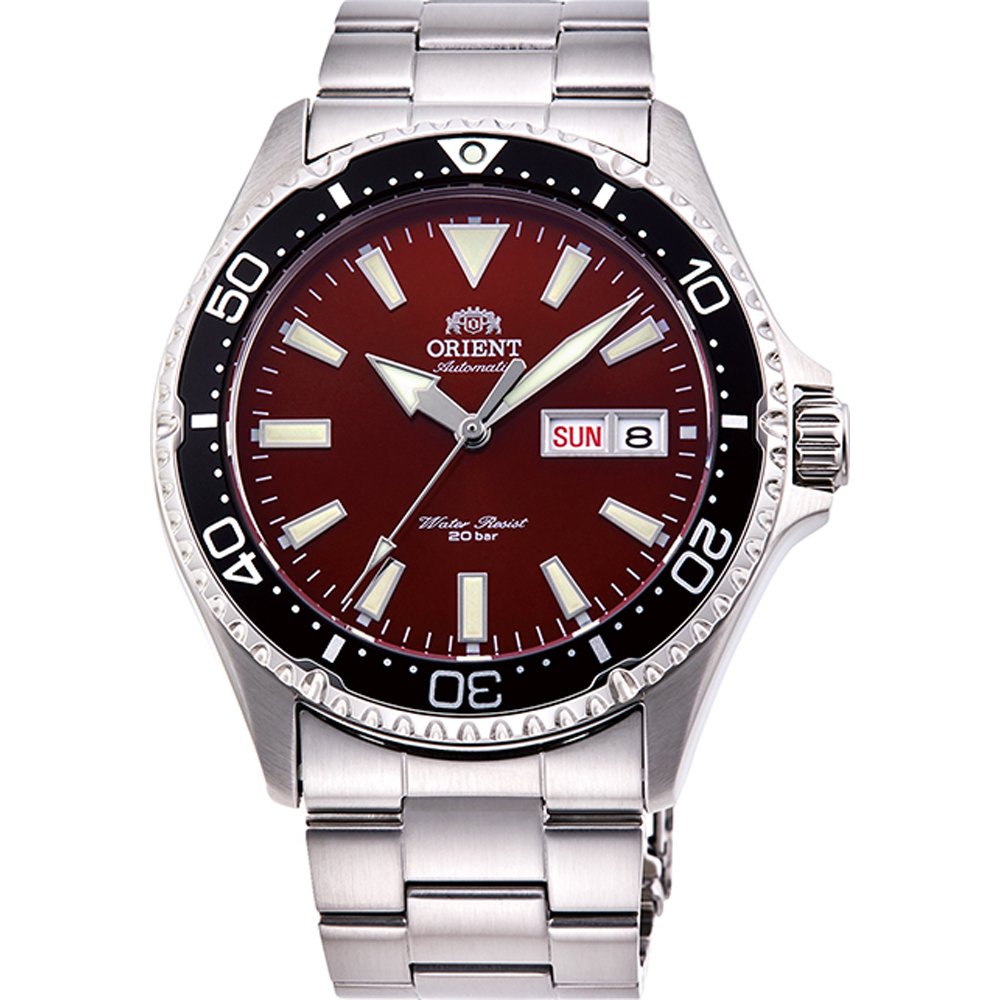
Orient’s 70-year dive watch heritage shows up clearly in the Kamasu. It runs Orient’s in-house F6922 movement — hand-winding and hacking, which is unusual to find at this price — inside a 41.8mm case with genuine 200m water resistance and a screw-down crown.
Why I recommend it: For buyers who actually want to swim or dive rather than just look like they might, this is one of the few sub-$350 watches with the real hardware to back it up.
Pros: True dive specs (screw-down crown, 200m WR), sapphire crystal on most references, hacking and hand-winding movement.
Cons: Finishing is a step below Seiko’s equivalents, and the bezel action can feel loose out of the box.
Ideal buyer: Active swimmers and casual divers who don’t want to spend $600+ on a Seiko Prospex.
Movement: Automatic Caliber F6922, 22 jewels, hand-winding, ~40-hour power reserve
Case size: 41.8mm
Water resistance: 200m
Price range: $290–$330
Styling advice: Casual and outdoor wear, polos, weekend gear.
Value rating: 8.5/10
7. Citizen Tsuyosa Automatic — Best Integrated Bracelet Watch
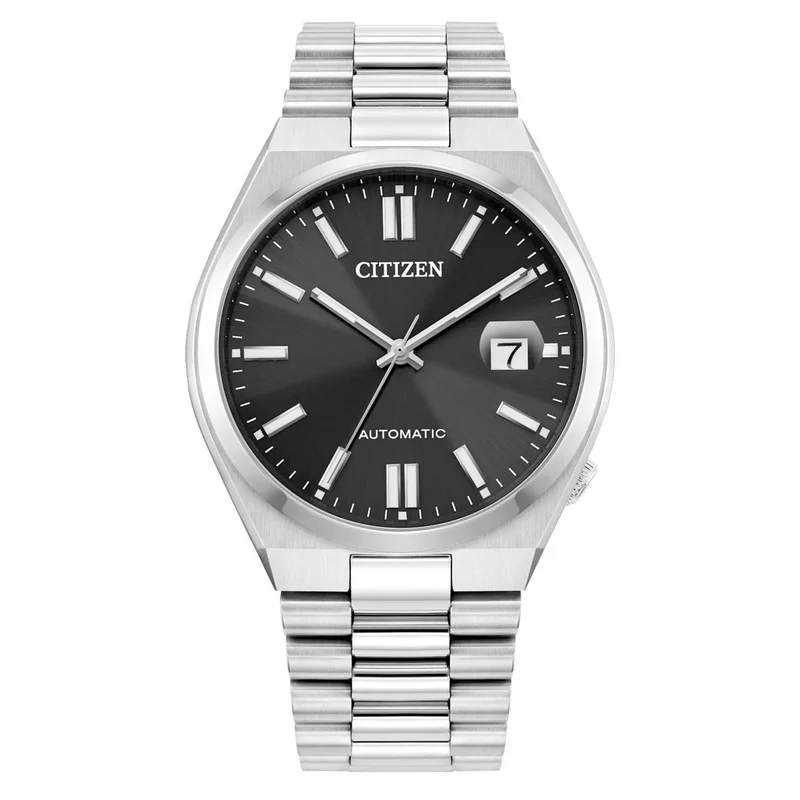
The integrated-bracelet sports watch trend, popularized by the likes of Audemars Piguet’s Royal Oak, has trickled all the way down to this price point, and the Tsuyosa is the best execution of it under $500. The 40mm case tapers seamlessly into a matching bracelet with alternating brushed and polished surfaces, and the automatic Caliber 8210 movement is visible through a sapphire exhibition caseback.
Why I recommend it: It’s genuinely rare to find a mechanical movement in this design category below $500 — most competitors at this price rely on quartz. The Tsuyosa gives you the fashionable integrated-bracelet look with real mechanical credibility.
Pros: Sapphire crystal front and back, integrated bracelet that looks far more expensive than its price, versatile enough for the office or the weekend.
Cons: Only 50m water resistance, so it’s a splash-safe watch rather than a swimming watch. The recessed crown at 4 o’clock can be fiddly to grip.
Ideal buyer: Someone chasing the “affordable Datejust” or integrated-sport-watch look without the wait list or the five-figure price tag.
Movement: Automatic Caliber 8210, ~42-hour power reserve
Case size: 40mm
Water resistance: 50m
Price range: $290–$475 (MSRP $475, frequently discounted)
Styling advice: Office-to-evening versatility. Works under a dress shirt cuff and just as well with a t-shirt.
Value rating: 9/10
8. Citizen Eco-Drive Weekender (Garrison) — Best Low-Maintenance Field Watch
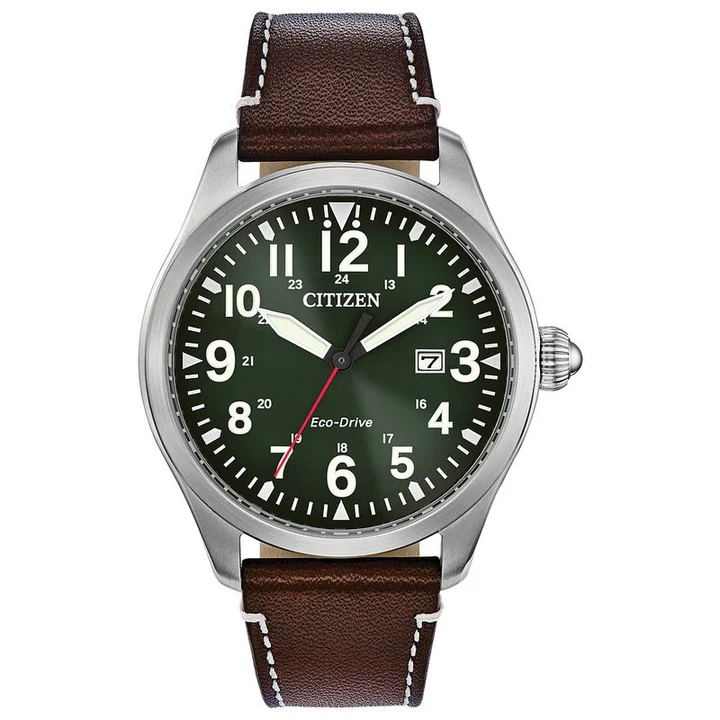
If winding a watch every morning sounds like a chore rather than a ritual, Citizen’s Eco-Drive technology solves that problem entirely. It’s solar-powered, so there’s no battery to replace and no crown to wind — just wear it, and light keeps it running indefinitely.
Why I recommend it: This is the watch you recommend to someone who wants a genuinely good timepiece but doesn’t want to think about it. Clean field-watch dial, legible at a glance, and durable enough for daily abuse.
Pros: Never needs a battery, 100m water resistance, straightforward field-watch design that goes with everything.
Cons: Quartz movement means no mechanical charm — the second hand sweeps in the typical quartz “tick,” not the smooth glide of an automatic. Design is intentionally understated, which some buyers find a little plain.
Ideal buyer: Someone who wants a “set it and forget it” everyday watch, particularly outdoorsy types who don’t want maintenance downtime.
Movement: Eco-Drive solar quartz
Case size: 42mm
Water resistance: 100m
Price range: $200–$250
Styling advice: Everyday casual and outdoor wear.
Value rating: 8.5/10
9. Citizen Eco-Drive Chandler Chronograph — Best Affordable Chronograph
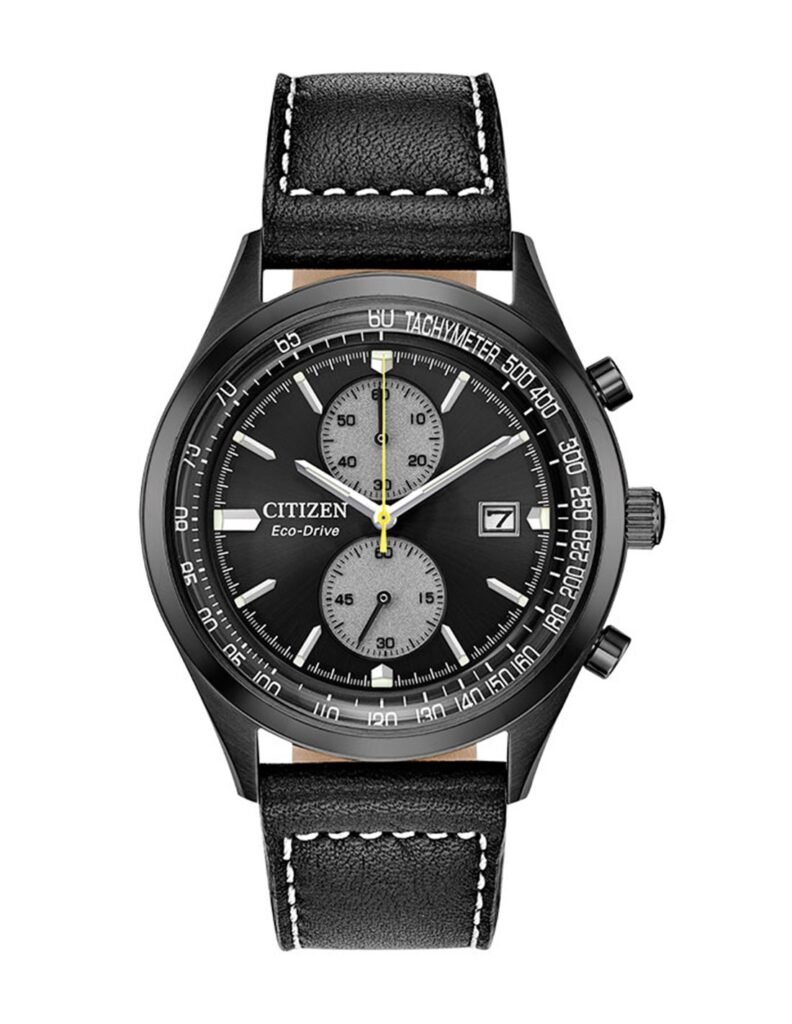
For a dressier chronograph that still runs on light rather than batteries, the Chandler pairs a 42mm steel case with a blue sunburst dial and a rich brown leather strap. The chronograph functions are accurate and the Eco-Drive movement means you’ll never deal with a dead battery mid-timing.
Why I recommend it: Chronographs at this price are usually either cheap quartz with a plasticky feel or automatic chronographs that blow past $500 fast. The Chandler threads the needle with genuine build quality and zero maintenance.
Pros: Solar-powered reliability, versatile blue-and-brown color combination, functional chronograph sub-dials.
Cons: The leather strap will need replacing eventually and isn’t ideal for water exposure despite the case’s 100m rating.
Ideal buyer: Office wear and date-night versatility for someone who wants a chronograph without commitment to winding or battery changes.
Movement: Eco-Drive solar quartz chronograph
Case size: 42mm
Water resistance: 100m
Price range: $220–$260
Styling advice: Business casual, dinner, and date nights. The leather strap makes it more formal-leaning than the Weekender.
Value rating: 8/10
10. Citizen Zenshin — Best Understated Everyday Watch
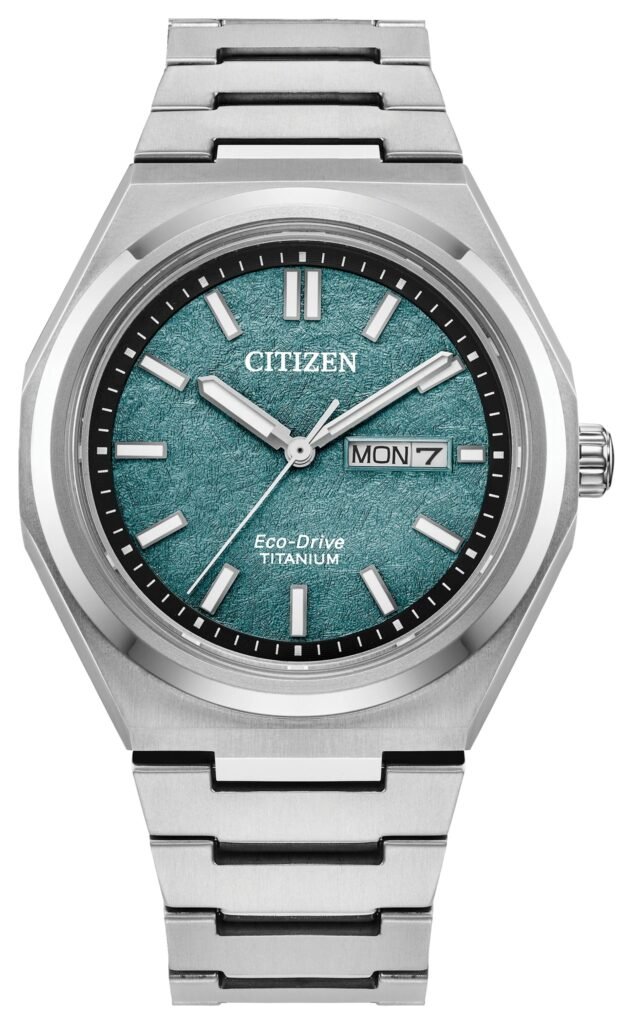
Less flashy than the Tsuyosa, the Zenshin is for buyers who want a genuinely refined automatic without a loud dial or an obvious design story. It’s built with lightweight Super Titanium that looks and feels like steel but resists scratches better and wears noticeably lighter on the wrist.
Why I recommend it: It’s a watch enthusiast’s quiet favorite — the kind of piece that photographs modestly but impresses in person once you notice the finishing and the lightness.
Pros: Super Titanium construction resists scratching far better than stainless steel, no-date dial keeps things clean and symmetrical, comfortable all-day wear.
Cons: The no-date design is a dealbreaker for buyers who want that functionality. 50m water resistance limits it to splash-safe use only.
Ideal buyer: Minimalists and buyers who prioritize comfort and understatement over brand recognition.
Movement: Automatic
Case size: 39mm
Water resistance: 50m
Price range: $300–$375
Styling advice: Works equally well with a suit or a t-shirt thanks to its restrained design.
Value rating: 8/10
11. Tissot PRX Quartz 40mm — Best Swiss-Made Value
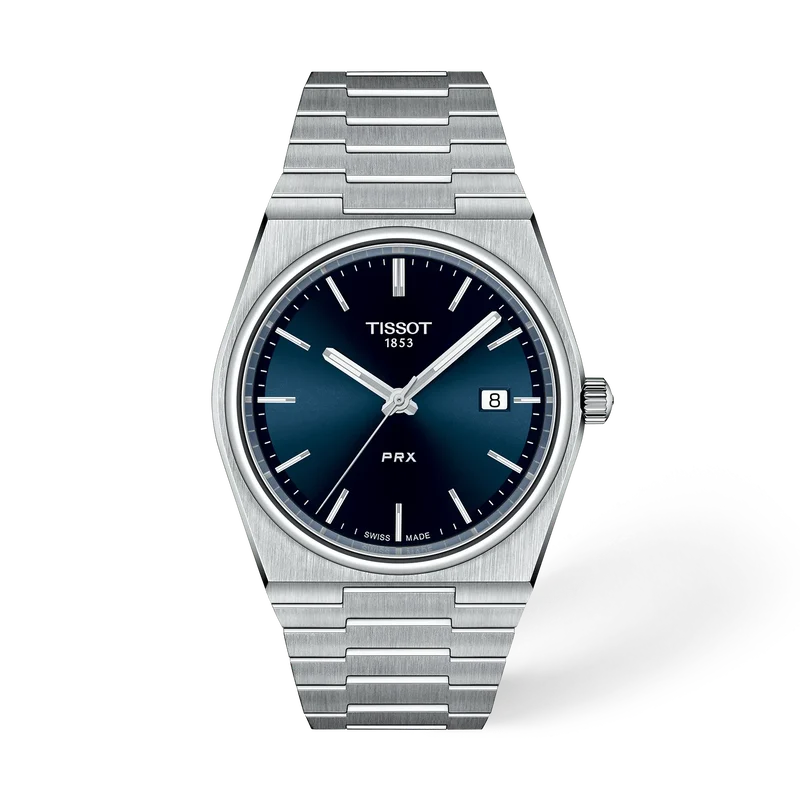
The Tissot PRX revived the integrated-bracelet sport-luxury look for the modern era, and the 40mm quartz version remains one of the smartest Swiss buys under $500. The Swiss-made F06.115 quartz caliber offers hour, minute, second, and date functions with the kind of long-term accuracy that automatic movements simply can’t match.
Why I recommend it: You get genuine Swiss manufacturing, sapphire crystal, and a design that’s been widely praised across the watch community — all for less than a mid-range smartphone.
Pros: Swiss Made designation, sapphire crystal, faceted integrated-bracelet case that punches well above its price visually, quartz reliability with a multi-year battery life.
Cons: No mechanical movement, which will disappoint buyers specifically chasing the automatic experience (the Powermatic 80 automatic version exists but costs $675+, well outside this budget). 100m water resistance but the quick-release strap system means it’s not built for serious diving.
Ideal buyer: Style-focused buyers who want Swiss credentials and don’t need a mechanical movement to feel satisfied.
Movement: Swiss quartz Caliber F06.115
Case size: 40mm, 10.4mm thick
Water resistance: 100m
Price range: $375–$425
Styling advice: The most versatile watch on this list — genuinely works from the office to a night out.
Value rating: 9/10
12. Tissot Seastar 1000 Powermatic 80 — Best Swiss Automatic Diver
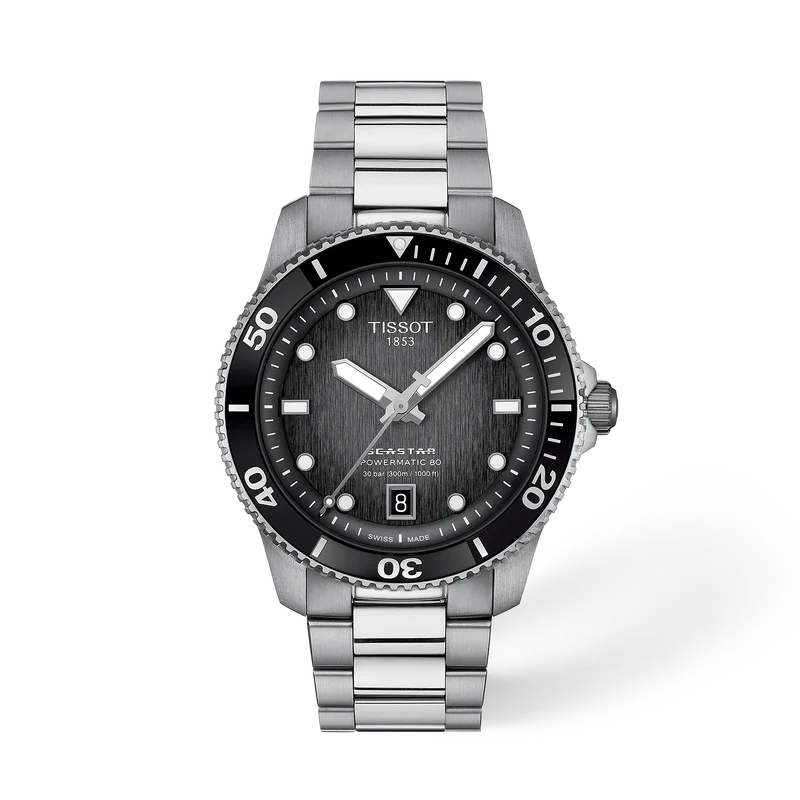
This is the most fully specified dive watch on the entire list: Swiss Made, ceramic unidirectional bezel, screw-down crown and caseback, sapphire crystal, and a genuine 300m water resistance rating. The Powermatic 80 movement inside delivers an 80-hour power reserve and uses a silicon balance spring, which makes it more resistant to magnetism and shock than a standard Swiss mechanical.
Why I recommend it: If you want a Swiss diver that could actually survive real diving, this is about as close to the front door of that world as $500 gets you.
Pros: Genuine 300m water resistance, ceramic bezel that won’t fade, 80-hour power reserve, quick-release bracelet system.
Cons: This is the one watch on this list that regularly sits right at or just above the $500 line depending on strap choice and current promotions — budget-conscious buyers should watch for sales. The 43mm case is unapologetically large.
Ideal buyer: Serious dive watch enthusiasts who want Swiss engineering without spending $1,000+.
Movement: Automatic Powermatic 80, 80-hour power reserve
Case size: 43mm
Water resistance: 300m
Price range: $495–$575 (watch for sales to land under $500)
Styling advice: Outdoor, casual, and water activities. This is a tool watch that happens to look sharp.
Value rating: 8.5/10
13. Casio G-Shock GM-2100 — Best Tough Watch With a Premium Look
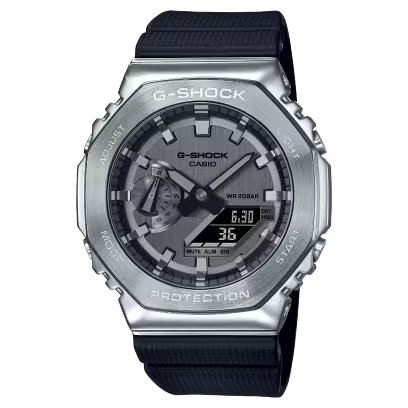
The GM-2100 is the “CasiOak,” nicknamed for its resemblance to the Royal Oak’s octagonal bezel — except this one is built for abuse rather than a vault. The metal bezel over G-Shock’s proven shock-resistant construction gives it a more elevated look than the standard resin GA-2100 while retaining all of G-Shock’s legendary durability.
Why I recommend it: Nothing on this list survives daily punishment better. If your lifestyle involves manual labor, sports, or general recklessness with your wrist, this is the one watch here that genuinely won’t care.
Pros: Exceptional shock resistance, 200m water resistance, stainless steel bezel elevates the look beyond a typical sport watch, and multi-year battery life.
Cons: It’s a quartz digital-analog hybrid, not a mechanical watch, so it won’t scratch the “real watch” itch for enthusiasts. The small LCD display is easy to overlook at a glance.
Ideal buyer: Anyone who wants a nearly indestructible watch for gym, work, and outdoor use.
Movement: Quartz analog-digital, Module 5611
Case size: 45.4mm (49.3mm including crown guards)
Water resistance: 200m
Price range: $150–$180
Styling advice: Streetwear, gym, and casual weekend wear. Not for the office.
Value rating: 9/10
14. Casio G-Shock GA-2100 (“CasiOak”) — Best Budget Tough Watch
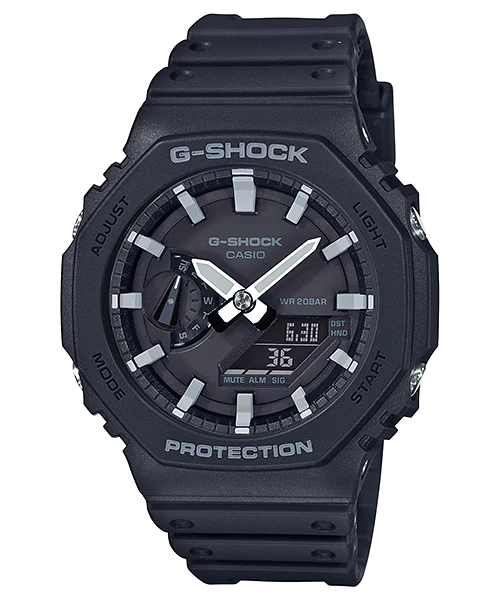
The resin-cased original CasiOak trades the GM-2100’s metal bezel for a lighter, cheaper build — and for a lot of buyers, that’s the smarter choice. It’s slimmer, lighter on the wrist, and comes in dozens of colorways, all while keeping the same 200m water resistance and shock protection.
Why I recommend it: At around $100, it’s the best dollar-for-dollar durability on this entire list, and honestly could headline a “best watches under $200” guide on its own.
Pros: Extremely affordable, lightweight, huge color selection, genuinely tough construction.
Cons: Resin construction feels less premium than the GM-2100’s metal bezel. Small LCD screen limits digital functionality.
Ideal buyer: Budget-conscious buyers, teenagers and young adults building their first collection, or anyone who wants a beater watch to protect a nicer one from daily wear.
Movement: Quartz analog-digital
Case size: 45.4mm
Water resistance: 200m
Price range: $100–$130
Styling advice: Streetwear and casual only.
Value rating: 9/10
15. Casio MDV106 (Duro) — Best Watch Under $100
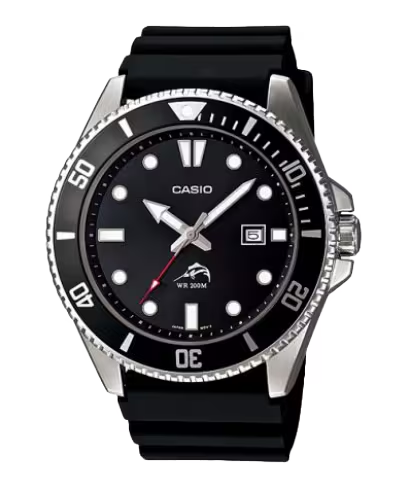
Sometimes called “the Bill Gates watch” after photos surfaced of the tech billionaire wearing one, the MDV106 proves that a genuinely capable dive watch doesn’t require a big budget. The 44mm resin-and-steel case, screw-lock crown, and 200m water resistance are all real, functioning specs — not marketing.
Why I recommend it: For the price of a nice dinner, you get an actual dive-rated watch with quartz reliability and a design that looks far more expensive than it is.
Pros: Genuinely low price, real 200m water resistance with a screw-lock crown, accurate quartz movement, bold design that photographs well.
Cons: Resin band and case feel exactly as cheap as the price suggests up close. Mineral crystal scratches more easily than sapphire or Hardlex.
Ideal buyer: Budget shoppers, backup/travel watches, or anyone testing whether they even like wearing a watch daily before investing more.
Movement: Quartz
Case size: 44mm
Water resistance: 200m
Price range: $70–$90
Styling advice: Casual and outdoor wear exclusively.
Value rating: 9.5/10
16. Praesidus A-11 — Best Field Watch With Real Military Heritage
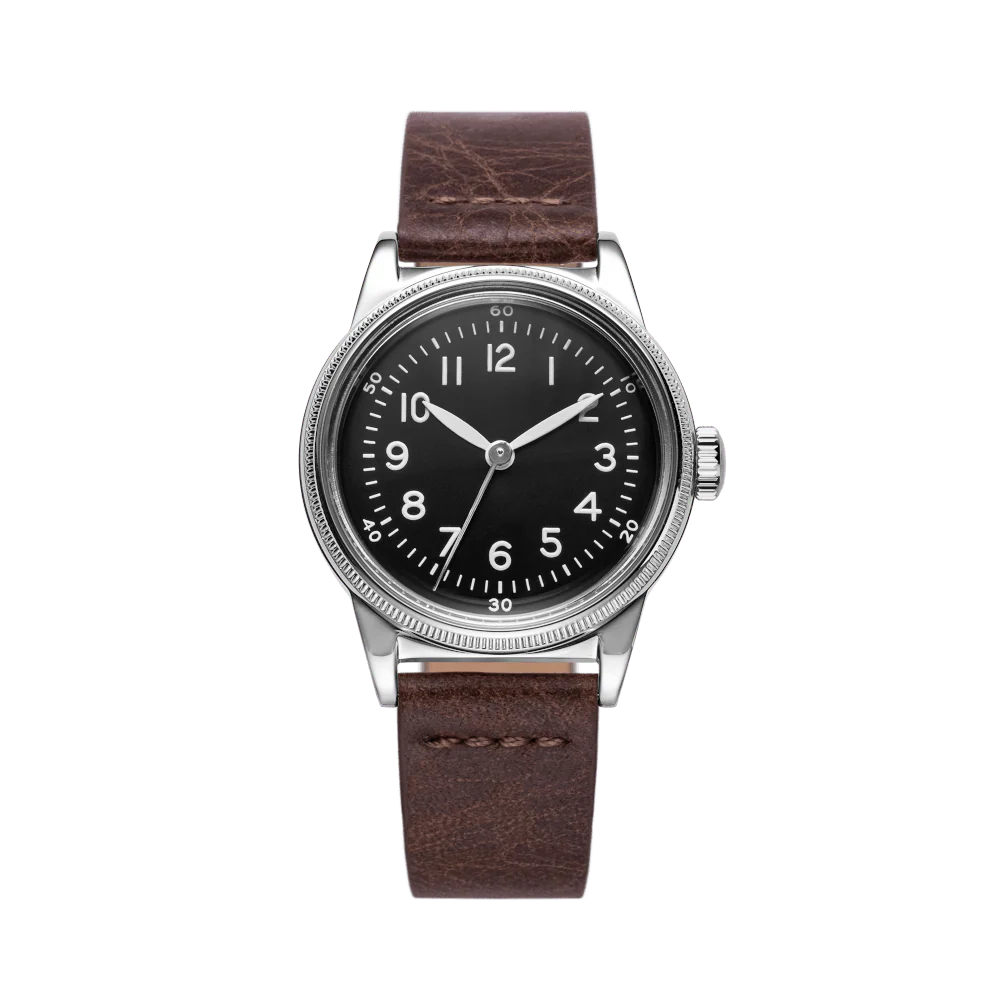
Named after the actual A-11 watch issued to U.S. troops in World War II, Praesidus builds a modern homage that keeps the same disciplined simplicity: black dial, clean numerals, no unnecessary complications. It’s a small brand, but one increasingly well-regarded among field watch enthusiasts for taking the history seriously rather than treating it as a marketing gimmick.
Why I recommend it: This is the watch for buyers who care about the story as much as the specs. It doesn’t try to modernize the A-11 design beyond recognition — it just executes it cleanly.
Pros: Genuine historical design fidelity, simple and highly legible dial, comfortable smaller case size for a field watch.
Cons: Quartz movement will disappoint buyers seeking mechanical authenticity to match the vintage design. As a smaller, direct-to-consumer brand, resale value and long-term parts support are less established than Seiko or Citizen.
Ideal buyer: Military watch history enthusiasts and anyone who wants a compact, no-nonsense field watch.
Movement: Quartz
Case size: 38mm
Water resistance: 50m
Price range: $220–$260
Styling advice: Casual and outdoor wear; the smaller case also suits slimmer wrists well.
Value rating: 8/10
17. Bulova Marine Star — Best Vintage-Inspired Sport Chronograph
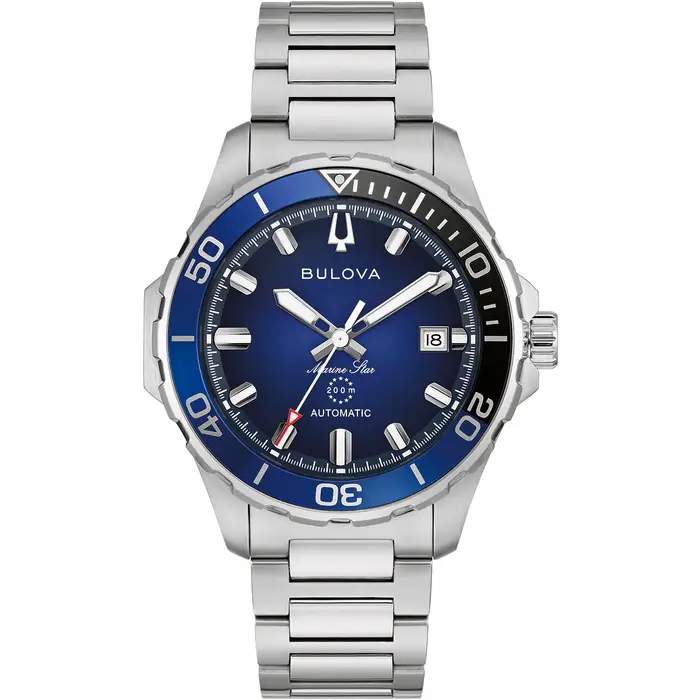
Bulova brings a retro-luxury sensibility to this price range with fluted bezels, day-date displays, and case designs that echo high-end chronographs from decades past. The Marine Star specifically delivers a sport chronograph look with genuine build quality.
Why I recommend it: For buyers who love the aesthetic of vintage luxury chronographs but don’t want to shop the pre-owned market, Bulova delivers that look new, under warranty, for a fraction of the price.
Pros: Distinctive retro styling not found elsewhere on this list, functional chronograph, solid stainless steel construction.
Cons: Quartz movement, and Bulova’s chronograph accuracy, while generally solid, isn’t in the same league as Swiss chronometer-grade movements.
Ideal buyer: Retro design enthusiasts who want a conversation-starting watch without spending vintage-market money.
Movement: Quartz chronograph
Case size: 43mm
Water resistance: 100m
Price range: $275–$350
Styling advice: Casual and business-casual; the fluted bezel dresses it up nicely.
Value rating: 7.5/10
18. Timex Marlin Automatic — Best Vintage Dress Watch Under $250
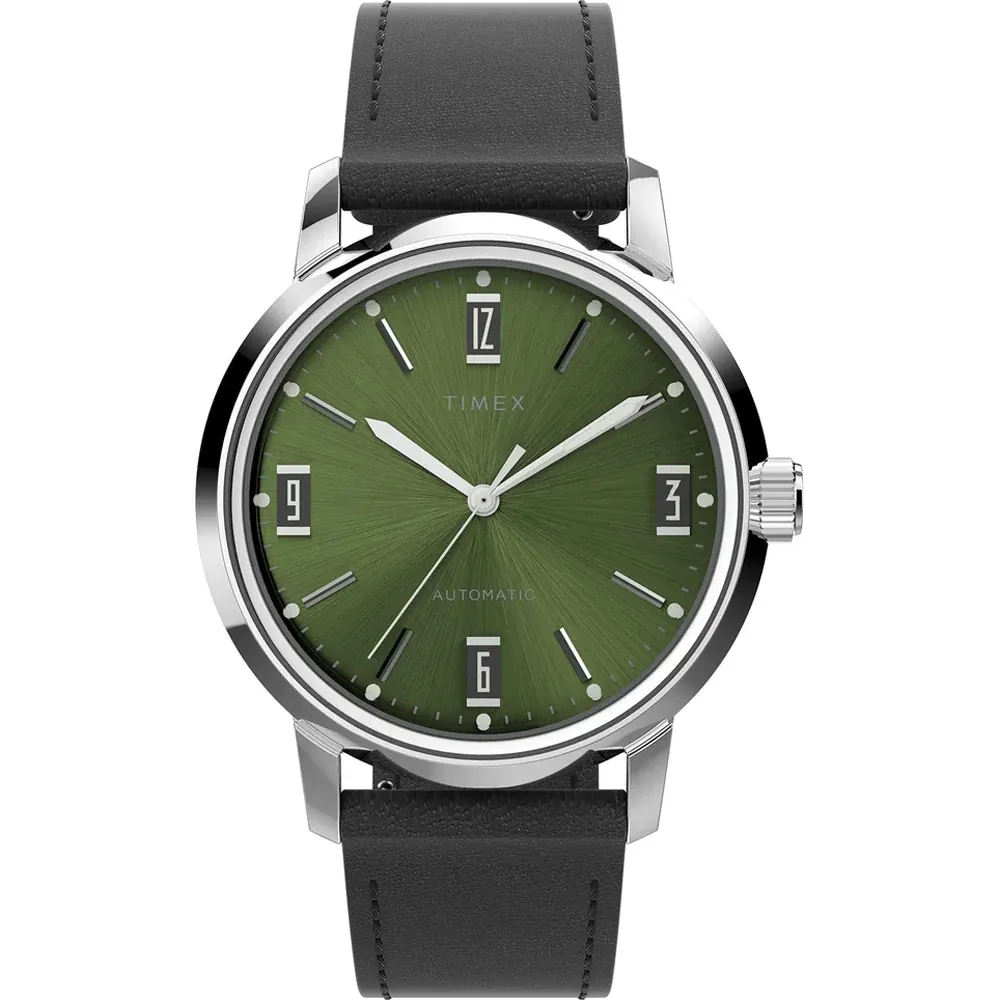
Timex revived its 1960s Marlin design with a genuinely charming small automatic — a 34mm or 40mm case (depending on version) with a domed acrylic crystal and a clean, mid-century dial. It runs on a Miyota automatic movement, making it a real mechanical watch rather than a quartz imitation of one.
Why I recommend it: It’s proof that “vintage-inspired” doesn’t have to mean expensive. The Marlin nails the small-case, thin-profile aesthetic that dominated men’s watches before cases ballooned past 40mm.
Pros: Genuine automatic movement at a very low price, authentic mid-century styling, thin and comfortable under a dress shirt cuff.
Cons: Only 30m water resistance. The acrylic crystal scratches easily, though it also polishes out easily with a bit of toothpaste and a soft cloth — a quirk vintage watch fans actually appreciate.
Ideal buyer: Vintage watch fans on a budget, or anyone who wants a genuinely small, thin dress watch in an era of oversized cases.
Movement: Automatic (Miyota-based)
Case size: 40mm (also available in 34mm)
Water resistance: 30m
Price range: $210–$250
Styling advice: Business and formal wear; not for water exposure.
Value rating: 8.5/10
19. Vaer C5 Field Automatic — Best Direct-to-Consumer Value
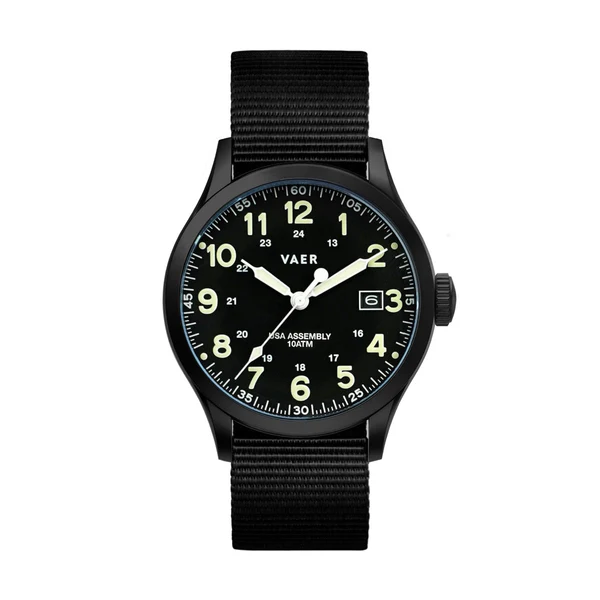
Vaer is a smaller, direct-to-consumer brand that’s built a loyal following by skipping traditional retail markups and passing the savings on as genuine spec upgrades. The C5 Field Automatic uses a Miyota 8215 movement in a clean, no-nonsense field watch case with sapphire crystal — a feature you’d expect to pay considerably more for elsewhere.
Why I recommend it: For buyers comfortable buying watches online directly from the brand rather than at a jewelry counter, Vaer consistently delivers more spec for the dollar than legacy brands can match.
Pros: Sapphire crystal at a genuinely low price point, clean and legible field-watch design, direct-to-consumer pricing model keeps costs down.
Cons: Smaller brand means less resale liquidity and a shorter track record than Seiko or Citizen. Limited retail presence — you generally can’t try one on before buying.
Ideal buyer: Online-savvy buyers who prioritize spec-for-dollar value and don’t need brand recognition.
Movement: Automatic Miyota 8215, ~40-hour power reserve
Case size: 39mm
Water resistance: 100m
Price range: $250–$300
Styling advice: Casual and outdoor daily wear.
Value rating: 8.5/10
20. Victorinox Fieldforce Mechanical — Best Swiss Field Watch Under $500
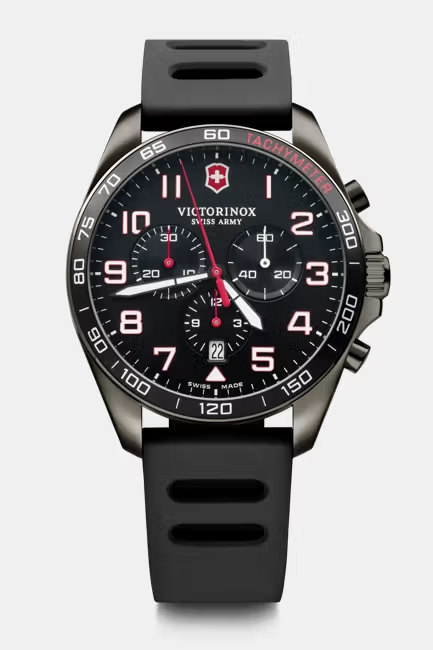
Best known for pocket knives, Victorinox also makes genuinely solid Swiss watches, and the Fieldforce Mechanical brings Swiss manufacturing to the field watch category at a reasonable price. It’s a straightforward, rugged design with legible dial markings and a reliable automatic movement.
Why I recommend it: For buyers who want the “Swiss Made” designation on a field watch specifically — rather than a dress piece or diver — this is one of the few options that checks that box under $500.
Pros: Swiss manufacturing, rugged and legible design, 100m water resistance suitable for genuine outdoor use.
Cons: Less brand cachet in watch enthusiast circles compared to Seiko or Tissot; the design, while solid, isn’t especially distinctive.
Ideal buyer: Outdoor enthusiasts who specifically want Swiss engineering in a field watch package.
Movement: Automatic
Case size: 40mm
Water resistance: 100m
Price range: $325–$400
Styling advice: Outdoor and casual wear.
Value rating: 7.5/10
Understanding Watch Movements: A Quick Primer
If you’re new to this, the terminology gets thrown around a lot without explanation. Here’s the short version.
Quartz movements use a battery to vibrate a quartz crystal at a precise frequency, driving the hands electronically. They’re accurate (typically within seconds per month), low-maintenance, and inexpensive to produce. The tradeoff is that they lack the mechanical romance collectors chase, and batteries eventually need replacing.
Automatic (self-winding mechanical) movements use a rotating weight inside the case that winds the mainspring as you move your wrist throughout the day. No battery, ever — but accuracy is typically looser than quartz, usually within 10-25 seconds per day depending on the movement’s quality, and the watch will stop if left unworn long enough for the power reserve to run out.
Solar (like Citizen’s Eco-Drive) movements are quartz movements powered by a rechargeable cell that charges from any light source, indoor or outdoor. You get quartz accuracy without ever needing a battery change — arguably the most practical option for someone who doesn’t want to think about maintenance at all.
Chronograph simply means the watch has a built-in stopwatch function, usually operated by pushers on the side of the case, with sub-dials tracking elapsed seconds and minutes.
GMT watches add a fourth hand that tracks a second time zone using a 24-hour scale, useful for travelers or anyone coordinating across time zones regularly.
Common Mistakes First-Time Buyers Make
Ignoring lug-to-lug measurement. Case diameter gets all the attention, but lug-to-lug (the distance from one strap attachment point to the other) determines how a watch actually fits your wrist. A 42mm watch with a short lug-to-lug can wear smaller than a 40mm watch with a long one. Always check both numbers, not just the diameter.
Assuming “automatic” means “better.” Automatic movements are romantic and mechanically interesting, but they’re objectively less accurate than quartz. If precise timekeeping matters more to you than the mechanical experience, a good quartz or solar watch is the smarter buy — not a downgrade.
Overlooking crystal type. Sapphire crystal resists scratches far better than mineral glass or Hardlex, but it’s also more prone to shattering on a hard impact (mineral crystal tends to scratch instead of crack). For a watch that’ll take real abuse, that tradeoff is worth thinking through.
Buying based on photos alone. Watches photograph inconsistently — case finishing, dial texture, and true color often look completely different in person. Where possible, see a watch in a store before committing, or at minimum, watch multiple video reviews from different lighting conditions.
Not accounting for strap comfort. A watch head you love can still feel wrong on your wrist if the stock strap or bracelet doesn’t suit you. Budget an extra $20–$40 for a strap swap if needed — it’s the cheapest upgrade in watch ownership.
How to Buy: A Practical Framework
Start with function, not looks. Ask yourself what you actually need the watch to do: swim-proof water resistance, legibility for work, a second time zone, or just something sharp for date nights. Let that answer eliminate half the list before aesthetics even enter the conversation.
Then think about your existing wardrobe. A rugged dive watch looks out of place with a suit, and a delicate dress watch looks equally wrong with gym clothes. Most buyers are better served by one versatile watch (like the Tissot PRX or Citizen Tsuyosa) than by chasing a specialized piece they’ll only wear occasionally.
Would you actually wear this every day? That question filters out more bad purchases than any spec sheet.
Finally, factor in long-term ownership. Automatic watches benefit from an occasional service (every 4-7 years, typically $75-150) to keep the movement running smoothly, though at this price point, many owners simply replace rather than service once a movement eventually wears out — and that’s a financially reasonable choice given the cost of servicing versus the watch’s value. Quartz and solar watches need essentially no maintenance beyond an occasional battery or, for Eco-Drive pieces, nothing at all.
Maintenance and Long-Term Ownership
Automatic watches in this price range use mass-produced movements (Seiko’s 4R and NH series, Citizen’s Miyota-based calibers, ETA-derived Swiss movements) that are durable but not built to the same tolerances as $2,000+ movements. Realistic expectations: 15-25 seconds of daily deviation is normal and not a defect. Wind or wear the watch regularly to keep the power reserve topped up, and avoid strong magnets (phone cases with magnetic closures, laptop speakers) which can magnetize the hairspring and cause timekeeping issues.
Resin and rubber straps on watches like the Casio models will outlast the watch itself. Leather straps on pieces like the Presage or Chandler typically need replacing every 1-3 years with regular wear. Steel bracelets require occasional cleaning to remove built-up grime between links, but otherwise last indefinitely.
Resale value in this category is generally modest — expect to recoup 40-60% of purchase price on the used market for well-known brands like Seiko, Citizen, and Tissot, and considerably less for smaller direct-to-consumer brands. Buy these watches to wear, not to flip.
Frequently Asked Questions
What is the best watch under $500 for a first automatic? The Seiko 5 Sports SRPD series is the most commonly recommended starting point, thanks to its proven 4R36 movement, easy parts availability, and huge range of dial and bezel options to suit personal taste.
Are watches under $500 actually worth buying, or should I save for something more expensive? Yes, absolutely — this price range now includes sapphire crystal, genuine Swiss movements, and real dive-rated water resistance, features that used to require spending far more. Unless you specifically want the prestige of a luxury brand name, there’s minimal functional gap between a well-chosen $400 watch and one costing three or four times as much.
Is a quartz or automatic watch better under $500? Neither is objectively “better” — it depends on priorities. Quartz and solar watches are more accurate and lower-maintenance; automatic watches offer the mechanical experience collectors love, at the cost of needing occasional winding or wear to stay running and looser day-to-day accuracy.
What’s the best dive watch under $500? For genuine dive specs (screw-down crown, 200m+ water resistance), the Orient Kamasu and Seiko Turtle SRPE93 are the strongest picks. For the deepest rating and Swiss manufacturing, the Tissot Seastar 1000 delivers 300m water resistance, though its price sits right at the $500 line.
Can I find a Swiss-made watch under $500? Yes. The Tissot PRX Quartz 40mm and Victorinox Fieldforce Mechanical both carry the Swiss Made designation at accessible prices, and the Tissot Seastar 1000 comes close depending on sales.
How often does an automatic watch need servicing? Most manufacturers recommend a service every 4-7 years, though many owners in this price bracket skip formal servicing given that replacement can be more cost-effective than repair on lower-cost movements.
What water resistance rating do I actually need? 30m is fine for splashes and rain but not swimming. 50-100m covers swimming and light snorkeling. 200m+ is genuine dive territory, appropriate for scuba and serious water sports.
Is sapphire crystal really worth prioritizing? If you’re hard on watches or plan to wear one daily for years, yes — sapphire resists scratches dramatically better than mineral glass or Hardlex. If you’re gentle with your gear or plan to rotate watches frequently, it matters less.
What size watch should I buy? Measure your wrist and check the lug-to-lug measurement (not just case diameter) against similar watches you already own and like. As a rough guide, wrists under 6.5 inches usually suit cases 38-40mm; wrists over 7.5 inches can comfortably wear 42-45mm cases.
Are microbrand watches like Vaer and Praesidus a safe buy? Generally yes for wearing and enjoying, but go in with realistic expectations about resale value and long-term parts support compared to established names like Seiko, Citizen, and Tissot.
What’s the best chronograph under $500? The Citizen Eco-Drive Chandler offers the best balance of style and zero-maintenance solar power; the Bulova Marine Star is the pick for buyers who want more overt vintage-luxury styling.
Should I buy from an authorized dealer or a discount retailer? For warranty coverage and authenticity guarantees, authorized dealers (or direct from brand websites) are the safer choice, especially for automatic watches where warranty service may be needed down the line.
Final Verdict: Which Watch Should You Actually Buy?
If you want one watch that does almost everything well, get the Citizen Tsuyosa or the Tissot PRX Quartz — both are versatile enough for the office, dinner, and the weekend, and both punch well above their price in finishing.
If this is your first mechanical watch and you want to understand what the fuss is about, start with the Seiko 5 Sports SRPD. It’s the most forgiving entry point, with the widest support network if anything ever needs attention.
If you’re on a genuinely tight budget and just need a great everyday watch, the Casio MDV106 or Citizen Eco-Drive Weekender deliver real specs and zero drama for well under $250.
If you want a dedicated dress piece, the Orient Bambino remains the best-looking automatic for the money, and the Seiko Presage Cocktail Time is worth the upgrade if your budget stretches further.
And if you’re a diver or just want the toughest, most capable watch on this list regardless of price ceiling, the Tissot Seastar 1000 is worth waiting for a sale to land under $500.
There’s no single “best” watch here — only the one that matches how you’ll actually use it. Buy for your life, not for the spec sheet, and you’ll end up wearing it for years instead of leaving it in a drawer after the first month.
Read also: