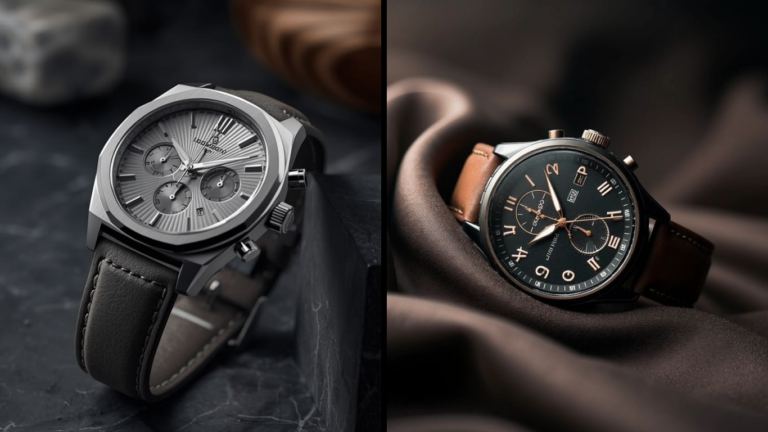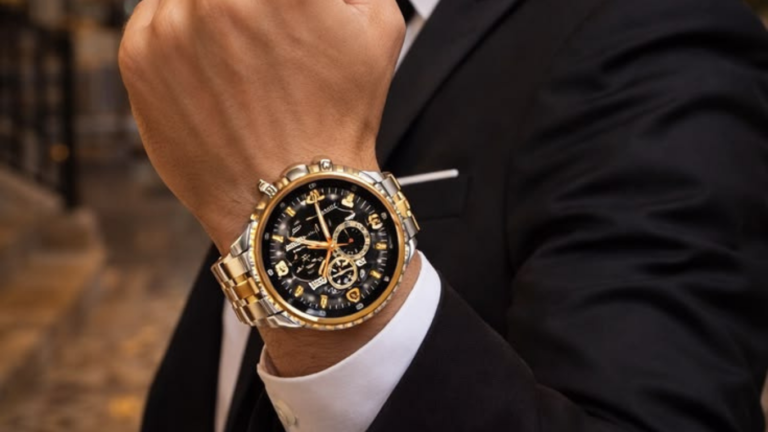
The Best Watches to Wear with a Suit
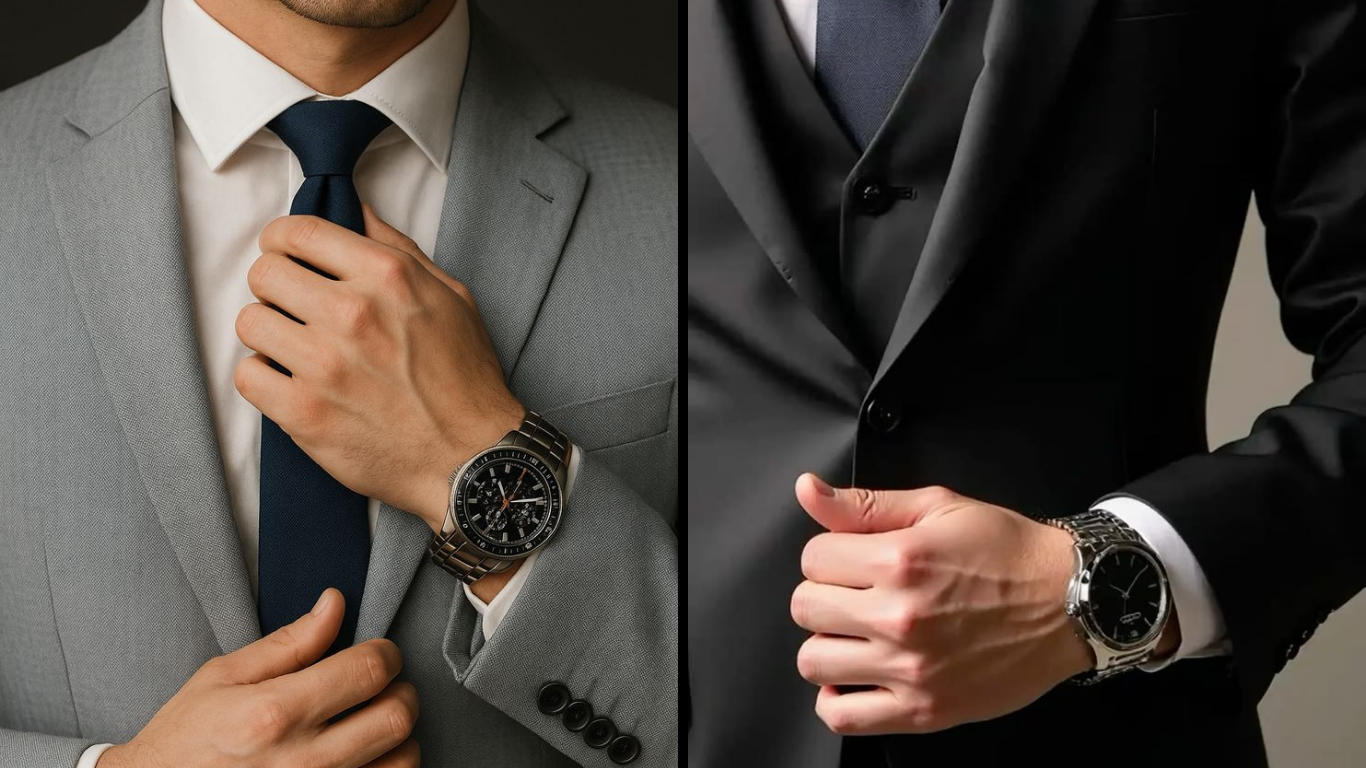
Walk into any menswear forum, and you’ll find the same argument on repeat: someone shows up wearing a 45mm orange-dialed dive watch with a charcoal three-piece, and half the room politely says nothing while the other half can’t help themselves.
The truth is, most watches don’t ruin a suit. But some genuinely do, and knowing the difference is the kind of quiet detail that separates a put-together outfit from one that’s almost there.
The good news is that the “rules” around suits and watches have relaxed a lot over the past decade.
You’re no longer required to own a whisper-thin gold dress watch to look correct in a suit — a clean steel sport watch or a well-chosen chronograph works fine for most business and semi-formal contexts.
But there are still real style principles at play, and they matter more the more formal the occasion gets.
This guide breaks down exactly what makes a watch suit-appropriate, walks through strong picks across every budget from around $250 to five figures, and tells you honestly which watches to leave in the drawer on the days you’re wearing a suit.
What Actually Makes a Watch “Suit-Appropriate”
Four things determine whether a watch reads as correct with tailoring: case size, thickness, dial complexity, and strap or bracelet material. None of these are hard rules, but they’re strong defaults.
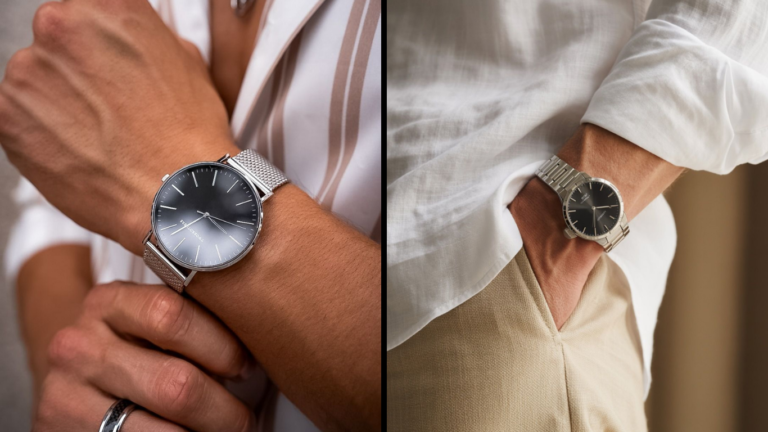
Case size for suit-appropriate watches typically runs 34-42mm. Smaller, for formal black-tie occasions, means more restrained and elegant; larger, toward 40-42mm, still works fine for business suits and reads as more modern. Anything much past 42mm starts to fight the proportions of a tailored jacket sleeve.
Thickness matters more than most buyers expect, mainly because a thick case won’t slide cleanly under a fitted shirt cuff. Dress watches under 10mm disappear invisibly. Everyday sport watches around 11-13mm are still fine for business wear. Chunky dive watches at 14mm-plus tend to bunch fabric and look mismatched with formal tailoring, even when the watch itself is objectively excellent.
Dial complexity should generally decrease as formality increases. A clean three-hand dial in white, silver, or blue is close to foolproof. A chronograph with sub-dials reads as sportier but still works for business settings. Bold colors, oversized numerals, or busy dive-watch bezels clash the harder you lean into black-tie territory.
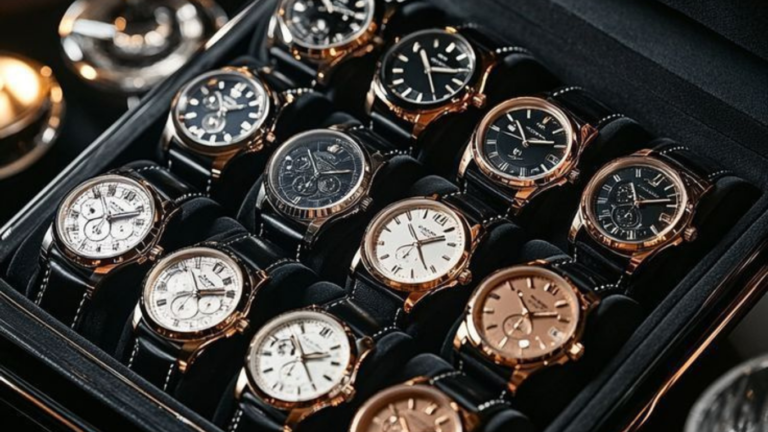
Strap and bracelet choice is the most flexible variable, and often the easiest fix. A dark brown or black leather strap instantly dresses up almost any watch. A polished steel bracelet works for business wear but reads slightly more casual than leather for black-tie. Rubber, NATO, and canvas straps are the ones to avoid entirely with a suit — no exceptions.
What matters more to you — a watch that disappears under your cuff, or one that makes a quiet statement when you check the time? That preference will steer you toward very different picks below.
Quick Comparison by Formality Level
| Occasion | Target Case Size | Max Thickness | Best Strap/Bracelet |
|---|---|---|---|
| Black-tie / formal | 34–38mm | 8–10mm | Black leather, alligator-pattern |
| Business suit, daily office | 36–40mm | 10–12mm | Dark brown/black leather or steel bracelet |
| Business casual, blazer | 38–42mm | Up to 13mm | Steel bracelet, leather, or NATO |
| Wedding guest | 36–40mm | 10–12mm | Leather, steel bracelet acceptable |
Best Watches to Wear with a Suit, by Budget
Budget Tier: Under $500
Orient Bambino — The most commonly recommended starting point for a reason. The 40.5mm case (some references run closer to 38mm) with a domed crystal and clean dial gives you a genuinely elegant look for around $200-270, powered by Orient’s in-house automatic movement. It slips easily under a cuff and pairs beautifully with a navy or charcoal suit on a simple leather strap.
Seiko Presage Cocktail Time — For roughly $400-450, the Presage line brings genuinely artisan-level dial finishing — sunburst textures inspired by Japanese bartending culture — to a price point nothing else really matches. The 40.5mm case and day-date function make it dressy but still practical for daily office wear.
Timex Marlin Automatic — A revived 1960s design with a small, thin case (34mm or 40mm depending on the reference) and a domed acrylic crystal. For around $210-250, it captures a genuinely vintage silhouette that larger modern watches can’t replicate, which makes it a favorite among buyers specifically chasing that mid-century, black-tie-ready look.
Citizen Eco-Drive Classic (quartz) — For buyers who want zero maintenance and a dressy look, Citizen’s solar-powered Eco-Drive classic line delivers clean dials and 100m water resistance for around $200-300, without ever needing a battery change.
Mid Tier: $500–$2,500
Tissot PRX Quartz 40mm — At around $375-425, this straddles budget and mid-tier, but it’s worth calling out specifically here: the Swiss Made designation, sapphire crystal, and integrated-bracelet design work surprisingly well with business suits despite reading sportier than a traditional dress watch. Swap the bracelet for a leather strap, and it dresses up further.
Longines Master Collection — Longines has built its reputation on exactly this category: classic, restrained automatic dress watches with genuine Swiss pedigree, typically starting around $1,900-2,400 depending on complications. The Master Collection’s blue or silver sunburst dials and moon-phase options are a step up in visible craftsmanship from anything in the budget tier.
Nomos Orion — German minimalism at its most refined. The Orion’s hand-winding, in-house Alpha movement sits in a slim 7.9mm case, typically starting around $2,000-2,500 in steel. Its Bauhaus-influenced dial — no unnecessary elements, just clean markers and hands — makes it one of the most versatile dress watches available, equally at home with a suit or a knit polo.
Hamilton Intra-Matic — Hamilton’s vintage-styled automatic dress collection typically runs $900-1,300, offering a genuinely elegant, slightly retro dial design with Swiss-made movements at a price well below the major Swiss houses’ flagship lines.
Luxury Tier: $2,500+
Cartier Tank — Arguably the archetypal dress watch, worn continuously since 1917 by everyone from Cary Grant to modern heads of state. The rectangular case and Roman numeral dial are instantly recognizable as understated luxury. Entry references (Tank Must, typically quartz) start around $3,000-3,500, with mechanical and precious-metal versions climbing considerably higher.
Jaeger-LeCoultre Reverso — The Reverso’s rectangular, reversible case was originally designed to protect the crystal during polo matches, but it’s become one of horology’s most respected dress watch designs. Prices for the Classic line typically start in the $8,000-9,500 range. Its slim profile and Art Deco lines make it a genuine heirloom-tier choice for someone who wears suits professionally and wants a watch to match.
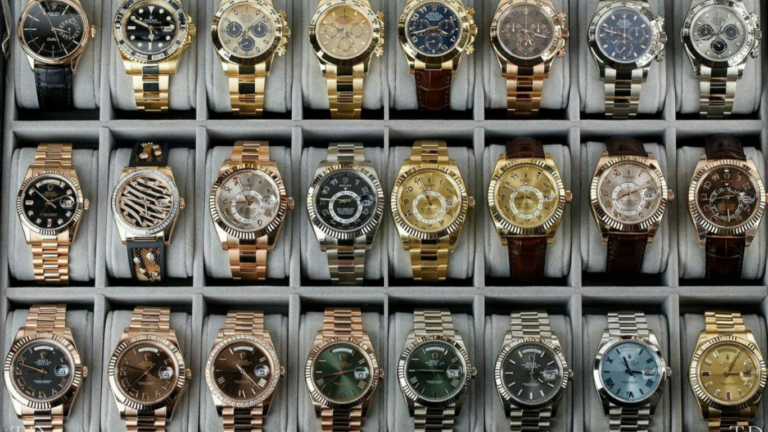
Rolex Datejust — Not a traditional “dress watch” in the ultra-thin sense, but its clean dial options, fluted bezel, and Jubilee or Oyster bracelet make it broadly appropriate from business suits to black-tie, depending on dial and metal choice. As of 2026, steel Datejust models retail around $8,150, with waiting lists common at authorized dealers.
Omega Aqua Terra — A slightly sportier alternative to the Datejust that still reads clean and appropriate with tailoring, particularly in a simple silver or blue dial without the “teak” wave pattern. Retail typically runs $6,200-7,500 depending on size and material, positioning it as a strong one-watch-does-everything option for someone who splits time between the office and weekends.
Patek Philippe Calatrava — The reference point for understated dress watch elegance in high horology. Thin, round, minimal — exactly what a formal dress watch is supposed to be. Pricing starts well into five figures and moves up quickly with complications, putting it firmly in aspirational territory for most buyers, but it’s worth knowing as the benchmark the rest of this category is measured against.
Watches to Avoid Wearing with a Suit
Large dive watches with rotating bezels. A 44mm dive watch with a chunky unidirectional bezel and a rubber strap reads as sporty, no matter how expensive it is. Save it for weekends.
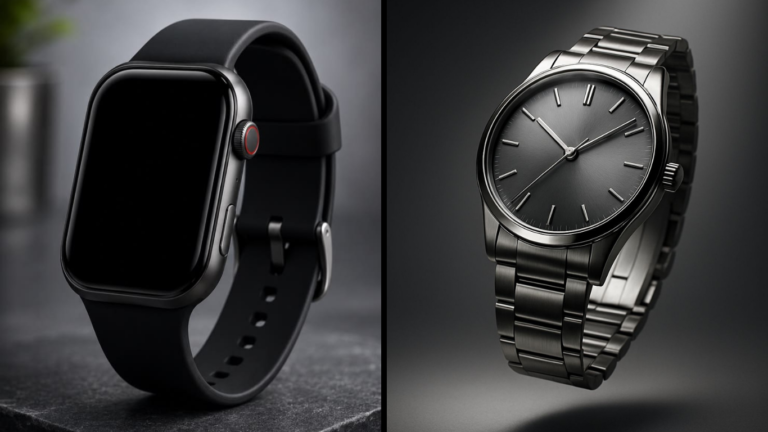
Digital and smartwatches. However capable, a screen on your wrist reads as distinctly informal and out of place with tailoring, particularly in client-facing or formal settings.
Anything on a rubber, NATO, canvas, or overly casual strap. Even an otherwise appropriate watch head gets undermined by the wrong strap. This is the single easiest fix if you already own a watch that’s borderline.
Oversized chronographs with busy dials. A 45mm chronograph stacked with multiple sub-dials and tachymeter scales fights a suit’s clean lines. A simpler, smaller chronograph can still work; an oversized, busy one generally doesn’t.
Novelty and character watches. Anything with cartoon characters, heavy branding, or gimmick functions belongs in a different context entirely.
Read also: 15 Luxury Watch Brands That Are Actually Worth the Investment
Common Mistakes
Assuming any automatic watch looks formal. Movement type has nothing to do with formality — a 44mm automatic dive watch is no more suit-appropriate than a 44mm quartz one. Case size, thickness, and dial design are what matter.
Wearing a watch that’s too big for the sleeve. A watch that doesn’t slide cleanly under a dress shirt cuff will constantly bunch fabric and require awkward adjustment throughout the day — genuinely annoying in meetings.
Matching the metal tone incorrectly. A gold watch with silver cufflinks and a silver belt buckle (or vice versa) creates a small but noticeable inconsistency. Keep metal tones matched across your accessories when dressing formally.
Over-investing in a “special occasion only” watch. Unless you regularly attend black-tie events, a watch you’ll wear twice a year is a less practical purchase than one versatile enough for both the office and the occasional formal event.
Ignoring water resistance trade-offs. Many true dress watches carry only 30m water resistance, meaning no swimming and caution around heavy rain. If you need more real-world durability, prioritize something like the Tissot PRX or Omega Aqua Terra over an ultra-thin dress piece.
How to Choose: A Practical Framework
Start with how often you’ll actually wear it. If suits are a daily uniform for work, prioritize versatility — something in the Tissot PRX, Longines Master Collection, or Omega Aqua Terra range that transitions cleanly from office to weekend. If suits are occasional (weddings, events, rare client meetings), you have more freedom to lean into a dedicated dress piece like a Cartier Tank or Nomos Orion that might feel too formal for daily wear but perfect for those moments.
Next, consider your existing collection. If you already own a rugged everyday watch, a genuinely dressy piece rounds things out better than another sport watch. If this is your first “nice” watch, a versatile option gives you the most mileage.
Would you actually reach for an ultra-thin, 30m water-resistant dress watch on a Tuesday, or would it sit in a drawer until the next wedding invitation? Be honest about that, because it should genuinely shape which tier of this list you shop.
Frequently Asked Questions
What size watch is best to wear with a suit? Generally 36-42mm, with smaller sizes (34-38mm) reading more formal and larger sizes (40-42mm) still working fine for business suits. Anything over 44mm typically looks out of proportion with tailored sleeves.
Can I wear a sports watch with a suit? Yes, within reason. Clean-dialed sport watches like the Rolex Datejust, Omega Aqua Terra, or Tissot PRX work well with business suits. Large dive watches with rotating bezels and rubber straps generally don’t.
Is a leather strap or metal bracelet better with a suit? Both work for business settings, but leather (particularly black or dark brown) is the more traditional and universally safe choice for formal and black-tie occasions specifically.
Do I need a different watch for black-tie events versus everyday business suits? Not necessarily, but it helps. A single versatile watch (like a Longines Master Collection or Tissot PRX) can cover both, while dedicated collectors often keep a separate ultra-thin dress watch specifically for black-tie.
What’s the best affordable watch to wear with a suit? The Orient Bambino remains one of the strongest recommendations under $300, offering a genuinely elegant automatic movement and domed-crystal dress case at an accessible price.
Should the watch match my belt and shoes? The watch strap, not the watch case, is what should coordinate — a brown leather strap pairs with brown belts and shoes, while black leather pairs with black. Metal watch bracelets are more neutral and don’t need to match leather goods.
Is it okay to wear a smartwatch with a suit? Generally not recommended for formal or client-facing settings. A screen on your wrist reads as distinctly casual, regardless of how expensive or capable the device is.
What water resistance do I need for a suit-appropriate watch? 30m is typically sufficient since dress watches aren’t meant for swimming or heavy water exposure. If you want more everyday durability, look toward 50-100m options like the Tissot PRX or Omega Aqua Terra instead of an ultra-thin traditional dress watch.
Does the dial color matter with a suit? Yes, to an extent. White, silver, and blue dials are the safest, most versatile choices. Black dials work well with darker suits. Bright or unusual colors can work with more casual business attire but are riskier for formal settings.
What’s the difference between a “dress watch” and a watch that’s just “suit-appropriate”? A true dress watch is specifically designed for formality — thin, minimal, and usually less water-resistant. A “suit-appropriate” watch is a broader category that includes some sport and chronograph watches with clean enough designs to work in business settings, even if they weren’t purpose-built as dress watches.
Final Verdict
If you want one watch that handles both the office and the occasional formal event without compromise, look at the Tissot PRX Quartz or Longines Master Collection — both are versatile enough to avoid feeling wrong in either direction.
If your budget is tight and you just need something clean and elegant for interviews, weddings, and client meetings, the Orient Bambino remains the best-value entry point, full stop.
If you wear suits professionally, every day, and want a watch that matches that level of polish, the Nomos Orion or Cartier Tank deliver genuine long-term satisfaction — pieces you’ll still be wearing, and still be happy with, a decade from now.
And if you’re building toward a true heirloom-tier dress watch with the budget to match, the Jaeger-LeCoultre Reverso or Patek Philippe Calatrava represent the top of what this category has to offer — watches bought not just to tell time, but to be handed down.
Whatever tier you land in, the core principle doesn’t change: match the watch’s formality to the suit’s formality, keep the strap intentional, and make sure it slides cleanly under your cuff. Everything else is personal taste.
Read also: