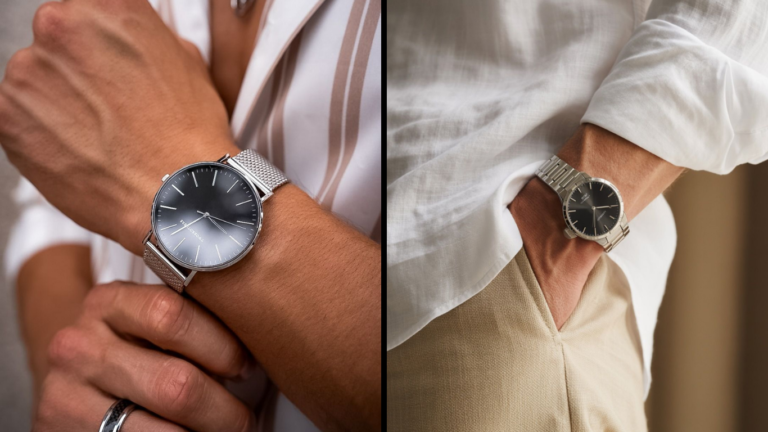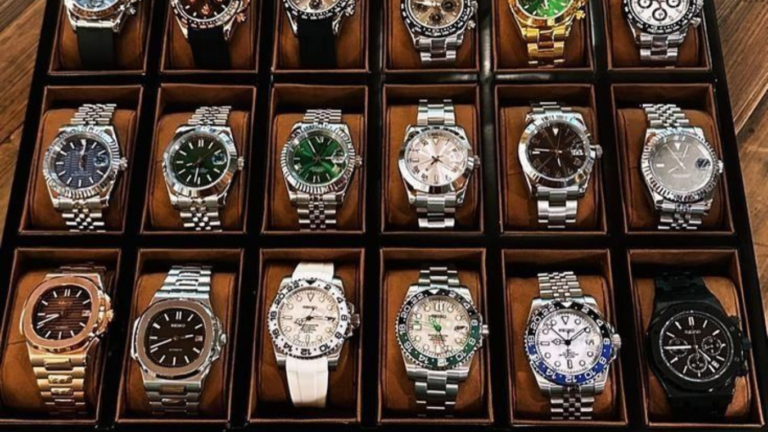
10 Affordable Watches That Look Expensive
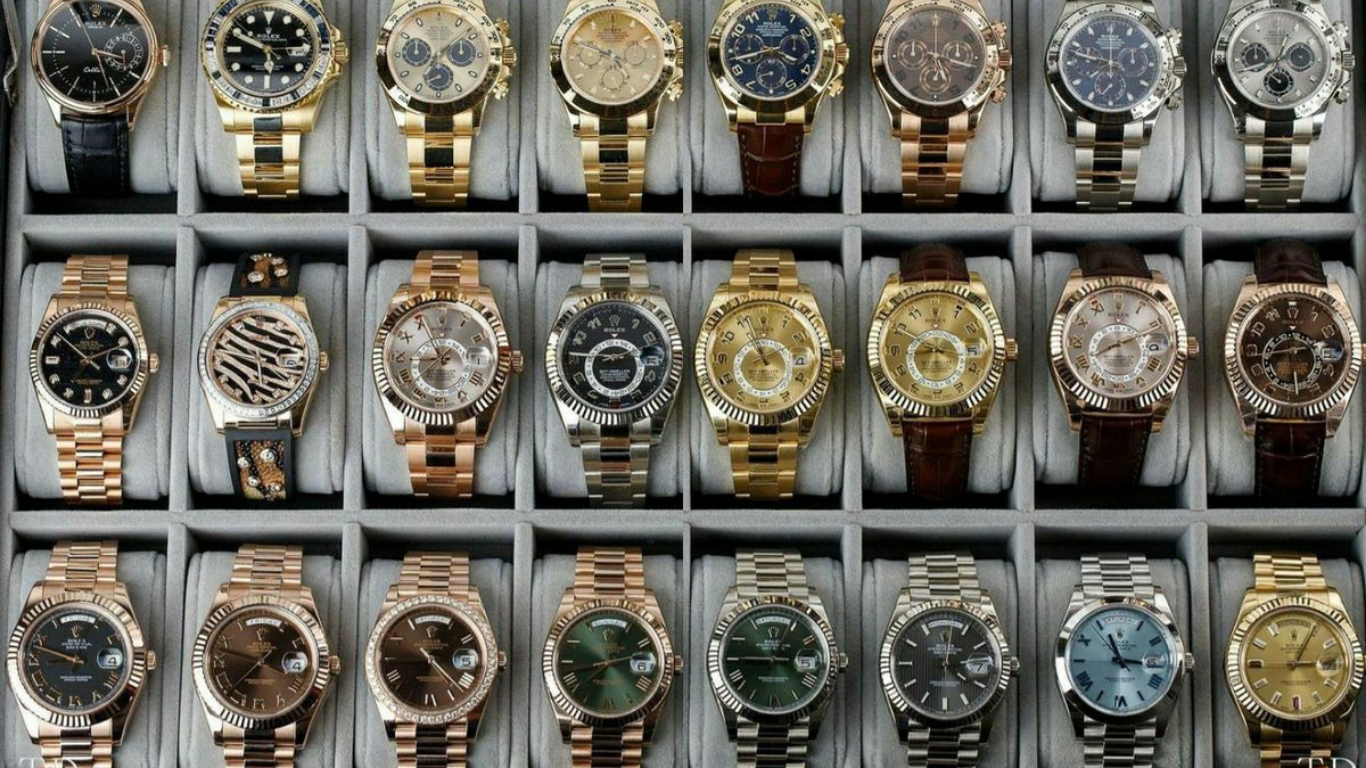
There’s a moment every watch enthusiast remembers — someone glances at your wrist, assumes you dropped a few thousand dollars, and you get to smile and tell them it cost less than a nice dinner for two.
That moment is entirely achievable, and it has nothing to do with luck.
It comes down to knowing which design details actually signal “expensive” to the eye, and which brands quietly nail those details at a fraction of luxury pricing.
I’ve tried on, bought, and lived with a lot of watches in this price bracket, and the gap between “looks cheap” and “looks expensive” almost never comes down to the price tag itself.
It comes down to dial finishing, case proportions, bracelet construction, and how well a brand understands restraint.
This guide walks through ten watches that consistently punch above their price, explains exactly why they pull it off, and tells you honestly where each one falls short — because even the best budget watch has a compromise somewhere.
By the end, you’ll know which of these fits your wrist and lifestyle, what actually makes a watch look expensive versus just look “busy,” and the specific mistakes that make budget watches look cheap even when the price tag says otherwise.
What Actually Makes a Watch “Look Expensive”
Before the list, it’s worth understanding what you’re really evaluating, because price and perceived value aren’t the same thing.
Dial finishing matters more than dial complexity. A clean, well-printed dial with good depth (sunburst finishes, applied indices, a domed crystal) reads as expensive. A busy dial with flat printing and plastic-feeling hands reads as cheap, even at a higher price.
Case proportions and finishing. Sharp, well-polished bevels and a case that doesn’t feel hollow or overly light communicate quality instantly. Cheap watches often get the size right but skip the finishing between brushed and polished surfaces.
Bracelet or strap quality. This is where budget watches most often fall apart, literally. A stamped, hollow-link bracelet with a flimsy clasp undoes an otherwise good watch immediately. A well-machined bracelet or a quality leather strap can single-handedly elevate the whole piece.
Restraint in design. The watches that look most expensive are rarely the busiest. Minimal branding, clean typography, and a coherent design story do more than adding extra sub-dials or oversized logos.
With that framework, here are ten watches that get this right.
The 10 Watches
1. Tissot PRX
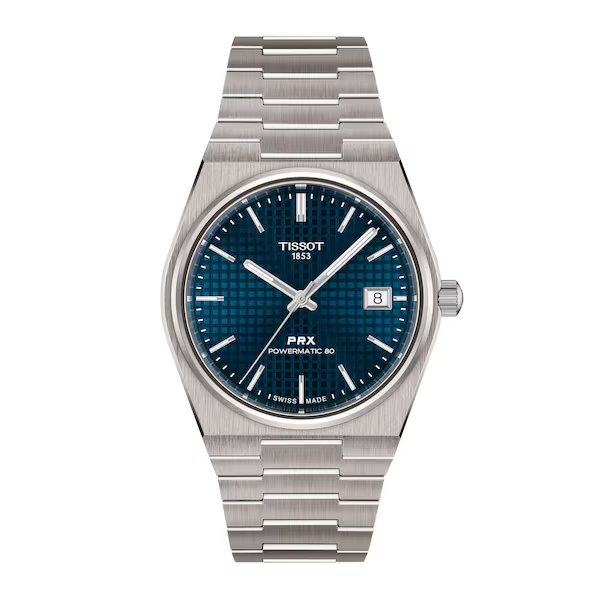
Overview: The PRX brought back a 1978 Tissot design with an integrated bracelet and a tapisserie-pattern dial that’s routinely compared to watches costing five to ten times as much.
Why we recommend it: The integrated steel bracelet with its tapered links is the star here — this is the exact design language that makes a Royal Oak or Nautilus look expensive, executed at a completely different price point. The finishing on the case, particularly the alternating brushed and polished surfaces, is genuinely impressive for the money.
Pros:
- Integrated bracelet with genuinely good finishing for the price
- Distinctive dial texture that photographs and wears beautifully
- Both quartz and automatic (Powermatic 80) versions are available
Cons:
- The automatic version’s movement is a basic workhorse, not a premium caliber
- Popularity has made some colorways harder to find at retail price
- The case is fairly thin, which some buyers love and others find less substantial
Ideal buyer: Someone who wants the “integrated sports watch” look without the years-long waitlist and five-figure price tag.
Movement: Quartz or automatic (ETA Powermatic 80)
Case size: 35mm, 40mm, or 41mm depending on version
Water resistance: 100m
Price range: $375–$650
Styling advice: Works well from office to weekend; the blue or green sunburst dial versions are the most versatile.
Value rating: 9/10
Read also: 20 Best Watches for Men Under $500 in 2026
2. Seiko 5 Sports
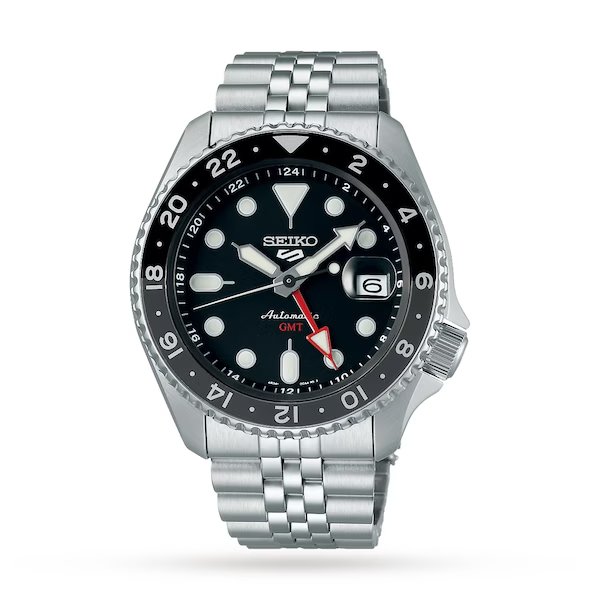
Overview: The Seiko 5 line has been a rite of passage for budget mechanical watch buyers for decades, and the current Sports generation looks noticeably more refined than its predecessors.
Why we recommend it: You’re getting a genuine automatic movement, a day-date complication, and solid 100m water resistance, all with dial designs that borrow confidently from GMT and field-watch aesthetics usually seen at higher price points.
Pros:
- Reliable in-house automatic movement (4R36) with a hacking, hand-winding option
- Huge range of dial colors and case styles to fit different tastes
- Excellent parts and service availability worldwide
Cons:
- Bracelet quality is decent but not premium — some buyers upgrade to an aftermarket strap
- Day-date window text can look slightly plain compared to competitors
- Accuracy is typical for the price bracket (±15-25 seconds a day), not chronometer-level
Ideal buyer: A first-time automatic watch buyer who wants genuine mechanical engagement without financial risk.
Movement: In-house automatic (Caliber 4R36)
Case size: 39–43mm depending on model
Water resistance: 100m
Price range: $250–$350
Styling advice: The GMT-style and field-watch colorways wear especially well casually; avoid the busiest dial variants for office settings.
Value rating: 9/10
3. Hamilton Khaki Field Mechanical
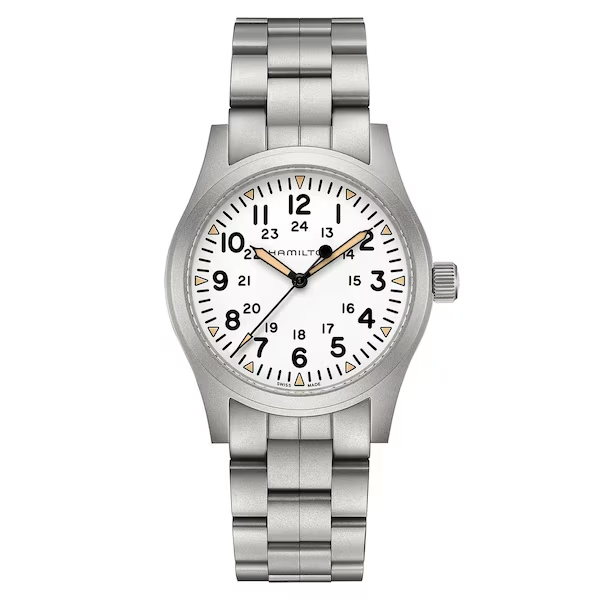
Overview: Hamilton’s Khaki Field line traces back to actual U.S. military watch contracts, and the Mechanical version — hand-wound, no date window, stark black dial — is about as honest and understated as budget watches get.
Why we recommend it: The manual-wind movement, the crisp printed numerals, and the restrained design give this watch a genuinely “vintage military issue” feel rather than a costume version of one. It photographs and wears like something that costs considerably more.
Pros:
- Genuinely handsome, restrained field watch design
- Swiss-made movement (ETA-based) with solid reliability
- Excellent on both NATO straps and leather for different looks
Cons:
- Manual winding won’t suit buyers who want a “set it and forget it” watch
- No date window, which some buyers consider a practical drawback
- Mineral crystal rather than sapphire on this specific reference
Ideal buyer: Someone who wants a genuinely classic, versatile field watch and doesn’t mind winding it daily.
Movement: Manual-wind (ETA/Hamilton H-50 based)
Case size: 38mm or 42mm
Water resistance: 50m
Price range: $550–$700
Styling advice: Pairs beautifully with a canvas NATO strap for casual wear or a leather strap for smart-casual settings.
Value rating: 8/10
4. Orient Bambino
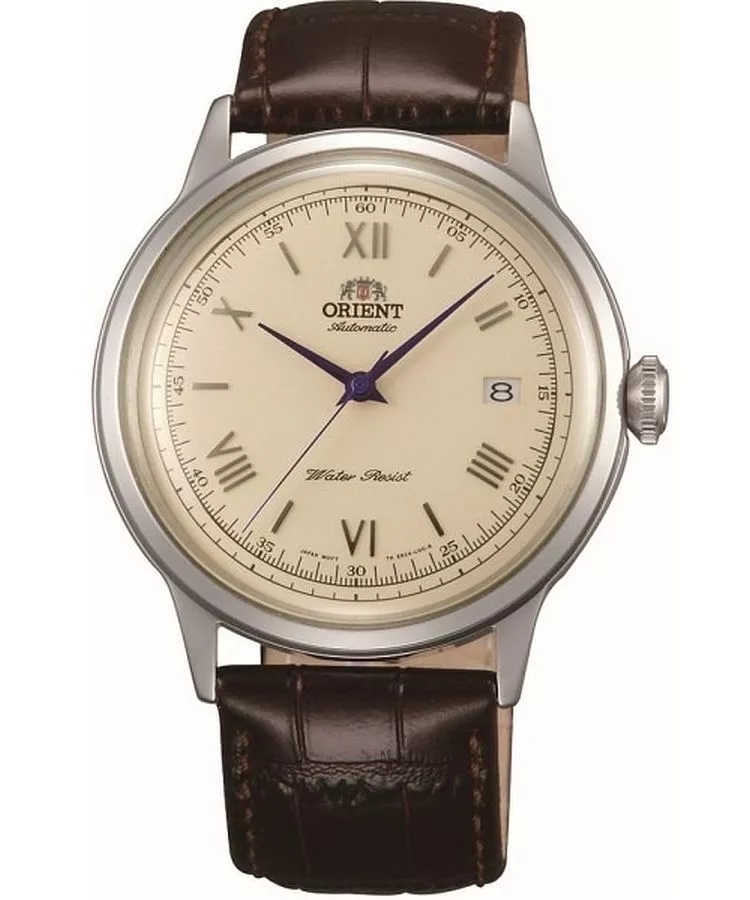
Overview: Orient (owned by Seiko Epson) built the Bambino specifically to punch above its price bracket, with a domed crystal, sunburst or textured dial, and dauphine hands that all read as considerably more premium than the actual cost.
Why we recommend it: The domed crystal alone does more visual heavy lifting than almost anything else on this list — it catches and bends light the way a proper dress watch crystal should, giving the whole piece depth that flat-crystal competitors can’t match at this price.
Pros:
- Domed crystal and dial texture that genuinely looks premium
- In-house automatic movement with hand-winding capability
- Extremely affordable for a dress watch with this much visual charm
Cons:
- Water resistance is minimal (30m), so this isn’t a watch for swimming or heavy daily wear
- Leather strap quality out of the box is basic and often benefits from an upgrade
- Movement accuracy is modest, typical for the price point
Ideal buyer: Someone who wants an affordable, elegant dress watch for office and formal wear.
Movement: In-house automatic
Case size: 40.5–42mm
Water resistance: 30m (not for swimming)
Price range: $150–$250
Styling advice: Best suited to business and formal settings; not a daily-beater or active-lifestyle watch.
Value rating: 8/10
5. Citizen Tsuyosa
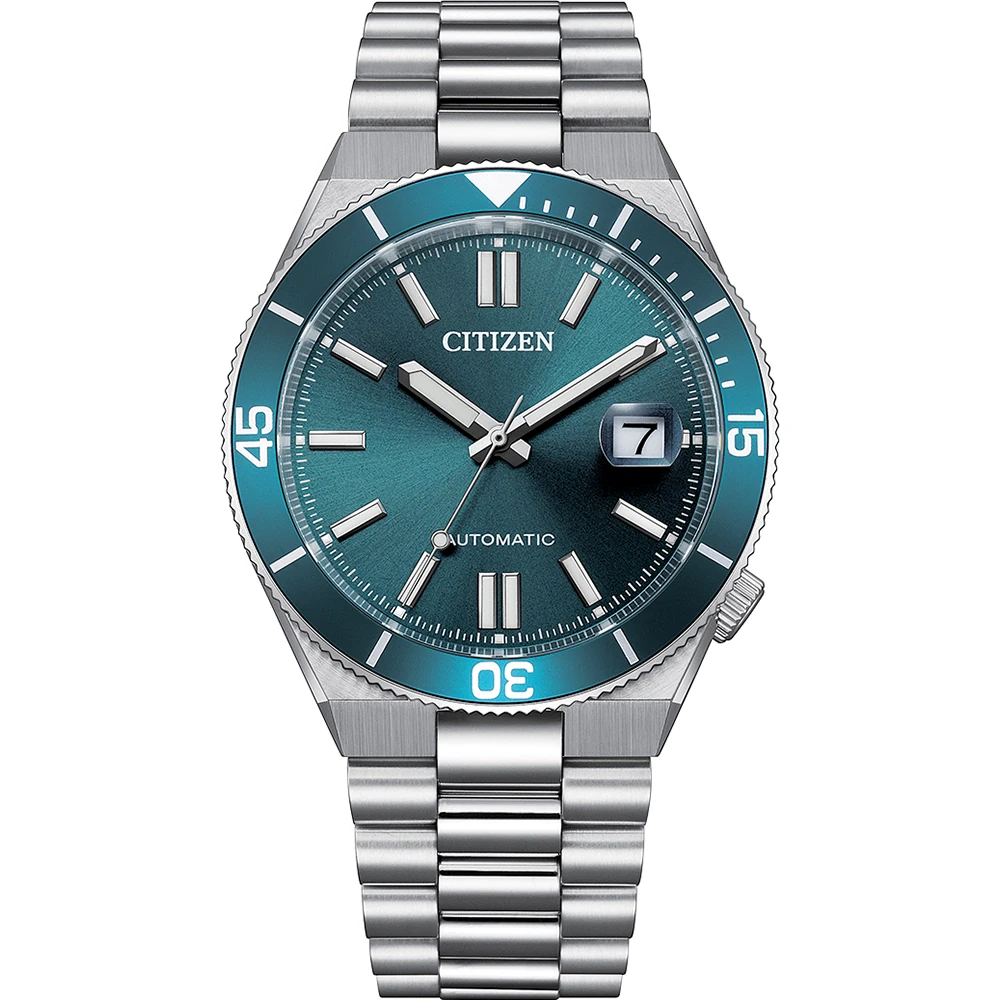
Overview: Citizen’s Tsuyosa line arrived with a cushion-shaped case and a sunburst dial that immediately drew comparisons to Grand Seiko and other watches costing several times more.
Why we recommend it: The dial texture and case shape are the standout here — a soft cushion case with a genuinely well-finished sunburst dial gives it a distinctive silhouette that most budget watches don’t attempt.
Pros:
- Distinctive cushion case shape not commonly seen at this price
- Attractive sunburst dial finishes across several colorways
- Solid automatic movement with day-date complication
Cons:
- Water resistance is modest (50m) for a watch with sporty styling cues
- Bracelet, where included, is decent but not exceptional
- Brand recognition among non-enthusiasts is lower than Seiko’s
Ideal buyer: Someone who wants a distinctive case shape and dial finish without committing to a higher price bracket.
Movement: Automatic (Miyota 8210)
Case size: 39.5mm
Water resistance: 50m
Price range: $250–$350
Styling advice: Versatile for office and casual wear; less suited to active or water-based activities.
Value rating: 8/10
6. Timex Marlin Automatic
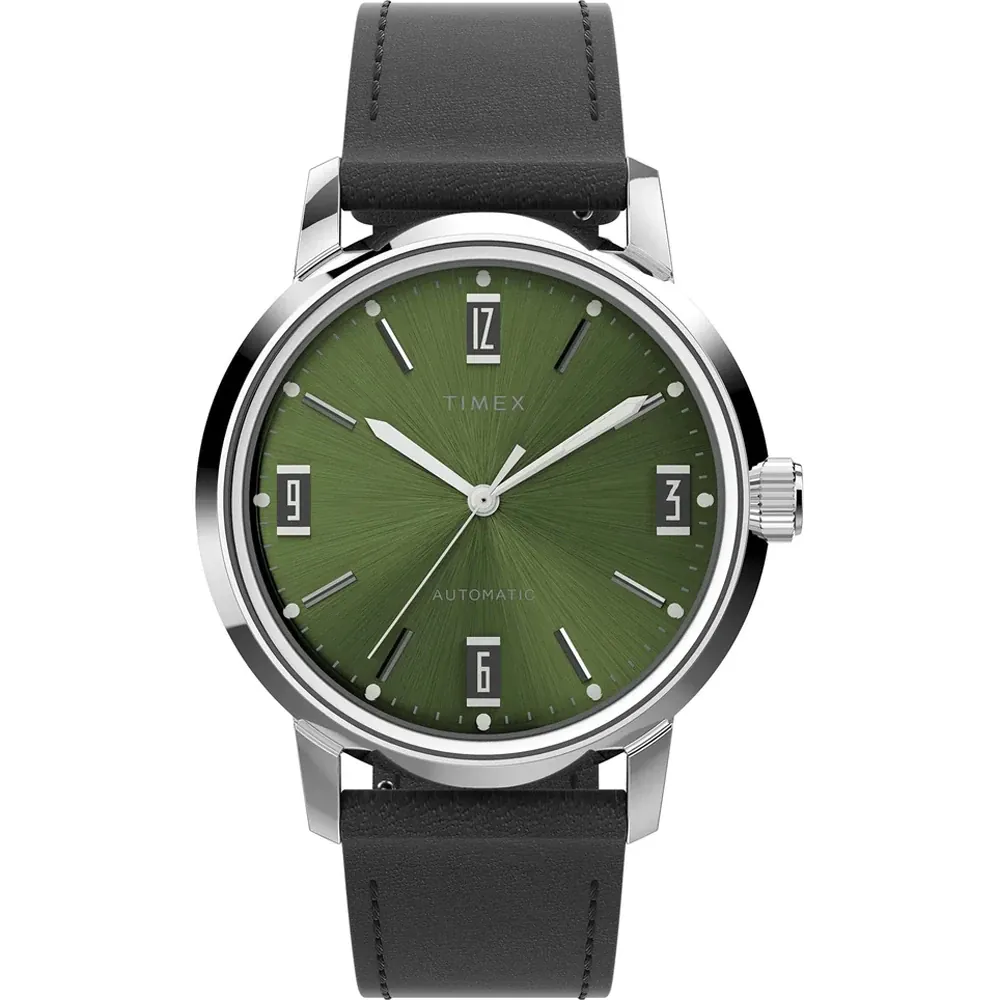
Overview: Timex reissued the 1960s Marlin as a genuine automatic watch, and the vintage-correct proportions — small case, thin bezel, clean dial — give it a charm that budget watches rarely capture authentically.
Why we recommend it: At under $300, this is one of the only genuinely vintage-proportioned automatic watches available. The 34mm case isn’t for everyone, but for the right wrist and the right aesthetic, it looks like a well-preserved vintage piece worth considerably more.
Pros:
- Authentic vintage proportions and design details
- Genuine automatic movement at a very low price point
- Excellent value for anyone into mid-century watch design
Cons:
- 34mm case is small by modern standards and won’t suit larger wrists
- Movement is a basic Miyota caliber without in-house engineering
- Water resistance is minimal (30m)
Ideal buyer: A vintage design enthusiast or someone with a smaller wrist looking for period-correct proportions.
Movement: Automatic (Miyota 8215)
Case size: 34mm or 40mm (reissue variants)
Water resistance: 30m
Price range: $230–$280
Styling advice: Best for smart-casual and vintage-inspired outfits; not intended for active or water use.
Value rating: 8/10
7. Mido Ocean Star
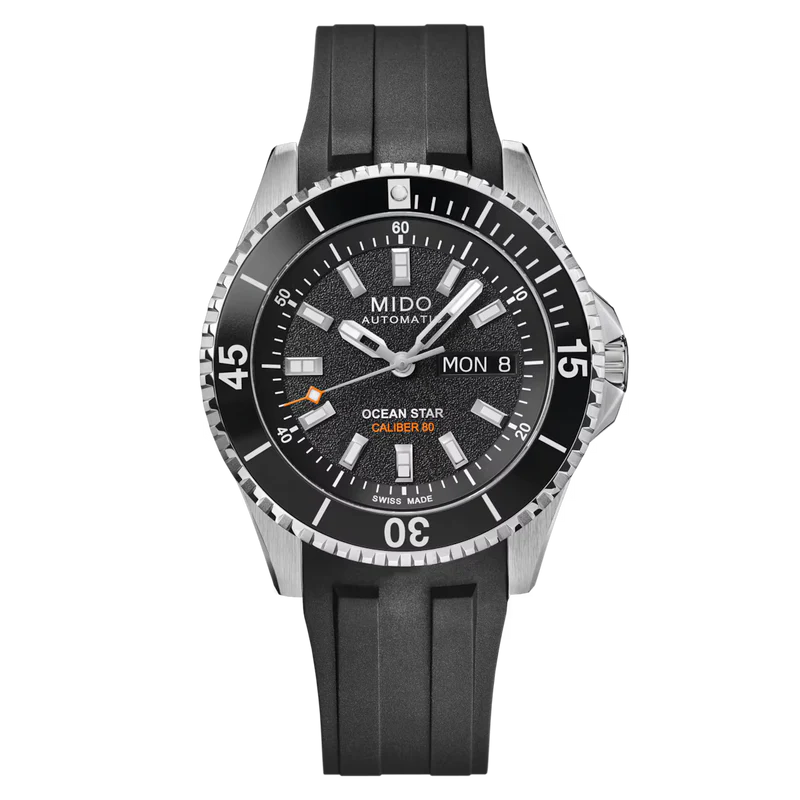
Overview: Mido, part of the Swatch Group alongside Omega and Tissot, shares movement architecture with brands costing considerably more, and the Ocean Star dive watch line delivers genuinely serious build quality.
Why we recommend it: You’re getting Swatch Group in-house movement technology (Caliber 80, an 80-hour power reserve automatic) in a genuinely well-finished dive case, at roughly a third of what a comparably specified Omega would cost.
Pros:
- 80-hour power reserve automatic movement, unusual at this price
- Genuine 200m dive-rated water resistance and build quality
- Excellent case finishing and bezel action for the price bracket
Cons:
- Brand recognition is modest outside enthusiast circles
- Bracelet clasp, while functional, isn’t as refined as pricier dive watches
- Some models run larger than the stated diameter due to case shape
Ideal buyer: Someone who wants genuine dive-watch capability and Swiss movement technology without the Omega or Rolex price tag.
Movement: Automatic (Caliber 80, ETA-based, 80-hour power reserve)
Case size: 40.5–43.5mm
Water resistance: 200m
Price range: $800–$1,200
Styling advice: A genuinely versatile tool watch; it works casually and holds up for actual water activity.
Value rating: 8/10
8. Certina DS Action
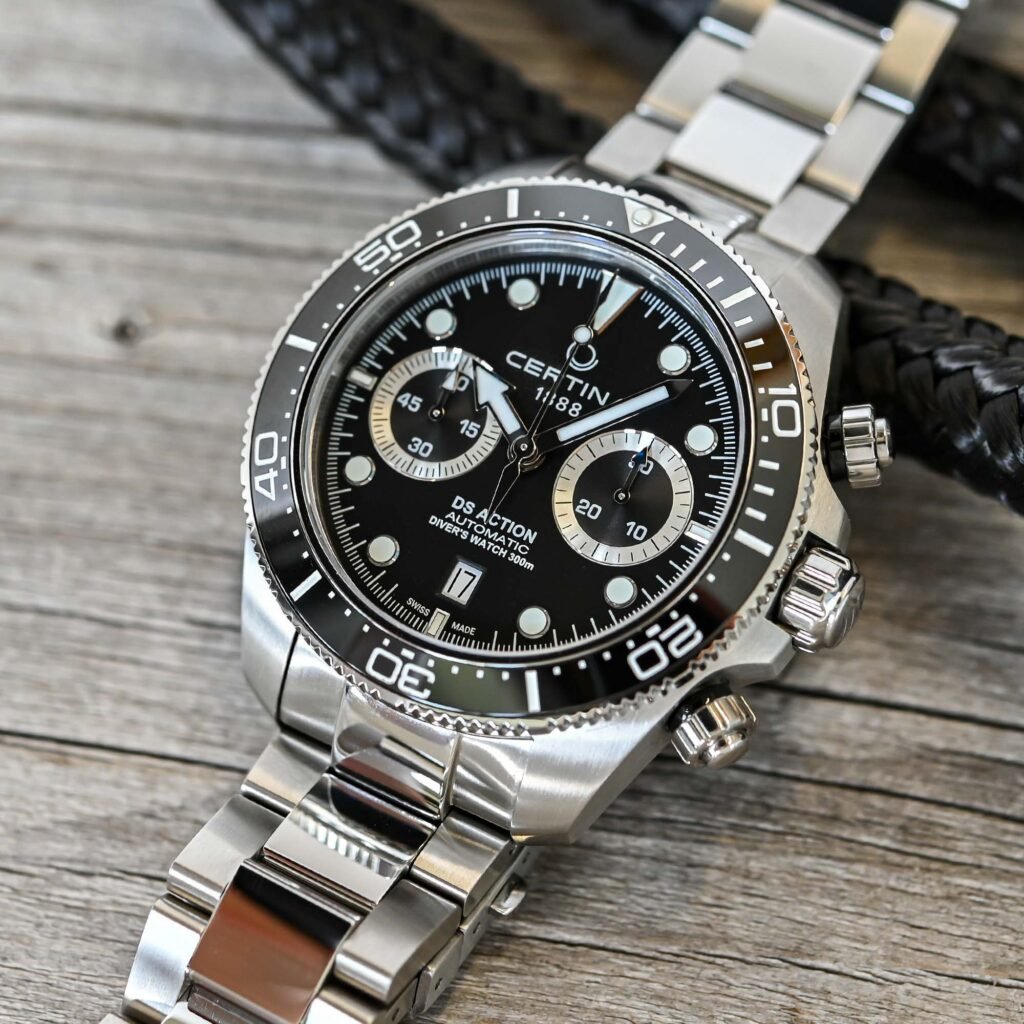
Overview: Another Swatch Group brand flying under the radar, Certina’s DS Action combines genuine dive-watch engineering (the brand’s DS or “Double Security” case construction) with clean, purposeful styling.
Why we recommend it: The case construction genuinely improves shock and water resistance over typical budget divers, and the finishing — brushed lugs, polished bezel edges — reads considerably more expensive than the price suggests.
Pros:
- Solid, genuinely engineered case construction (DS concept)
- Clean, purposeful dive-watch design without excess branding
- COSC-certified chronometer options available on some references
Cons:
- Limited brand recognition compared to Tissot or Omega
- Bracelet sizing and micro-adjustment aren’t as refined as premium competitors
- Fewer retail locations to try before buying
Ideal buyer: Someone who wants genuine dive-watch engineering and doesn’t need brand recognition to justify the purchase.
Movement: Automatic (ETA-based, some COSC-certified)
Case size: 38–43mm
Water resistance: 200–300m
Price range: $700–$950
Styling advice: A strong daily and active-lifestyle watch; works with both a bracelet and a rubber strap.
Value rating: 7.5/10
9. Casio Edifice
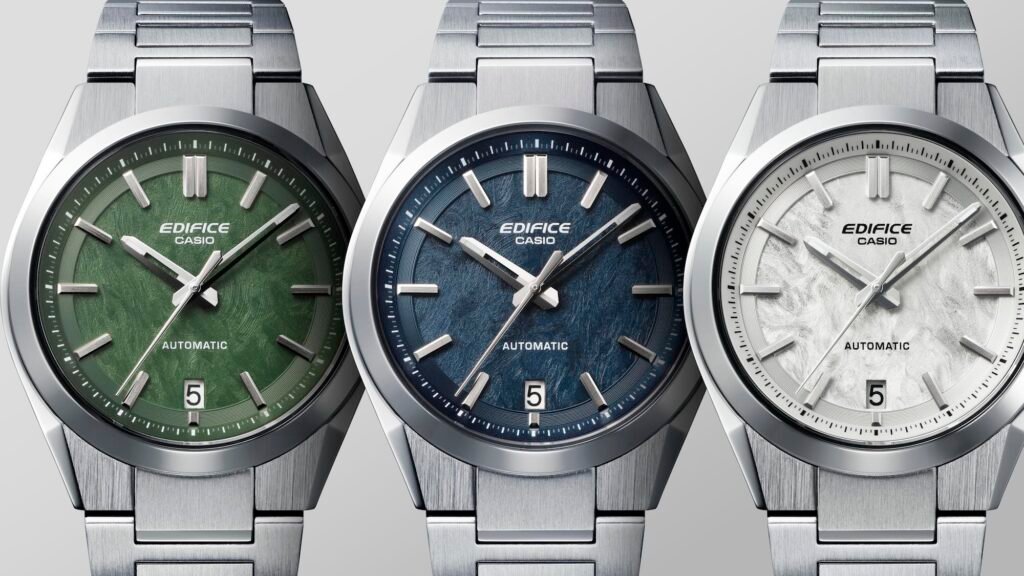
Overview: Casio’s Edifice line takes cues from motorsport chronographs, with multi-layered dials, sapphire crystal options on higher models, and case designs that borrow heavily from far pricier chronograph watches.
Why we recommend it: For buyers who want the visual complexity of a luxury chronograph — multiple sub-dials, tachymeter bezels, faceted cases — without any of the mechanical maintenance, Edifice delivers a genuinely sharp look at quartz-watch pricing.
Pros:
- Sharp, layered dial design that mimics expensive chronograph aesthetics
- Quartz reliability with no winding or servicing required
- Some models include sapphire crystal, unusual at this price
Cons:
- Quartz movement lacks the mechanical appeal serious collectors look for
- Some models lean busy, which can undercut the “expensive” look if overdone
- Build quality, while solid, doesn’t match Swiss-made competitors
Ideal buyer: Someone who wants a bold chronograph look with zero maintenance and a low price point.
Movement: Quartz chronograph
Case size: 42–46mm depending on model
Water resistance: 100m
Price range: $150–$300
Styling advice: Best for casual and business-casual wear; choose simpler dial layouts for more formal versatility. Value rating: 7/10
10. Invicta Pro Diver Automatic
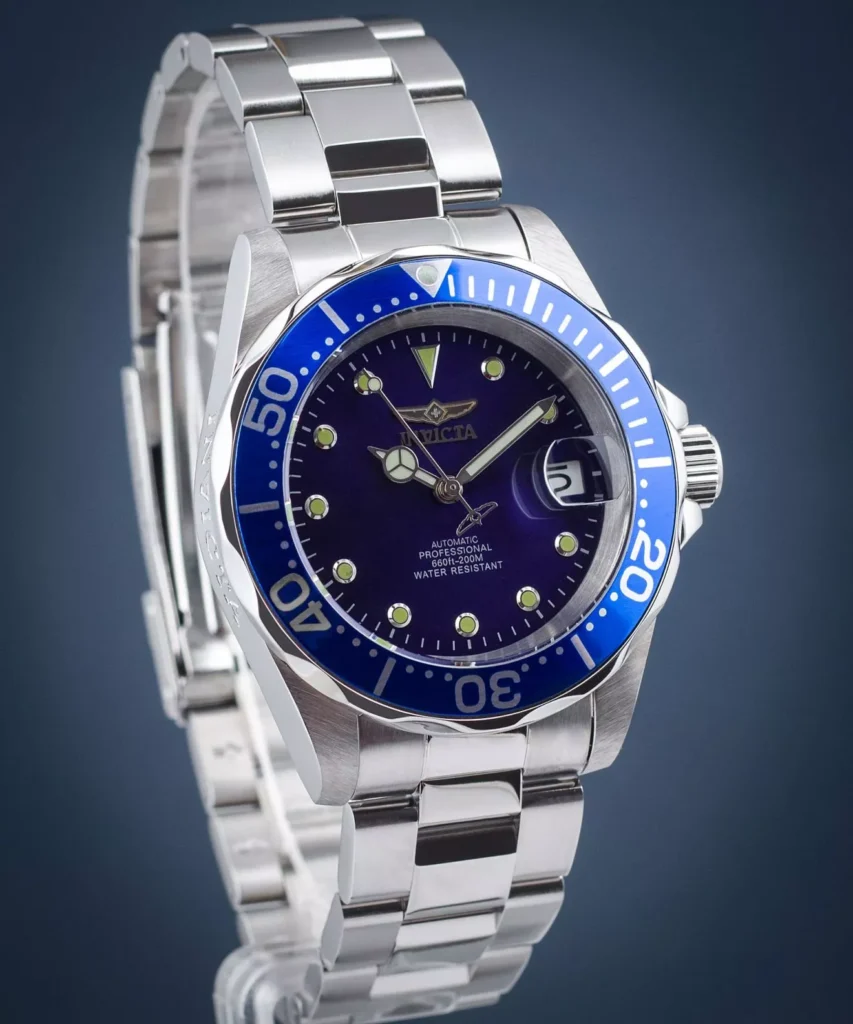
Overview: Invicta gets a mixed reputation in enthusiast circles for leaning heavily on other brands’ design language, and it’s worth being upfront about that here. That said, the Pro Diver Automatic offers genuine mechanical value at an extremely low price if you buy it for what it is.
Why we recommend it: At under $150, you’re getting a real automatic movement, a reasonably substantial case, and solid water resistance. It photographs well and reads as a serious diver from a few feet away, even if close inspection reveals the cost-cutting.
Pros:
- Genuine automatic movement at a very low price point
- Bold, substantial case presence that photographs well
- Real 200m water resistance on most Pro Diver references
Cons:
- Design borrows heavily and obviously from Rolex Submariner styling, which some buyers and observers see as derivative rather than original
- Finishing quality (printing, bracelet, clasp) is noticeably rougher up close than anything else on this list
- Resale value is minimal; treat this as a wear-it-and-enjoy-it purchase, not an asset
Ideal buyer: A budget-conscious buyer who wants dive-watch presence and doesn’t mind the design being an obvious homage rather than an original.
Who should avoid it: Buyers who want their purchase to reflect original design thinking, or anyone planning to resell — value retention here is close to zero.
Movement: Automatic (NH35 or similar)
Case size: 40–47mm depending on reference
Water resistance: 200m
Price range: $80–$150
Styling advice: Casual and weekend wear only; the obvious design borrowing makes it a less confident choice for business settings.
Value rating: 5/10 — genuinely good mechanical value, honestly weak on originality and resale
Common Mistakes When Buying an Affordable Watch
Judging a watch purely from product photos. Professional photography can make a flat, poorly printed dial look dimensional. Look for close-up, unedited photos or in-person reviews before buying, especially online.
Ignoring the bracelet or strap. This is the single most common failure point in budget watches. A hollow, stamped bracelet undermines an otherwise good watch instantly — factor in a $30-50 strap upgrade if the stock option looks weak in reviews.
Buying based on brand mimicry alone. Watches that closely copy a famous design (like some Invicta models) can be fun and affordable, but they rarely hold value and can read as try-hard rather than confident up close. Decide honestly whether that trade-off works for you.
Overlooking crystal type. Mineral crystal scratches more easily than sapphire. It’s not a dealbreaker at this price point, but it does affect how the watch looks after a few years of daily wear.
Not considering case thickness and lug-to-lug fit. A watch can have a reasonable diameter but still wear awkwardly large if the lug-to-lug distance is long or the case is thick. Check these dimensions, not just the diameter, before buying.
Buying Advice: How to Choose the Right One for You
Think first about where you’ll wear it most. An office-focused buyer should lean toward the Tissot PRX, Orient Bambino, or Hamilton Khaki Field. Someone wanting an active, water-ready daily watch should look at the Mido Ocean Star or Certina DS Action. If you want mechanical engagement on a tight budget, the Seiko 5 Sports is hard to beat.
Decide how you feel about automatic versus quartz. Automatics offer more emotional engagement (a moving rotor, a slight mechanical hum) but need regular wear or a watch winder to stay accurate. Quartz options like the Casio Edifice need zero maintenance and keep better daily time, at the cost of that mechanical charm.
What matters more to you — mechanical authenticity or design originality? Some of the best value on this list (the Invicta, for instance) comes with an honest trade-off in originality. Decide upfront whether that bothers you, because it will affect how confident you feel wearing it around people who know watches.
Frequently Asked Questions
Can an affordable watch actually look as good as a luxury one? Yes, in terms of visual impression from a normal viewing distance. Dial finishing, case proportions, and bracelet quality — not price — are what most people register visually, and several watches on this list nail those details convincingly.
What’s the best affordable automatic watch under $500? The Seiko 5 Sports and Tissot PRX are the strongest picks in this range, offering genuine automatic movements, solid build quality, and distinctive designs well above what their price would suggest.
Is it worth upgrading the strap or bracelet on a budget watch? Often, yes. A stock bracelet is frequently the weakest part of a budget watch, and a $30-60 leather or NATO strap upgrade can meaningfully improve how the whole watch looks and feels on the wrist.
Are homage watches like the Invicta Pro Diver worth buying? They can be, if you go in with clear expectations. You’re getting genuine mechanical value at a low price, but the design borrows heavily from other brands and resale value is minimal. It’s a legitimate choice as long as you’re comfortable with that trade-off.
Does water resistance rating actually matter for everyday wear? Yes, if you shower, swim, or work with your hands regularly. A 30m rating is really only splash-resistant, while 100m or higher is genuinely suitable for swimming and daily water exposure.
What’s the difference between an in-house and a generic movement in budget watches? In-house movements (like Seiko’s 4R36 or Orient’s calibers) are developed by the brand itself, while generic movements (Miyota, NH35, ETA-based) are widely used across many budget brands. Both can be reliable — the practical difference is usually more about specific features (power reserve, hacking seconds) than raw quality at this price point.
How can I tell if a dial will look cheap before buying? Look closely at printing quality in high-resolution photos or in-person reviews — crisp, evenly spaced text and clean lume application are good signs, while blurry printing or visible glue residue around the crystal are red flags.
Is sapphire crystal worth prioritizing at this price point? It’s a nice bonus but not essential under $500. Mineral crystal is more prone to scratching over years of wear, but it’s also cheaper to replace if it does get scratched or cracked.
What size watch looks best for most wrists? 38-42mm suits the widest range of wrist sizes comfortably. Smaller wrists (under 6.5 inches) generally look best with 38-40mm cases, while larger wrists can comfortably carry 42-44mm.
Do quartz watches ever look as premium as automatics? Yes — the movement type doesn’t determine visual quality. The Casio Edifice and many Tissot PRX quartz variants look just as premium as their automatic counterparts; the difference is purely mechanical engagement, not appearance.
Final Verdict
If you want the single best all-around pick, the Tissot PRX is hard to beat — the integrated bracelet design does more visual heavy lifting per dollar than almost anything else available today. If you’re set on a genuine mechanical experience at the lowest realistic price, the Seiko 5 Sports remains the smartest entry point into automatic watches. For office and formal settings, the Orient Bambino’s domed crystal and dial texture punch well above its cost. And if you want real dive-watch capability without dive-watch pricing, the Mido Ocean Star is the strongest choice on this list.
Whichever you choose, remember that the goal isn’t to fool anyone — it’s to wear something that genuinely looks considered and well-made, at a price that lets you actually enjoy wearing it every day instead of worrying about it.
Read also: