15 Luxury Watch Brands That Are Actually Worth the Investment
If you’ve spent any time in a watch forum or scrolling through Instagram, you already know the problem:
Everyone has an opinion, half the “best luxury watch brands” lists are just recycled press releases, and somewhere in the mix is the uncomfortable truth that most luxury watches lose money the second you walk out of the boutique.
So which ones actually hold their value, wear well for decades, and justify the price tag beyond the logo?
I’ve spent years buying, selling, servicing, and just plain living with mechanical watches — including a couple of purchases I regret and a few I’d buy again tomorrow.
This isn’t a hype list. It’s a practical breakdown of which luxury brands genuinely deliver on craftsmanship, durability, and resale value, and which models within those brands are actually worth chasing versus which ones are better left on the shelf.
By the end of this guide, you’ll know exactly which 15 brands consistently earn their price tags, what to look for (and avoid) when buying into each one, realistic price ranges, and how to think about “investment” in watches without falling for marketing spin.
Because here’s the thing nobody tells you upfront: very few watches are actual investments in the financial sense.
Most are expensive hobbies that happen to hold value reasonably well.
Once you accept that framing, you make much better decisions.
What “Worth the Investment” Actually Means for a Watch
Before we get into brands, let’s clear up a common misconception. When people say a watch is “a good investment,” they usually mean one of three different things, and conflating them leads to bad purchases:
Value retention — the watch doesn’t crater in resale value the moment you buy it. Some luxury watches retain 80-90% of retail after a few years; others lose half their value in the first month.
Long-term durability — the movement, case, and bracelet are built to survive decades of wear and multiple services without falling apart or becoming impossible to repair.
Genuine appreciation — a small number of watches, usually specific references rather than entire brands, actually go up in value over time due to scarcity, discontinuation, or cultural relevance.
Most of the brands on this list check the first two boxes reliably. Only a handful of specific references check the third. If someone tells you a particular watch is “guaranteed to appreciate,” be skeptical — the secondary market has humbled plenty of confident predictions over the last few years.
The 15 Brands
1. Rolex
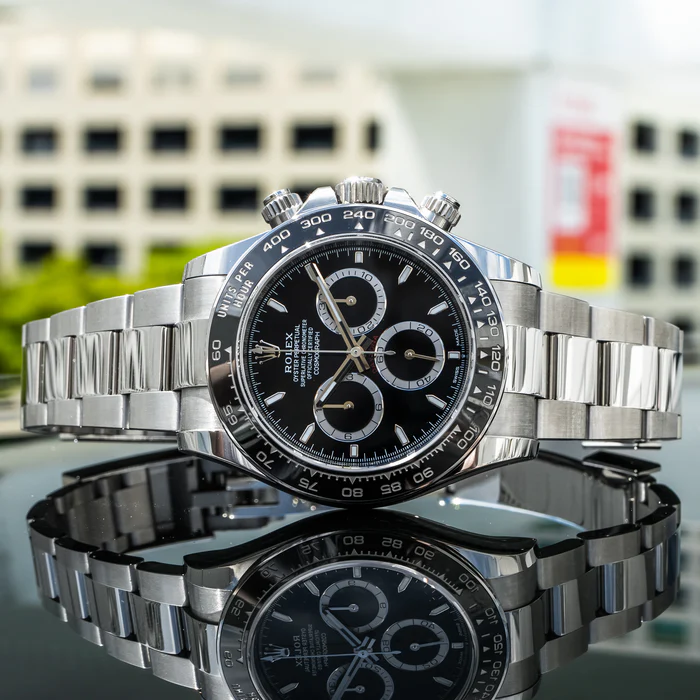
Overview: Rolex is the brand every other luxury watchmaker gets measured against, and for once, the hype is mostly earned. The in-house movements are over-engineered for reliability, the cases are built like tanks, and the brand’s control over supply has kept resale values unusually strong across most of the catalog.
Why it’s worth it: Rolex doesn’t innovate for the sake of headlines — it refines the same core designs (Submariner, Datejust, GMT-Master II) generation after generation, which means parts availability and service knowledge stay excellent for decades. That’s a real practical advantage most brands can’t match.
Pros:
- Exceptional build quality and shock resistance
- Strong global service network
- Steel sports models often hold or exceed the retail price
- In-house movements with long power reserves and chronometer certification
Cons:
- Waitlists for popular steel sports models can run for years at authorized dealers
- Grey market premiums on hyped references are genuinely irrational
- Design conservatism means limited variety if you want something distinctive
Ideal buyer: Someone who wants one watch that does everything well and holds its value — a first serious luxury purchase or a “last watch you’ll ever need” type of buy.
Who should avoid it: Buyers chasing a specific hyped reference (Daytona, GMT “Batman”) purely for flip profit. The premiums have compressed significantly since 2022, and you can lose money fast.
- Movement: In-house automatic (Caliber 3230, 3235, etc.)
- Case size: 36–44mm, depending on model
- Water resistance: 100m (Datejust) to 300m (Submariner)
- Price range: $6,500–$45,000+ retail; secondary market varies widely
- Styling: Versatile enough for office, weekend, and evening wear, depending on the model
- Value rating: 9/10 for steel sports models; 7/10 for precious metal dress pieces
2. Patek Philippe
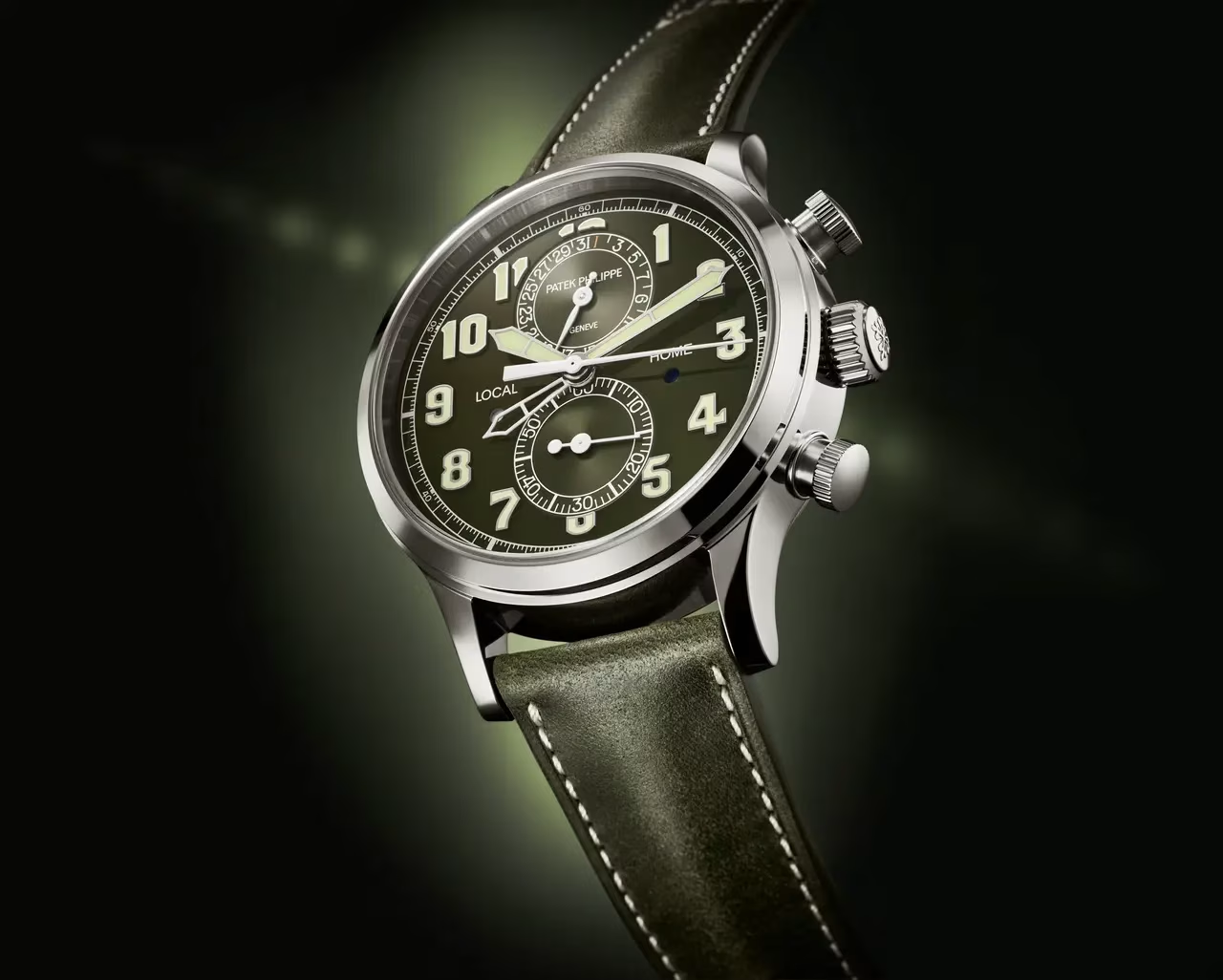
Overview: Patek sits at the top of the traditional watchmaking hierarchy for a reason — the finishing on their movements is done largely by hand, and the brand has never chased trends the way some competitors have.
Why it’s worth it: The Nautilus and Aquanaut get all the social media attention, but the dress watches and complications (perpetual calendars, chronographs) are where Patek’s actual expertise shows. These are watches designed to be handed down, not flipped.
Pros:
- Among the finest movement finishing in the industry
- Exceptional long-term value retention on core references
- Genuine multi-generational durability
Cons:
- Waitlists for steel sports models are longer and more restrictive than Rolex’s
- Entry price is steep even for “basic” models
- Some references are genuinely difficult to service outside authorized centers
Ideal buyer: A collector who already understands movements and finishing, or someone buying a serious heirloom piece rather than a daily beater.
Who should avoid it: Anyone expecting to walk in and buy a Nautilus off the shelf, or buyers who aren’t prepared for the ongoing relationship with the boutique that serious allocation often requires.
- Movement: In-house manual and automatic, often with Geneva Seal or Patek Seal
- Case size: 34–42mm
- Water resistance: 30m (dress) to 120m (Nautilus)
- Price range: $25,000–$100,000+ retail
- Styling: Formal to smart-casual depending on model
- Value rating: 9/10 on core references, though the steel sports pieces have cooled from 2021-22 peaks
3. Audemars Piguet
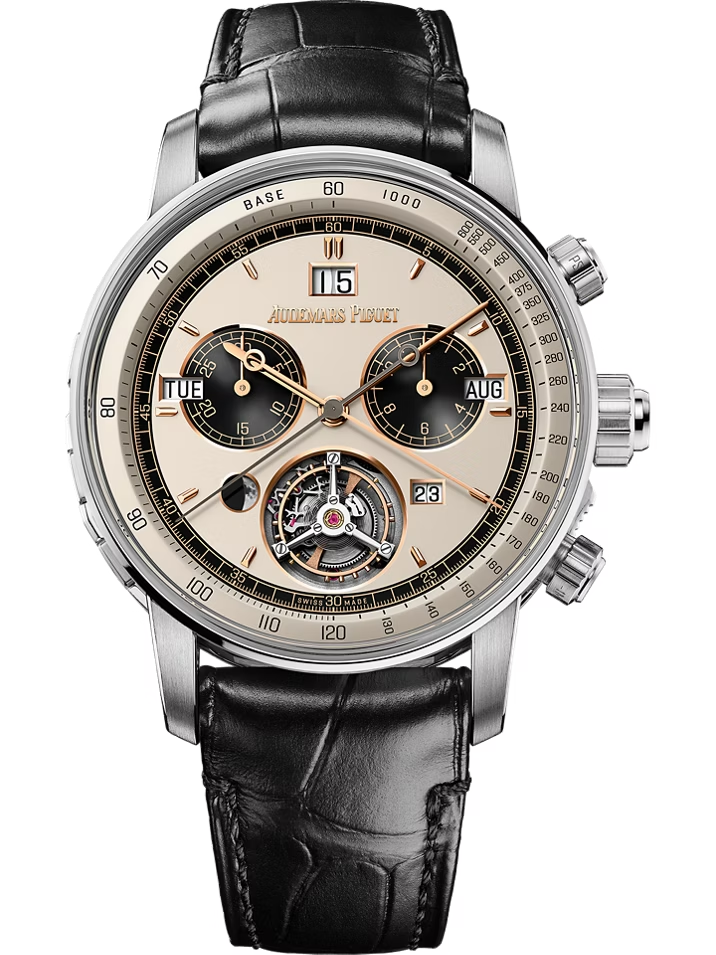
Overview: AP built its modern identity almost entirely around the Royal Oak, Gerald Genta’s 1972 design that turned a steel “sports watch” into one of the most desirable luxury objects on the planet.
Why it’s worth it: The integrated bracelet and octagonal bezel design was genuinely revolutionary, and AP’s finishing quality — particularly the tapisserie dial — remains distinctive and hard to replicate. It’s a brand with real design DNA, not just a logo.
Pros:
- Iconic, instantly recognizable design language
- Strong resale on core Royal Oak references
- Excellent in-house movement development, including thin automatics
Cons:
- Heavily reliant on one design family; the brand outside the Royal Oak is less understood by the market
- Boutique allocation politics can be frustrating for new buyers
- Some references have seen sharp secondary-market corrections after 2022
Ideal buyer: Someone who wants a design-forward luxury sports watch and is comfortable navigating boutique relationships.
Who should avoid it: Buyers who want to flip quickly — the market has cooled considerably, and entry-level Royal Oak references have dropped closer to retail.
- Movement: In-house automatic (Calibre 4302, 2121, etc.)
- Case size: 37–41mm typical for Royal Oak
- Water resistance: 50m
- Price range: $24,000–$60,000+ retail
- Styling: Smart-casual to semi-formal
- Value rating: 7/10 — strong but more volatile than Rolex or Patek
4. Omega
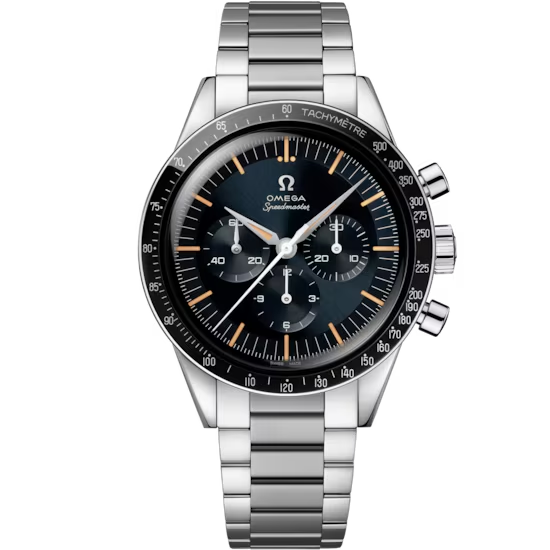
Overview: Omega is the most underrated brand on this list relative to what you actually get. The Speedmaster and Seamaster have genuine historical credibility (moon landing, James Bond), and the movements — particularly the Co-Axial calibers — are technically excellent.
Why it’s worth it: Omega’s METAS-certified Master Chronometer movements are independently tested for magnetic resistance and accuracy at a level most competitors don’t match at this price point. You’re getting Swiss haute horlogerie-adjacent engineering without the multi-year waitlist.
Pros:
- Excellent value relative to movement technology
- Actual availability at authorized dealers for most models
- Strong heritage and genuine historical significance (Speedmaster Moonwatch)
Cons:
- Resale value is good but not in Rolex territory
- The catalog is large and can be confusing for new buyers
- Some limited editions are genuinely overpriced relative to the base model
Ideal buyer: Someone who wants serious watchmaking and a great story without waiting years or paying grey-market premiums.
Who should avoid it: Buyers purely chasing resale flip potential — Omega holds value respectably but won’t outperform Rolex on the secondary market.
- Movement: In-house Co-Axial Master Chronometer automatic
- Case size: 39.5–42mm typical
- Water resistance: 50m (Speedmaster) to 300m (Seamaster Diver 300M)
- Price range: $5,500–$12,000 for most core models
- Styling: Highly versatile, from office to weekend to formal
- Value rating: 8/10 for the price-to-quality ratio
5. Vacheron Constantin
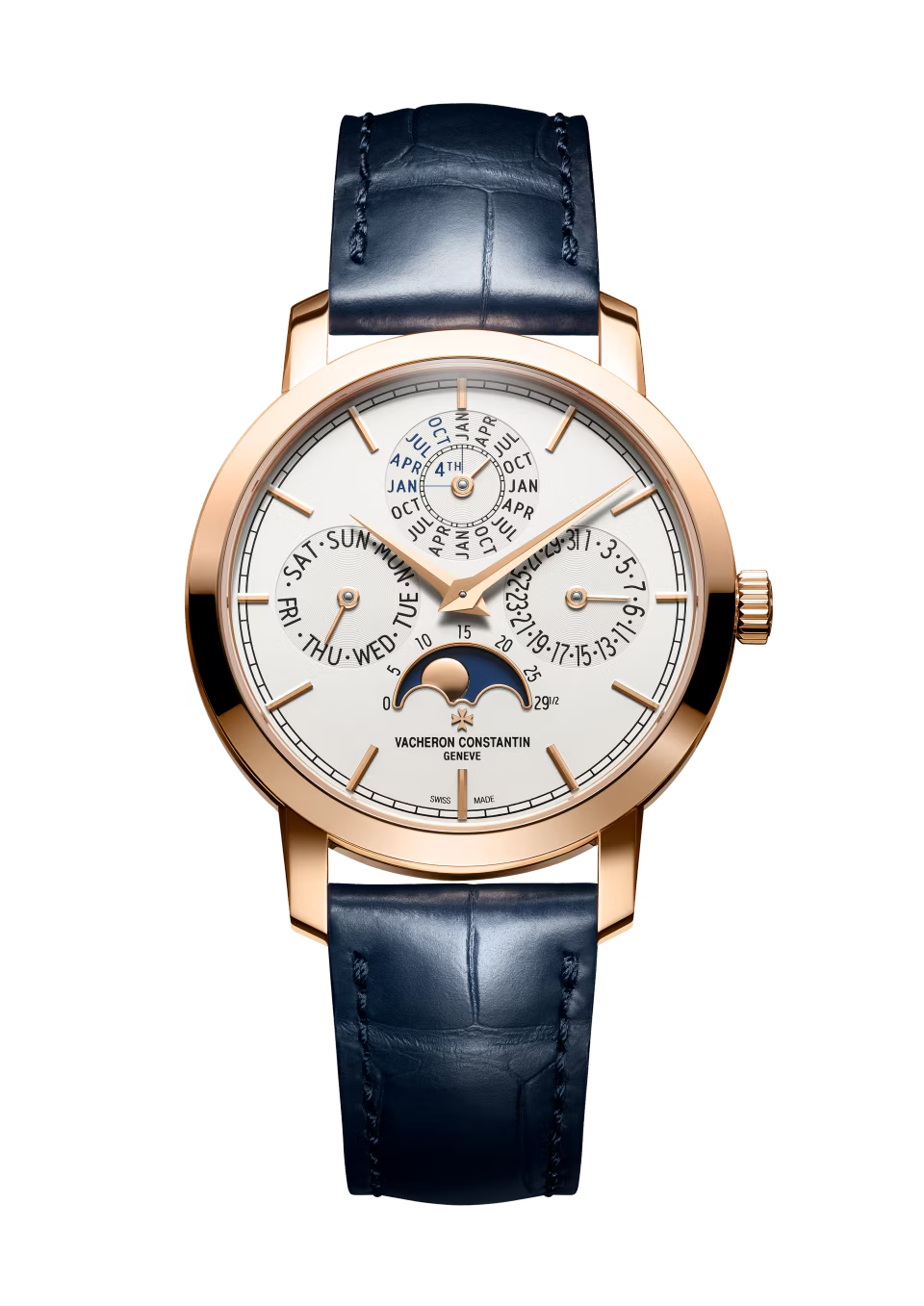
Overview: The oldest continuously operating watch manufacturer in the world, Vacheron doesn’t get the mainstream attention of Rolex or Patek, and that’s actually part of its appeal to serious collectors.
Why it’s worth it: The Overseas and Historiques lines combine genuinely excellent finishing (Hallmark of Geneva certification on many pieces) with a lower profile — you’re buying craftsmanship, not logo recognition.
Pros:
- Exceptional traditional finishing and movement architecture
- Lower profile means less “look at my watch” energy, which some buyers prefer
- Strong historical pedigree in complications
Cons:
- Weaker brand recognition outside enthusiast circles can mean softer resale in some markets
- Fewer authorized dealers and boutiques than Rolex or Omega
- Higher cost of ownership for complicated pieces
Ideal buyer: A collector who values craftsmanship and history over instant recognizability.
Who should avoid it: Someone buying primarily for status signaling to non-enthusiasts — most people won’t recognize the brand on sight.
- Movement: In-house automatic and manual, Hallmark of Geneva on many models
- Case size: 37–42.5mm
- Water resistance: 30m to 150m (Overseas)
- Price range: $22,000–$60,000+ retail
- Styling: Smart-casual to formal
- Value rating: 7/10 — excellent quality, moderate liquidity
6. Jaeger-LeCoultre
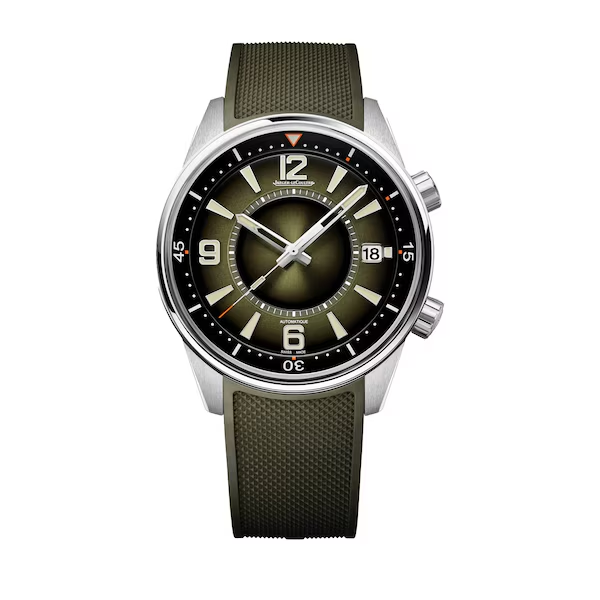
Overview: JLC is a watchmaker’s watchmaker — the manufacture has developed movements used by Patek, AP, and Vacheron over the decades. The Reverso, with its flip-case design from 1931, remains one of the most genuinely original watch designs ever produced.
Why it’s worth it: You’re buying into serious in-house movement development (JLC makes hundreds of calibers a year) at a price point below the “Holy Trinity” brands, with a design — the Reverso — that’s unmatched for versatility between formal and casual settings.
Pros:
- Deep in-house movement expertise
- The Reverso is genuinely unique and endlessly versatile
- Better value than Patek or Vacheron for comparable finishing quality
Cons:
- Brand recognition is lower among casual observers
- Resale values are respectable but not exceptional
- Complicated pieces can be expensive to service
Ideal buyer: Someone who wants serious watchmaking pedigree and appreciates design history over brand hype.
Who should avoid it: Buyers who need mainstream recognizability for status purposes.
- Movement: In-house manual and automatic
- Case size: 35–46mm (Reverso varies by model)
- Water resistance: 30m typical
- Price range: $8,000–$30,000+ for core models
- Styling: Formal to smart-casual (Reverso works both ways literally)
- Value rating: 7/10
7. Cartier
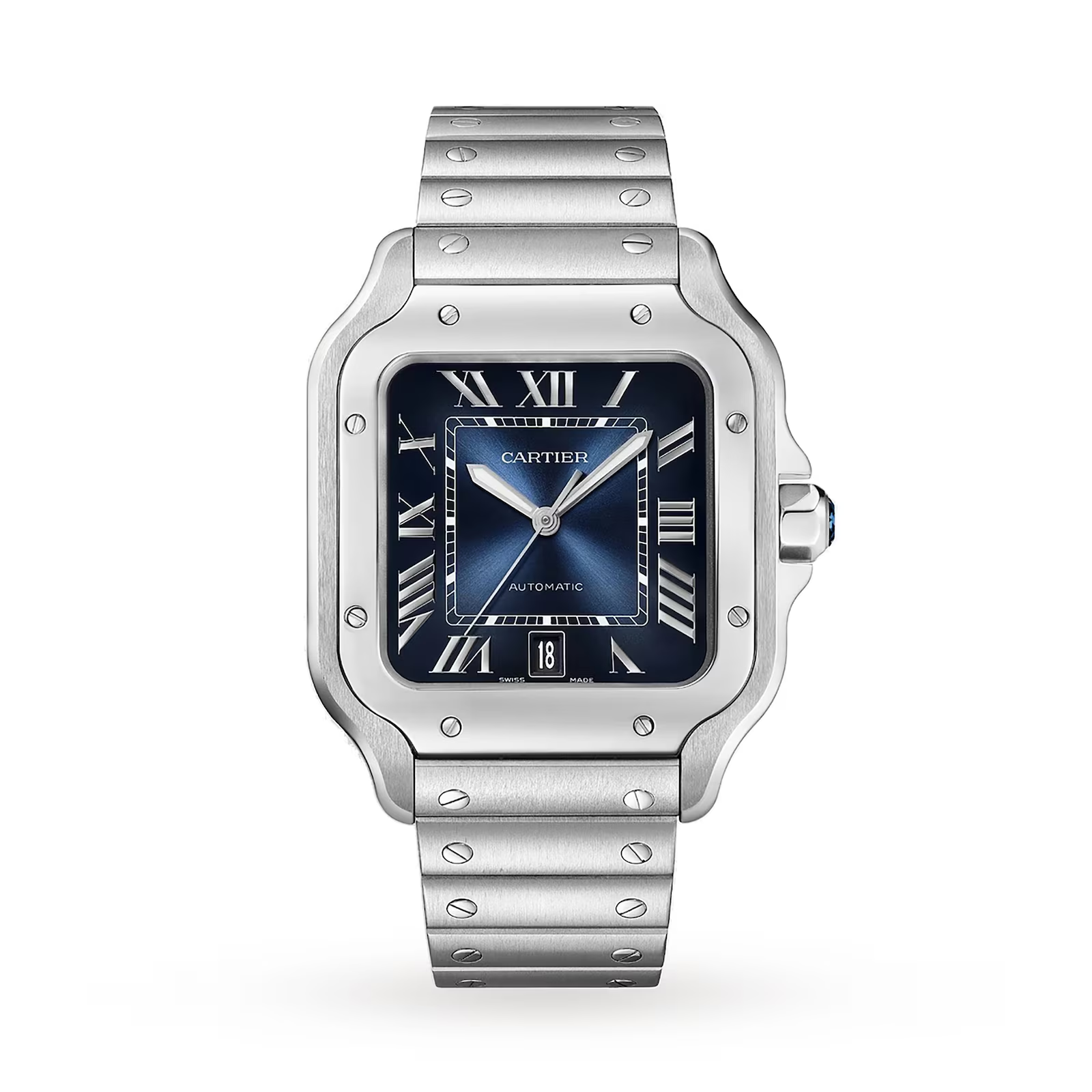
Overview: Cartier is often dismissed by “serious” watch collectors as a jewelry brand that happens to make watches, which misses the point entirely. The Tank and Santos are design icons that predate most modern sports watches, and Cartier’s design consistency over a century is remarkable.
Why it’s worth it: You’re buying design authority, not movement complexity. The Tank has been worn by everyone from Andy Warhol to modern collectors precisely because it doesn’t chase trends — it defined one that’s lasted 100+ years.
Pros:
- Unmatched design pedigree and instant elegance
- Excellent for formal and business settings
- Growing collector interest, especially in vintage and Privé pieces
Cons:
- Movements are often outsourced or simpler than Swiss watchmaking purists prefer
- Not a “tool watch” — water resistance and durability are modest on most models
- Resale on modern pieces varies significantly by model
Ideal buyer: Someone prioritizing design and elegance over mechanical complexity — particularly for formal or business wear.
Who should avoid it: Buyers wanting a rugged daily/sports watch or those who care primarily about in-house movement complexity.
- Movement: Mix of in-house and outsourced automatic/quartz
- Case size: 25–41mm depending on model
- Water resistance: 30m typical (not a diving brand)
- Price range: $3,500–$15,000+ for most models
- Styling: Formal, business, and elegant casual
- Value rating: 6.5/10 — strong on iconic references, softer elsewhere
8. IWC Schaffhausen
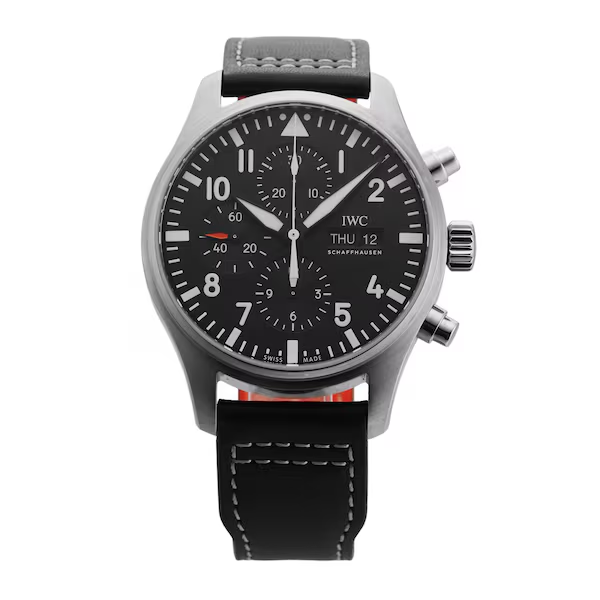
Overview: IWC built its reputation on pilot’s watches and engineering-forward design, and the Big Pilot and Portugieser lines remain genuinely distinctive in a crowded field of “aviation-inspired” watches from other brands.
Why it’s worth it: IWC movements are robust and well-engineered, and the brand sits in a sweet spot — more prestigious than Omega, more accessible than Patek, with a strong engineering identity that doesn’t feel derivative.
Pros:
- Distinctive, purpose-built pilot watch heritage
- Solid in-house movement development
- Good value relative to the “big three” Swiss houses
Cons:
- Some models are genuinely large (Big Pilot lives up to its name) and won’t suit smaller wrists
- Resale is respectable but not exceptional
- Ceramic and titanium case models can be more expensive to repair if damaged
Ideal buyer: Someone who wants a distinctive engineering-focused watch without Rolex-level waitlists.
Who should avoid it: Small-wristed buyers considering the Big Pilot specifically — try it on first, always.
- Movement: In-house and modified automatic movements
- Case size: 39–46mm
- Water resistance: 60m (Portugieser) to 100m (dive models)
- Price range: $6,000–$20,000+ for core models
- Styling: Smart-casual to business
- Value rating: 7/10
9. Panerai
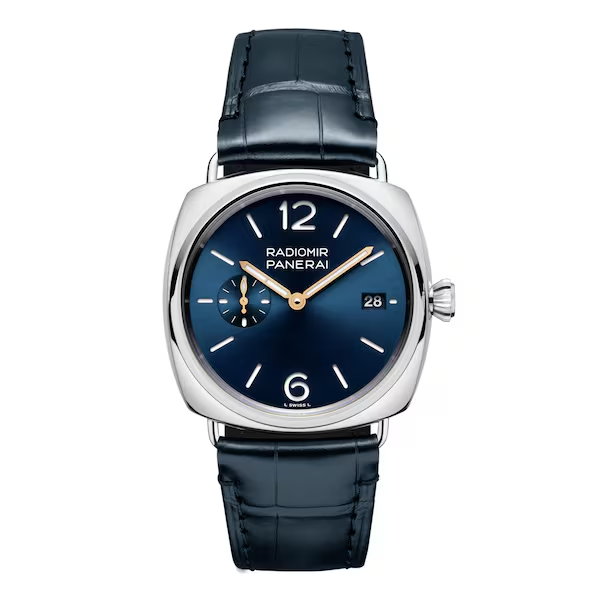
Overview: Panerai’s cushion-shaped cases and crown-guard lever design came from Italian military dive-watch history, and the brand has built a passionate (if polarizing) following around that heritage.
Why it’s worth it: No other brand makes a case this distinctive at this size and presence. If the aesthetic clicks with you, nothing else quite substitutes for it — and the in-house P.9000 series movements are genuinely well-engineered.
Pros:
- Extremely distinctive design, impossible to mistake for another brand
- Strong build quality and water resistance for genuine diving use
- Passionate collector community with good parts and service support
Cons:
- Large case sizes (many 44-47mm) won’t suit everyone
- Resale value has softened noticeably from the brand’s mid-2000s peak popularity
- Polarizing design means it’s not a universal “safe” purchase
Ideal buyer: Someone with a larger wrist who wants a bold, unmistakable dive watch and doesn’t mind standing out.
Who should avoid it: Buyers with smaller wrists, or anyone wanting a subtle everyday watch.
- Movement: In-house automatic (P-series) or modified movements
- Case size: 42–47mm
- Water resistance: 100–300m depending on model
- Price range: $7,000–$20,000+
- Styling: Casual and rugged, not office-appropriate for most models
- Value rating: 6/10 — quality is real, but demand has cooled
10. Breitling
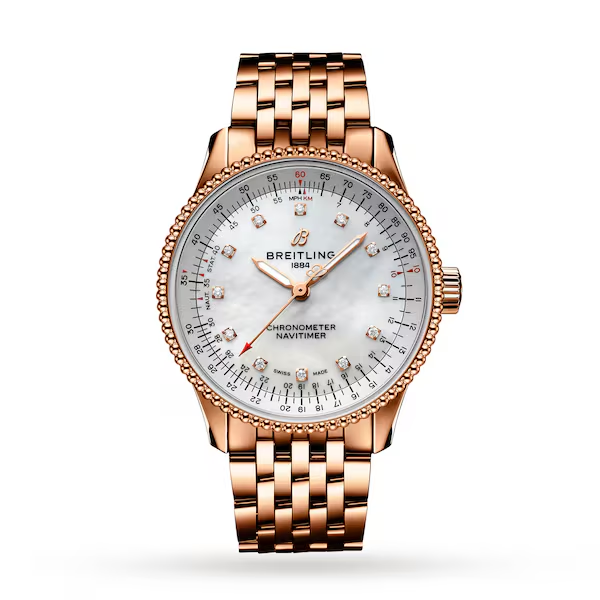
Overview: Breitling built its name on pilot chronographs and has spent the last decade genuinely improving in-house movement development after years of relying on modified ETA and Valjoux calibers.
Why it’s worth it: The Navitimer and Superocean lines offer real chronograph functionality and dive capability at a price below the “big three,” and the brand’s recent push toward in-house B-series movements has closed the quality gap significantly.
Pros:
- Genuinely functional chronograph and dive tools, not just styling
- More attainable pricing than Omega for comparable complications
- Strong recent improvement in movement quality and finishing
Cons:
- Historically inconsistent resale value; still recovering brand perception from over-discounting in past decades
- Some older models used generic modified movements, so vintage buying requires care
- Bracelet and clasp quality has been inconsistent across different eras
Ideal buyer: A pilot-watch enthusiast or chronograph lover who wants real function at a lower entry point than Omega or IWC.
Who should avoid it: Buyers focused purely on resale value or brand cachet at dinner parties.
- Movement: In-house B01 automatic chronograph and modified movements
- Case size: 41–46mm typical
- Water resistance: 30m (Navitimer) to 300m (Superocean)
- Price range: $4,500–$10,000 for core models
- Styling: Casual to smart-casual, especially strong for weekend and travel wear
- Value rating: 6.5/10, improving
11. Tudor
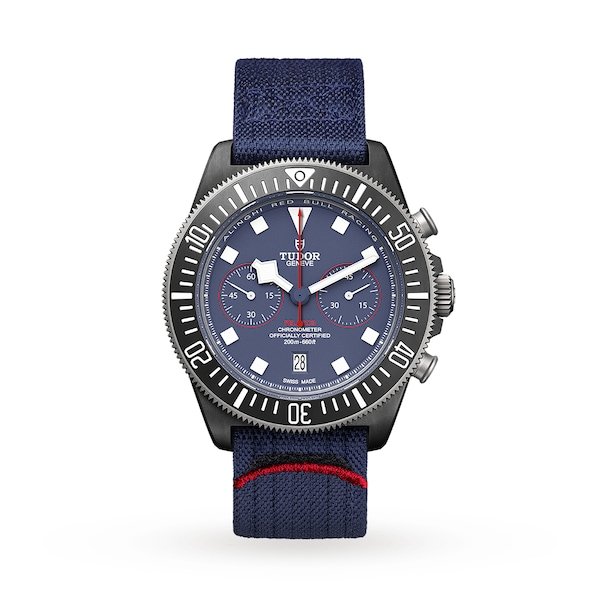
Overview: Tudor is Rolex’s sister company, sharing the same parent (the Wilsdorf Foundation) and, increasingly, in-house movement technology developed in partnership with Breitling and Kenissi. It’s the best “gateway” brand into serious Swiss watchmaking.
Why it’s worth it: The Black Bay line offers genuinely excellent build quality, in-house automatic movements, and design heritage pulled from Tudor’s own 1950s-60s military dive watches — at roughly a third the price of an equivalent Rolex.
Pros:
- Exceptional value for the build quality and movement technology
- In-house COSC-certified movements on most current models
- Strong resale relative to price point; some models hold value very well
Cons:
- Less prestige recognition than Rolex, even though quality is close
- Some earlier ETA-based models are less desirable to collectors than newer in-house calibers
- Limited complications compared to more expensive Swiss brands
Ideal buyer: Someone who wants serious Swiss mechanical quality without Rolex pricing or waitlists — often a first “real” luxury watch.
Who should avoid it: Buyers who specifically need brand recognition for status purposes; most non-enthusiasts won’t know Tudor.
- Movement: In-house automatic (MT5602 and similar Kenissi-based calibers)
- Case size: 36–41mm typical for Black Bay
- Water resistance: 150–200m
- Price range: $3,200–$5,500 for most core models
- Styling: Highly versatile, casual to smart-casual
- Value rating: 8.5/10 — arguably the best value-to-quality ratio on this list
12. Grand Seiko
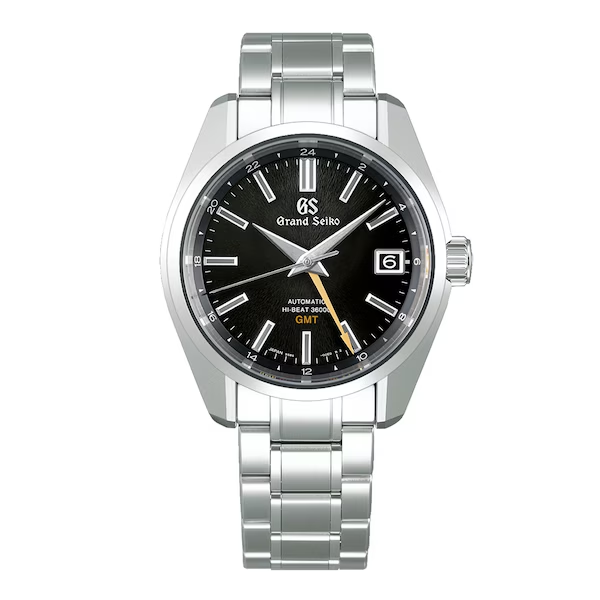
Overview: Grand Seiko spent decades as Japan’s best-kept watchmaking secret before splitting fully from Seiko as its own global brand in 2017. The finishing quality — particularly the “Zaratsu” polishing and textured dials inspired by Japanese landscapes — rivals Swiss houses costing two to three times as much.
Why it’s worth it: This is the brand for people who care about dial texture, case finishing, and mechanical innovation (their Spring Drive movement, combining mechanical and quartz technology, is unlike anything else in the industry) more than they care about brand cachet at a cocktail party.
Pros:
- Extraordinary dial and case finishing for the price
- Spring Drive movement offers genuinely unique technology (a mechanical movement with quartz-level accuracy)
- Excellent value relative to comparable Swiss finishing quality
Cons:
- Lower brand recognition outside enthusiast circles, which affects resale liquidity
- Some models can be harder to service outside major cities
- Design is more subtle and won’t appeal to buyers wanting obvious luxury signaling
Ideal buyer: A detail-oriented buyer who wants exceptional finishing and mechanical interest over status recognition.
Who should avoid it: Someone who needs the watch to be instantly recognized as “luxury” by people who don’t know watches.
- Movement: In-house mechanical, Spring Drive, or quartz (9F series)
- Case size: 37–44mm
- Water resistance: 100–200m typical
- Price range: $3,800–$9,000 for most models
- Styling: Versatile, office to weekend
- Value rating: 7.5/10 for quality; resale liquidity is the main weak point
13. A. Lange & Söhne
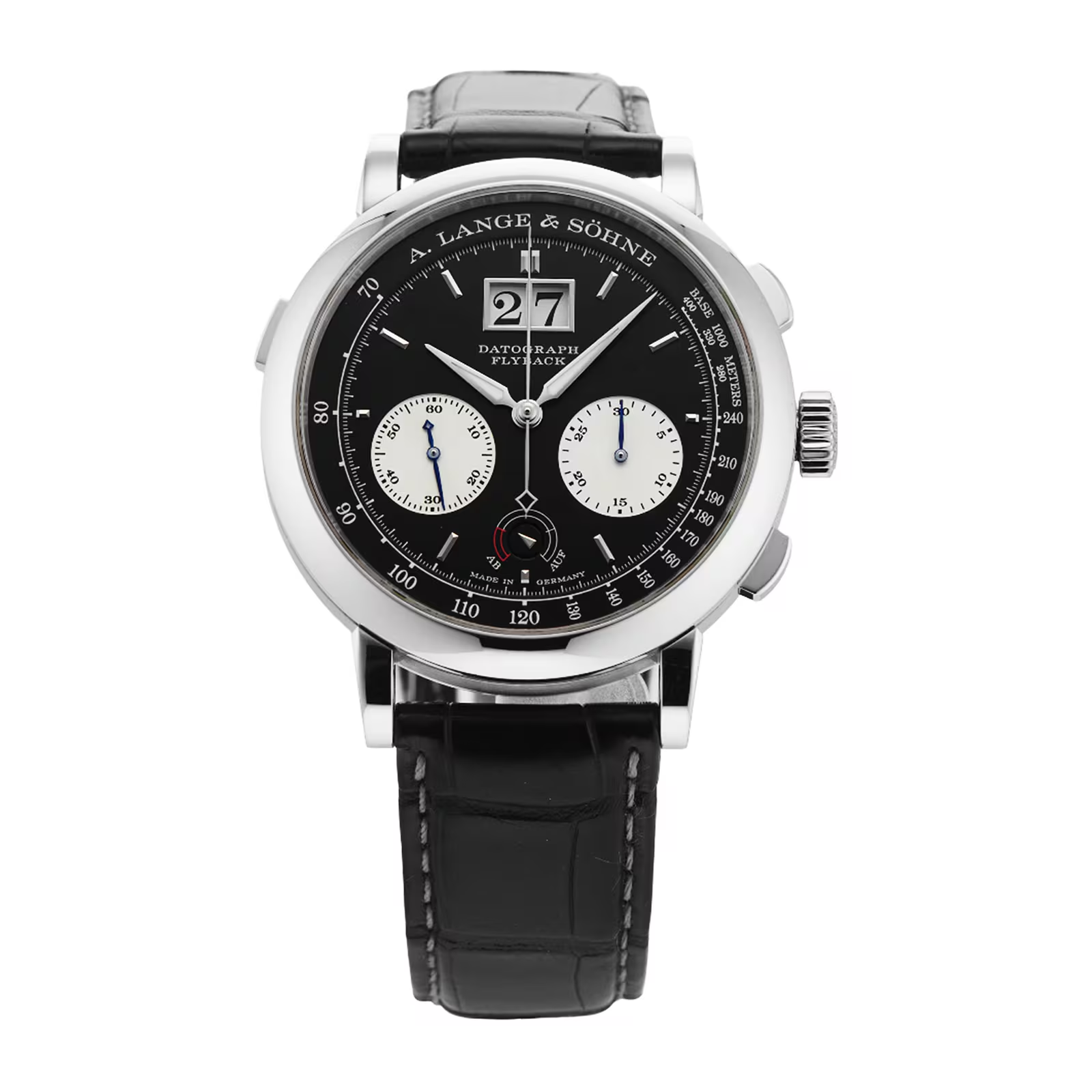
Overview: This German manufacturer, based in Glashütte, is often cited by hardcore collectors as producing the finest movement finishing in the world — arguably ahead of even Patek in certain respects. The German aesthetic (solid gold chatons, hand-engraved balance cocks, off-center dials) is distinct from Swiss design language.
Why it’s worth it: If movement architecture and hand-finishing are what excite you about mechanical watches, Lange’s in-house calibers — visible through display casebacks on most models — are genuinely some of the best executed in the industry.
Pros:
- Exceptional, arguably unmatched movement finishing
- Distinct German design identity, different from Swiss norms
- Strong collector demand for key references (Lange 1, Datograph)
Cons:
- Very limited service network outside major cities
- High cost of entry even relative to other haute horlogerie brands
- Lower brand recognition among the general public
Ideal buyer: A serious collector who already understands movement finishing and wants something distinct from mainstream Swiss houses.
Who should avoid it: First-time luxury watch buyers — this isn’t a starting point, it’s usually a later addition to an established collection.
- Movement: In-house manual and automatic, hand-finished
- Case size: 38.5–41.9mm typical
- Water resistance: 30m (not a sports brand)
- Price range: $30,000–$100,000+
- Styling: Formal, dress-focused
- Value rating: 7/10 — exceptional quality, niche liquidity
14. Zenith
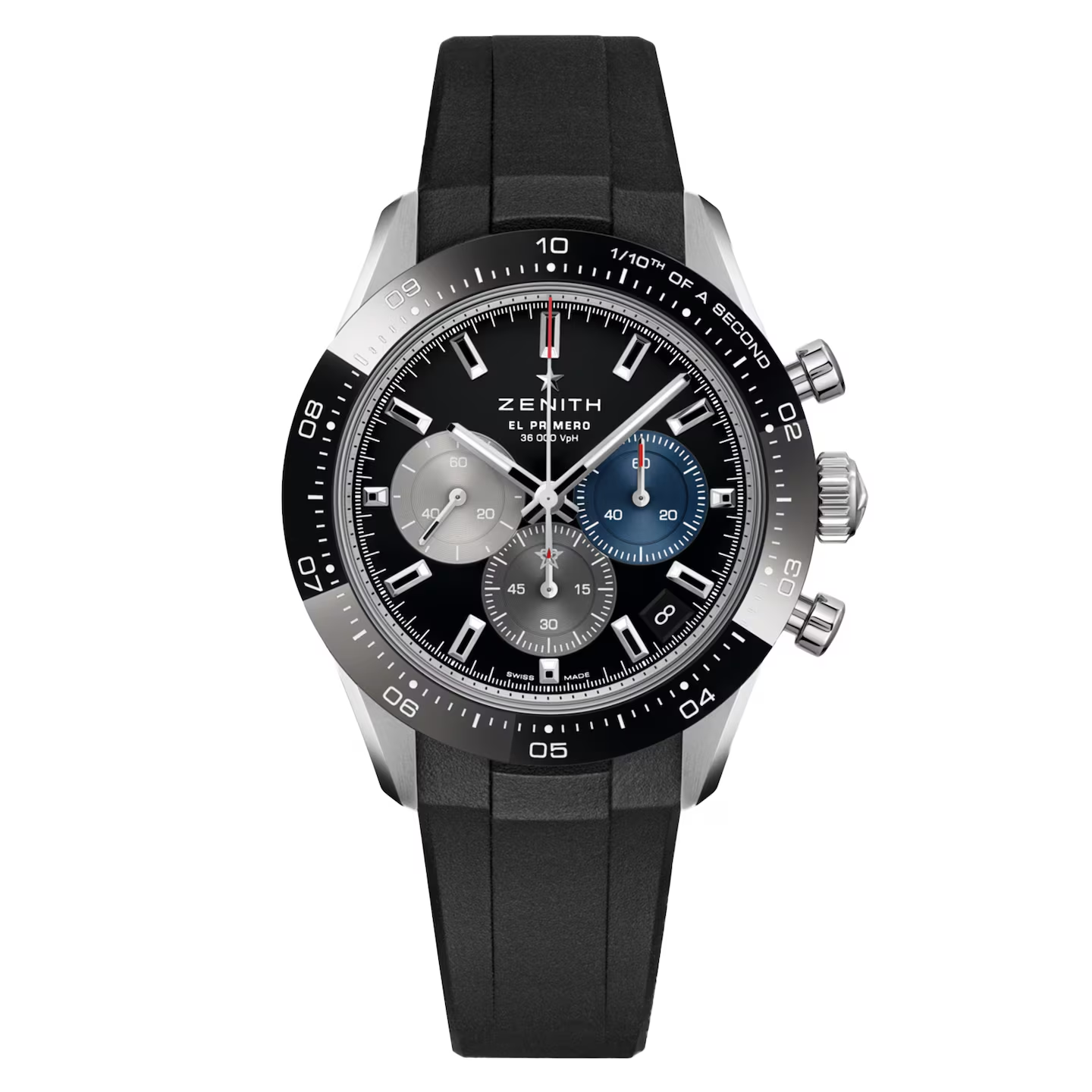
Overview: Zenith’s El Primero, launched in 1969, was one of the first automatic chronograph movements ever produced and remains in continuous, refined production today — a genuinely rare feat in the industry.
Why it’s worth it: The Chronomaster line offers a historically significant, high-frequency movement (36,000 vibrations per hour, enabling 1/10th-of-a-second accuracy) at a price meaningfully below Rolex Daytona or Omega Speedmaster equivalents.
Pros:
- Genuine horological significance with the El Primero movement
- High-frequency movement offers real technical advantages in chronograph precision
- Good value relative to comparable Swiss chronograph competitors
Cons:
- Brand recognition has fluctuated over the decades and remains modest outside enthusiast circles
- Resale value is decent but not in Rolex or Omega territory
- Design language has changed direction several times, which can confuse new buyers
Ideal buyer: A chronograph enthusiast who wants genuine horological history without paying Daytona prices.
Who should avoid it: Buyers prioritizing brand recognition or resale liquidity above mechanical interest.
- Movement: In-house El Primero automatic chronograph
- Case size: 38–42mm
- Water resistance: 50–100m
- Price range: $6,500–$12,000
- Styling: Smart-casual to semi-formal
- Value rating: 6.5/10
15. Longines
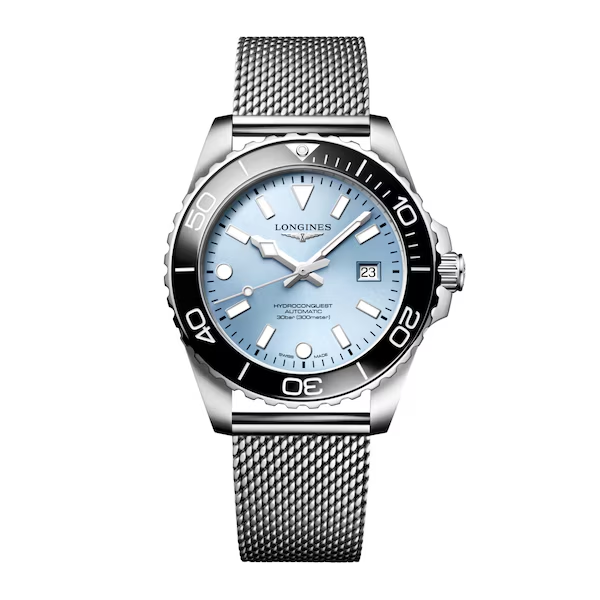
Overview: Longines sits just below true “haute horlogerie” pricing but delivers genuinely excellent build quality, heritage, and design for the money — making it the most accessible entry point on this list into legitimate Swiss luxury watchmaking.
Why it’s worth it: Owned by the Swatch Group, Longines benefits from ETA-based movement technology refined in-house, combined with over 190 years of design heritage. The Spirit and Heritage lines in particular punch well above their price bracket.
Pros:
- Excellent build quality and finishing for the price bracket
- Deep design heritage with genuinely attractive vintage-reissue models
- Reliable movements with strong accuracy for the price
Cons:
- Resale value is modest — this isn’t a brand you buy for financial upside
- Movements are shared architecture with other Swatch Group brands rather than fully unique in-house designs
- Lower prestige ceiling than the other brands on this list
Ideal buyer: Someone entering serious watch collecting who wants genuine Swiss quality without a five-figure commitment.
Who should avoid it: Buyers specifically looking for investment-grade appreciation potential.
- Movement: Automatic (ETA-based, some in-house column-wheel chronograph calibers)
- Case size: 38–42mm typical
- Water resistance: 30–100m
- Price range: $1,800–$3,500 for most models
- Styling: Versatile, office to casual
- Value rating: 7/10 for the price bracket, though not a resale investment
Common Mistakes When Buying a Luxury Watch
Buying for resale flip potential instead of enjoyment. The secondary market has corrected hard since the 2021-22 peak. Buy something you’ll actually wear for a decade, and treat any appreciation as a bonus, not the plan.
Ignoring wrist size and case dimensions. A 45mm Panerai looks completely different on a 6-inch wrist than a 7.5-inch one. Try before you buy whenever possible, and if you can’t, measure your wrist and compare against the case diameter and lug-to-lug distance, not just the diameter alone.
Skipping authorized dealers for “deals” on unfamiliar grey market sites. Counterfeit and Franken-watch (assembled from mismatched genuine parts) problems are real, especially with Rolex and Patek. If the price seems too good, it usually is.
Not budgeting for servicing. A full mechanical service every 5-8 years can run $500-$1,500 depending on the brand and complications. Factor this into total cost of ownership, not just the purchase price.
Assuming all luxury brands appreciate the way Rolex sometimes does. Most brands on this list are excellent watches that hold value reasonably — they are not Rolex Daytonas from the 1970s. Manage expectations accordingly.
How to Buy Your First Luxury Watch: Practical Advice
Start by figuring out what you’ll actually wear it for. A watch for daily office use has different priorities (versatility, comfort, subtlety) than a special-occasion dress watch or a dedicated dive watch for actual diving.
Try watches on in person before committing, even if you plan to buy online eventually. Photos and specs don’t tell you how a 41mm case with a long lug-to-lug measurement will actually sit on your wrist.
Buy from authorized dealers or well-reviewed, established secondary market platforms (Chrono24 with verified dealer status, WatchBox, Bob’s Watches) rather than unknown private sellers, especially for your first purchase.
Consider your climate and lifestyle. If you’re near water often, prioritize water resistance and a dive-rated model. If you’re mostly in air-conditioned offices, a dress watch with less water resistance is perfectly fine.
Would you actually wear this every day, or is it a special-occasion piece? Be honest with yourself here — the watch that gets worn is the one that earns its price tag, not the one sitting in a box.
Frequently Asked Questions
What’s the best luxury watch brand for a first purchase? Tudor and Omega are the two most commonly recommended starting points. Both offer genuine Swiss mechanical quality, solid resale value, and price points ($3,000-$8,000) that don’t require years of relationship-building with a boutique to access.
Which luxury watch brands hold their value best? Rolex is the clear leader on value retention, particularly steel sports models like the Submariner and GMT-Master II. Patek Philippe and Audemars Piguet follow, though with more volatility depending on the specific reference and market conditions.
Is a luxury watch actually a good financial investment? Generally, no — treat it as a durable good you enjoy, not a financial asset. A small number of specific references have appreciated significantly, but predicting which ones will do so in advance is unreliable, and most watches depreciate at least somewhat after purchase.
How much should I budget for watch servicing? Plan for a full service every 5-8 years, typically costing $400-$1,500 depending on the brand and movement complexity. Higher-end brands with in-house complications (chronographs, perpetual calendars) cost more to service than simpler three-hand automatics.
What’s the difference between in-house and outsourced movements? In-house movements are designed and manufactured entirely by the watch brand itself, which typically (though not always) means better quality control and unique engineering. Outsourced movements, often from ETA or Sellita, are reliable and well-understood but shared across many brands, which some collectors see as less prestigious.
Should I buy a watch with a quartz or automatic movement? For luxury watches, automatic (self-winding mechanical) movements are the norm and generally what collectors and resale markets expect, though Grand Seiko’s quartz and Spring Drive calibers are notable, well-regarded exceptions.
What case size should I look for? Most modern luxury watches range from 38-42mm for versatile daily wear. Measure your wrist and, more importantly, check the lug-to-lug distance — a watch can wear larger or smaller than its diameter suggests depending on how the lugs extend.
Are vintage luxury watches a good option for beginners? Vintage watches can offer excellent value and character, but they come with real risks: parts availability, previous repair quality, and authenticity concerns are all bigger issues than with new watches. If you’re new to the hobby, buying your first piece new or from a reputable, guaranteed-authentic vintage dealer is safer.
How do I know if I’m getting a real watch and not a counterfeit? Buy only from authorized dealers, brand boutiques, or established secondary market platforms with verified authentication processes. Be wary of prices significantly below market rate, sellers unwilling to provide documentation, and private sales without any provenance.
Do luxury watches make sense for everyday wear, or should I save them for special occasions? Most watches on this list are built to be worn daily — that’s genuinely part of the point, and a watch that never leaves the safe doesn’t earn its price tag. Dressier or more delicate pieces (thin dress watches, precious metal cases) may warrant more selective wear, but sports and tool watches from these brands are designed for regular use.
What’s the most versatile luxury watch for someone who only wants to own one? A steel three-hand automatic in the 38-40mm range — think Rolex Datejust, Omega Aqua Terra, or Tudor Black Bay 36/39 — tends to transition most smoothly between office, casual, and semi-formal settings.
Final Verdict
If you want one watch and you’re prioritizing resale value and universal recognition, Rolex remains the safest choice, specifically a steel sports model like the Submariner or GMT-Master II.
If budget is the constraint and you still want genuine Swiss mechanical quality, Tudor’s Black Bay line offers the best value-to-quality ratio on this entire list. If you care more about finishing and mechanical craftsmanship than brand recognition, Grand Seiko or Jaeger-LeCoultre will reward you more per dollar spent than anything with heavier marketing behind it.
And if you’re a serious collector building toward the top of the hobby, Patek Philippe, Vacheron Constantin, and A. Lange & Söhne represent the genuine high-water mark of traditional watchmaking — but they’re not where most people should start.
Whatever you choose, buy the watch you’ll actually wear, from a seller you can trust, and treat any value retention as a nice bonus rather than the reason for the purchase. That mindset alone will save you from most of the expensive mistakes people make in this hobby.
Read also: