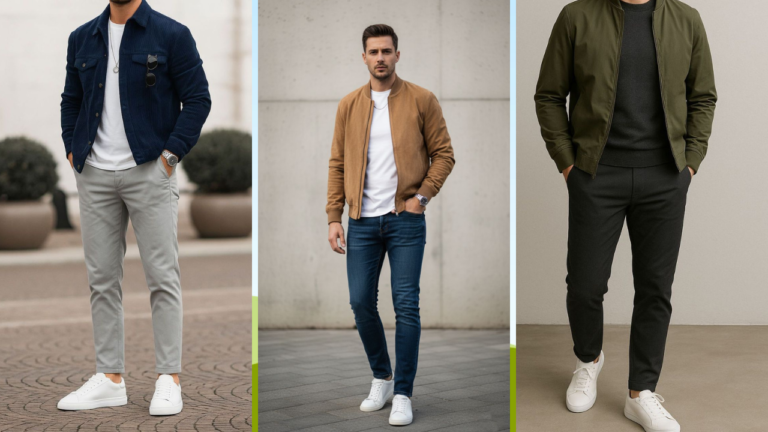
How to Dress Sharp in 5 Minutes
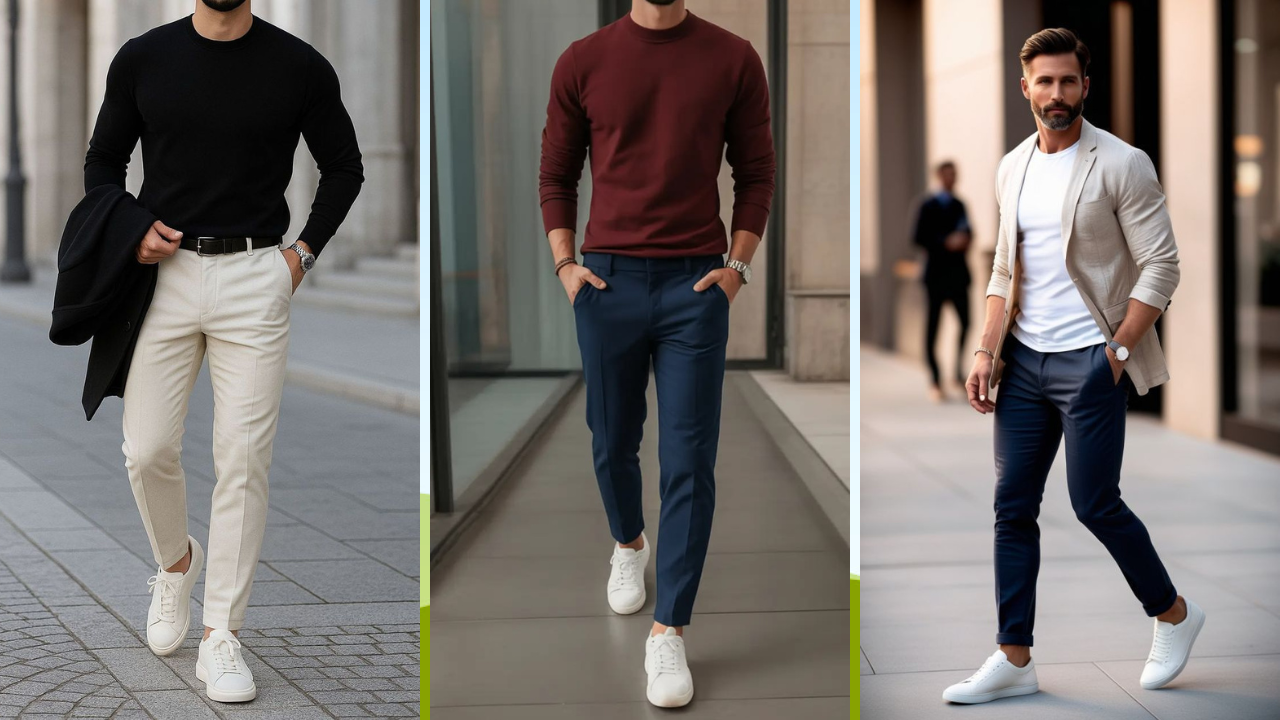
You’re running late. Again. You’ve got ten things on your mind, and the last thing you need is to stand in front of your closet for twenty minutes trying to figure out what works together.
Meanwhile, you’ve seen guys who somehow always look sharp without seeming like they spent hours getting ready.
Here’s what they know that you don’t: looking good has nothing to do with time spent and everything to do with having a system. Sharp dressing in five minutes isn’t about rushing or cutting corners—it’s about eliminating decisions beforehand so getting dressed becomes automatic.
When you know exactly which combinations work, when your clothes fit properly and are ready to wear, and when you’ve removed all the friction from the process, you can go from pajamas to put-together faster than most guys can decide which hoodie to wear.
This isn’t about looking like you tried hard; it’s about looking like you’ve got your life together even when you’re pressed for time. This guide shows you exactly how to build a wardrobe and system that lets you dress sharp in five minutes or less, every single time.
Why Speed and Style Aren’t Opposites
The myth that looking good requires significant time investment keeps most men stuck in mediocre default outfits.
In reality, the opposite is true: truly sharp dressers spend less time getting dressed because they’ve done the work upfront.
They’ve built wardrobes where everything works together, established go-to combinations, and eliminated the friction that turns getting dressed into a time-consuming puzzle.
Decision fatigue is real and expensive. Every morning choice—which shirt, which pants, do these work together, what shoes make sense—drains mental energy you could use for actually important decisions.
Successful people in every field understand this, which is why many adopt personal uniforms or drastically simplified wardrobes. They’re not being boring; they’re being strategic about where they invest their cognitive resources.
The five-minute benchmark is deliberate. It’s enough time to shower awareness over your choices without obsessing, enough to ensure proper fit and condition, but not enough to overthink or second-guess yourself.
When getting dressed takes five minutes, it becomes a simple routine rather than a production. This consistency means you look sharp every day, not just on days when you have extra time.
Sharp dressing at speed requires systems, not spontaneity. Spontaneous outfit creation works when you have unlimited time and deep style knowledge.
For everyone else—and for quick mornings—pre-planned combinations and strategic wardrobe organization eliminate guesswork and guarantee results. You’re not limiting creativity; you’re building reliability.
The Prerequisites: What Needs to Be True First
Before you can dress sharp in five minutes, certain foundational elements must be in place.
These aren’t optional shortcuts—they’re non-negotiable requirements that make speed possible without sacrificing quality.
Everything Must Fit Properly
You cannot dress sharp quickly in clothes that don’t fit. Ill-fitting items require compensation—trying different combinations, adding layers to hide issues, changing multiple times—all of which destroys your five-minute goal.
Every piece in your wardrobe should fit well enough that you can put it on and know it looks good without consulting a mirror repeatedly.
Take everything that doesn’t fit to a tailor or donate it. This includes items that are too big, too small, too long, too short, or just awkwardly proportioned for your body. Keeping ill-fitting clothes “just in case” or “for someday” clogs your closet and creates decision paralysis. If it doesn’t fit today, it’s not part of your five-minute system.
Proper fit means shirts follow your torso without pulling or billowing, pants sit at your natural waist and taper appropriately, jackets align at the shoulders, and everything is hemmed to the correct length.
When fit is handled, you can grab any appropriate piece knowing it will work.
Everything Must Be Ready to Wear
Sharp dressing in five minutes collapses instantly if you need to iron a shirt, polish shoes, or search for matching socks.
Every item in your rotation must be clean, pressed, and immediately wearable. This requires systems for maintenance, not just occasional effort.
Implement a Sunday or weekly reset where you ensure the coming week’s wardrobe is ready. Wash and press shirts, clean shoes, match socks, spot-clean jackets, and verify everything is in rotation-ready condition.
This one-hour weekly investment saves five to ten minutes daily and eliminates the morning scramble.
Hang or fold clothes properly immediately after wearing if they’re still clean enough for another wear.
Use a steamer for quick wrinkle removal—faster and easier than ironing. Keep a shoe cleaning kit accessible and use it regularly. Maintenance as routine prevents morning emergencies.
Your Color Palette Must Be Cohesive
Quick dressing requires knowing that any top works with any bottom in your wardrobe. This is only possible with a restricted, coordinated color palette.
If you’re checking whether navy and brown work together every time you get dressed, you’re wasting precious minutes on questions that should be solved at the wardrobe-building level.
Choose your neutral base colors—typically navy, gray, white, and black, or earth tones like tan, brown, and olive—and commit to them.
Every foundational piece (pants, jackets, shoes) should come from this palette. You can introduce accent colors in shirts or accessories, but your core pieces must be universally compatible.
When everything in your closet coordinates by design, you literally cannot create a clashing outfit. This eliminates color-matching decisions entirely and makes five-minute dressing foolproof.
You Need Predetermined Outfit Formulas
Sharp guys who dress quickly aren’t making new outfit decisions each morning—they’re rotating through proven combinations they’ve already tested.
You need 5-7 go-to outfit formulas that work for your life: outfits for work, casual weekends, dates, active days, and any regular contexts you encounter.
Write these formulas down or mentally catalog them. For example: “White oxford + gray chinos + brown Chelsea boots + navy blazer” or “Black t-shirt + dark jeans + white sneakers + denim jacket.” These become your defaults, and you rotate between them rather than creating new combinations from scratch.
With predetermined formulas, your morning decision is simply “which formula makes sense today” rather than “what should I wear.” This single-choice versus multiple-choice distinction is what makes five-minute dressing possible.
The 5-Minute Method: Step-by-Step Execution
Once prerequisites are handled, the actual five-minute process becomes straightforward and repeatable. Here’s exactly how it works, broken into one-minute increments.
Minute 1: Choose Your Formula Based on Context
Your first decision is determining which pre-established outfit formula matches today’s needs.
This requires knowing your schedule, which you should check the night before or first thing when you wake up.
Ask yourself: What’s my primary activity today? What formality level is required? What’s the weather?
If it’s a work day, you default to one of your work formulas. Weekend? Choose from weekend formulas.
Special event? You’ve already planned that outfit. The key is that you’re not creating anything new—you’re selecting from existing, tested options.
This decision should take 30-60 seconds maximum. If you’re deliberating longer, you don’t have clear enough formulas or haven’t accurately assessed your context. The answer should be nearly automatic: “Tuesday, client meeting, need the smart-casual formula.”
Keep your formulas mentally organized by context. You might have: Formula A (business casual), Formula B (casual Friday), Formula C (weekend day), Formula D (evening casual), Formula E (active weekend). When you wake up, your context immediately points to the right formula.
Minute 2: Grab Your Bottom Half
Start with pants because they’re foundational and limit your subsequent choices less than starting with a shirt would. Go directly to the pants required by your chosen formula.
If it’s your business casual formula that calls for gray chinos, grab your gray chinos. Don’t deliberate between multiple pairs or second-guess the formula—just execute.
Put the pants on immediately. This commits you to the formula and prevents backtracking.
Once you’re wearing the pants, you’re moving forward with that outfit. This decisive action maintains momentum and prevents the analysis paralysis that destroys quick dressing.
Check the fit and condition in this moment. If something’s wrong—unexpected stain, button missing, fit feels off—you catch it now and can quickly pivot to an alternate formula rather than realizing problems later and starting over.
The bottom half also determines your footwear, which you should mentally note now. If you’re wearing dark jeans, you know sneakers or Chelsea boots work. If you’re wearing chinos, you might need loafers or dress shoes. This parallel processing—thinking about shoes while putting on pants—saves time.
Minute 3: Add Your Base Layer
Your formula specifies your base layer: t-shirt, henley, button-down, or sweater. Grab it and put it on without deliberation.
Again, you’re executing a plan, not creating one. If your formula calls for a white t-shirt, grab a white t-shirt. If it specifies a light blue oxford, that’s what you’re putting on.
Tuck or untuck according to the piece and formula. T-shirts and henleys typically stay untucked.
Button-downs depend on the outfit—tucked for business casual, untucked for smart casual if the shirt has an untucked hem. Make this decision once per formula, not fresh each wearing.
This is also when you verify the base layer’s condition. If your designated white t-shirt isn’t actually clean or has developed a stain, grab the backup from the same category.
You should have multiples of essential base layers (3-4 white t-shirts, 2-3 oxfords in key colors) specifically to prevent this from derailing your timeline.
Check the fit in the mirror quickly—not to second-guess, but to ensure everything is sitting correctly.
Adjust the collar, straighten the shoulders, make sure nothing is bunched or twisted. This ten-second check prevents walking out with obviously disheveled clothing.
Minute 4: Layer and Add Footwear
Now add your outer layer if the formula includes one: blazer, cardigan, jacket, or sweater.
This should be hanging ready to wear, not wrinkled in the back of your closet. Put it on, button or zip if applicable, and check the shoulders and sleeve length in the mirror.
If your formula doesn’t include an outer layer (summer, warm climates, casual contexts), use this minute for footwear and accessories instead.
Put on your shoes—the specific pair called for in your formula. If you started with dark jeans, you’re putting on white sneakers or black Chelsea boots as pre-determined. No decisions, just execution.
Ensure your belt matches your shoes if you’re wearing dress shoes or boots. Brown belt with brown shoes, black with black.
This should be automatic based on your formula, but verify quickly. Mismatched leathers stand out and undermine the sharp appearance you’re creating.
The outer layer and footwear transform your outfit from basic to complete. This is where structure and intentionality become visible.
The base layers are foundation; this minute is where the outfit actually becomes sharp.
Minute 5: Accessories and Final Check
Add your watch and any other minimal accessories your formula includes. The watch should be your everyday piece that works with multiple outfits—not something you need to coordinate specifically.
If your formula includes a belt, verify it’s on and matches your footwear. If you carry a bag, grab the appropriate one (leather backpack for casual, briefcase for business).
Do a complete mirror check that takes 20-30 seconds. You’re not second-guessing the outfit—you’re verifying execution.
Check that everything is sitting correctly, no tags are showing, your collar is straight, pants are sitting at the right height, shoes are tied or buckled, and nothing looks obviously off.
This is also when you handle final grooming details visible in your outfit: hair is styled, facial hair is intentional, no food or toothpaste spots on your shirt. These aren’t clothing issues but presentation issues that affect how sharp you look overall.
If something feels genuinely wrong—not just unfamiliar or slightly different, but actually incorrect—you make a surgical fix, not a complete restart.
Wrong shoes? Swap them quickly. Forgot your belt? Add it. The five-minute goal allows for minor adjustments, not complete do-overs.
If you find yourself wanting to change the entire outfit, the problem is your formulas or prerequisite preparation, not the outfit itself.
The Wardrobe Structure That Makes This Possible
Five-minute sharp dressing requires a specifically structured wardrobe. You cannot have unlimited options and quick decisions simultaneously. The following structure provides enough variety to avoid feeling repetitive while maintaining the simplicity that enables speed.
The Essential Base Layers (8-10 pieces)
You need multiple versions of your most-worn base layers to ensure options are always available. This includes 3-4 premium white or gray t-shirts that fit perfectly, 2-3 button-down shirts in neutral colors (white, light blue, and one pattern like subtle stripes), and 2-3 versatile sweaters or henleys in neutral tones (navy, gray, charcoal).
These pieces should be nearly identical in fit and quality but give you options when one is in the wash or you want subtle variation.
The point isn’t variety through different styles—it’s reliability through redundancy.
When you know you have three perfect white t-shirts, you never face a morning where your go-to formula is impossible because the shirt is dirty.
The Foundational Bottoms (5-6 pieces)
You need fewer pants than shirts because pants rotate less frequently. Include 2 pairs of dark wash jeans (one indigo, one black), 2-3 pairs of chinos in neutral colors (navy, gray, khaki), and 1 pair of dress trousers in charcoal for formal situations.
Each pair should fit identically or very similarly—same rise, same taper, same break. This consistency means you’re not relearning proportions with each pair.
Your dark jeans should fit the same way, your chinos should all have the same cut, and your dress trousers should follow suit. Consistent fit across categories makes them interchangeable within their formality level.
The Versatile Outerwear (4-5 pieces)
Outerwear provides the most dramatic visual impact for the least effort, making it crucial for sharp five-minute dressing.
You need a navy blazer (semi-structured or unstructured for versatility), a casual jacket (denim or utility jacket), a leather or suede jacket for edge, and a weather-appropriate outer layer (overcoat, rain jacket, or bomber depending on climate).
These four pieces cover the full range from business casual to weekend casual, from temperate to cold weather, from understated to statement-making. Each should fit perfectly in the shoulders (non-negotiable) and be in rotation-ready condition at all times.
The Footwear Foundation (4-5 pairs)
Shoes make or break sharp appearance and can’t be rushed. You need white leather sneakers (for casual formulas), brown Chelsea boots or loafers (for smart-casual), black dress shoes (for business formal), and one additional casual option (desert boots, minimalist sneakers, or boat shoes depending on your lifestyle).
Keep all shoes clean and maintained. Dirty white sneakers destroy a sharp look faster than almost anything else. Scuffed dress shoes signal carelessness. If your five-minute process includes shoe selection, the shoes must be ready to wear without any cleaning or conditioning.
The Minimal Accessories (5-7 items)
Accessories should enhance, not complicate. You need one versatile watch (analog, leather or metal band, works across contexts), two belts (brown and black leather), and optionally one or two subtle jewelry pieces (simple chain, leather bracelet, or ring).
These accessories work across multiple formulas, so you’re not coordinating accessories specifically for each outfit. Your watch works with everything. Your belt matches your shoes automatically based on color. Any jewelry is subtle enough to work universally. This eliminates accessory decisions entirely.
Pre-Planning: The Night-Before Advantage
The absolute fastest way to dress sharp in five minutes is to eliminate morning decisions entirely by choosing your outfit the night before. This shifts thinking time to when you’re not rushed and ensures truly zero decision-making in your actual five-minute window.
The Evening Selection Process
After checking tomorrow’s schedule and weather, select your formula and physically set out the complete outfit. This means laying out or hanging together: pants, shirt, outer layer if applicable, shoes positioned nearby, belt placed on the pants, and watch and accessories set out.
This takes 3-5 minutes in the evening when you’re relaxed and thinking clearly. In exchange, your morning dressing becomes literally automatic—you put on what’s already selected without thinking. This is the difference between five minutes of execution and five minutes of decision-making plus execution.
The evening selection also reveals problems early. If your go-to shirt is actually dirty, you discover this when you have time to choose an alternative and possibly throw in a load of laundry. If your shoes need cleaning, you can handle it before bed. Morning surprises are what destroy quick dressing.
The Weekly Batch Planning
Take this concept further by planning your entire week on Sunday evening. Review your week’s schedule and assign formulas to each day. Monday: Formula A (business casual). Tuesday: Formula B (client meeting, elevated). Wednesday: Formula C (casual, working from home). This creates a roadmap for the week.
You can then verify you have all necessary pieces clean and ready, batch any needed maintenance (ironing multiple shirts at once, cleaning all shoes), and identify any gaps that require attention. This systematic approach eliminates the possibility of morning wardrobe failures.
Weekly planning also helps you avoid repetition. If you wore your navy blazer Monday and Tuesday, you’ll consciously choose a different outer layer for Wednesday. This prevents the “didn’t I just wear this?” feeling that makes you restart the outfit selection process.
The Seasonal Preset Formulas
At the start of each season, establish 5-7 go-to formulas appropriate for that season’s weather and activities. Write them down or save photos of complete outfits. These become your seasonal rotation, and you simply cycle through them for three months before updating.
This preset system means you’re never creating outfits from scratch. Summer Formula 1 might be: white t-shirt + khaki chinos + white sneakers + no jacket. Winter Formula 1 might be: gray henley + dark jeans + brown Chelsea boots + navy blazer + camel overcoat. You’re not reinventing anything; you’re executing proven combinations.
Update these formulas seasonally as weather changes, your lifestyle shifts, or you acquire new pieces. The formulas evolve gradually rather than requiring constant recreation, providing both stability and freshness.
The Closet Organization System
How you store and organize your wardrobe directly impacts how quickly you can access pieces and execute your formulas. A disorganized closet adds minutes to the process through searching, comparing, and decision-making.
Categorize by Type, Then Color
Organize your closet so similar items are grouped together: all t-shirts in one section, all button-downs together, all pants together, all shoes together. Within each category, arrange by color from light to dark or by color family. This lets you locate “white t-shirt” or “navy chinos” instantly without sorting through unrelated items.
Visible organization reduces decision fatigue. When you can see all your options at a glance without digging, your brain processes choices faster. When items are hidden or jumbled, you waste time excavating and reconsidering pieces you’d forgotten you owned.
Use uniform hangers (all the same type and color) for a cleaner visual field. This seems like a small detail but reduces visual clutter that slows down selection. Velvet hangers prevent clothes from sliding off, wooden hangers work for heavier items like coats, and thin plastic hangers maximize space.
The Front-of-Closet Rotation System
Keep your current weekly rotation at the front of your closet or in the most accessible position. These are the 10-15 pieces you’re actually wearing this week based on your planned formulas. Everything else—off-season items, special occasion pieces, backups—can be stored less accessibly.
This front-loading system means you’re choosing from a curated selection of 10-15 items rather than your entire wardrobe. It’s the difference between “which of these three appropriate shirts” versus “which of these fifteen shirts I own.” Reduced options paradoxically make decisions faster and better.
Rotate items in and out of the front position weekly or as needed. After wearing something, return it to the front if it’s still clean enough for another wear, or move it to the laundry area if it needs washing. This keeps your active rotation fresh and available.
The Vertical Visibility Principle
Store items so you can see everything at once without moving other items. This means hanging rather than stacking when possible, using drawer dividers so clothes don’t pile up, and avoiding storage methods that hide items underneath others.
For items that must be folded (t-shirts, sweaters, casual pants), use the KonMari vertical folding method where clothes stand upright in drawers rather than stacking. You can see every item simultaneously and remove one without disturbing others—crucial for quick selection.
Keep shoes visible on racks or shelves rather than in boxes. Searching through shoe boxes destroys your five-minute timeline. Visible shoes mean you can grab the right pair immediately based on your formula.
The Outfit Photo System
Take photos of your complete proven formulas and save them in a dedicated album on your phone labeled “Outfits” or “Formulas.” When you’re rushing and can’t remember which formula to use, scroll through these photos and pick one that matches your context.
This visual reference eliminates the mental work of remembering outfit combinations. You’re not thinking “what goes with my gray chinos again?”—you’re looking at a photo of yourself in gray chinos, brown boots, white oxford, and navy cardigan, and recreating that exact look.
Update photos as formulas evolve or new pieces enter rotation. Delete photos of outfits that no longer work or items you’ve removed from your wardrobe. Keep this album current so it remains a useful tool rather than a historical record.
Troubleshooting Common Speed Obstacles
Even with perfect preparation, certain situations threaten your five-minute goal. Anticipating and solving these obstacles in advance keeps you on track.
When Your Go-To Piece Is Dirty
The solution is strategic redundancy in key pieces. You should never have only one white t-shirt, one pair of dark jeans, or one pair of brown shoes if these items appear in multiple formulas. Own 2-3 of anything you wear more than once weekly.
When you discover your planned piece is unavailable, you immediately substitute the backup version. Since these pieces are intentionally similar or identical, the substitution doesn’t change the outfit—you’re just grabbing a different white t-shirt, not redesigning the formula.
Keep a minimum rotation buffer. If you wear button-downs twice weekly, own five so you always have clean options available. If dark jeans appear in three formulas, own two pairs so one can be in the wash while one is available.
When Weather Doesn’t Match Your Plan
Check weather the night before when planning, but unexpected changes happen. The solution is having modular formulas where you can add or remove a layer without changing the core outfit.
For example, your base formula might be white t-shirt + dark jeans + white sneakers. In warm weather, you add a denim jacket. In cold weather, you add a sweater and an overcoat. In summer, you wear just the base. The formula adapts to temperature without requiring complete redesign.
Keep a weather-adaptive mindset where your formulas have “light,” “medium,” and “heavy” versions using the same foundational pieces. This flexibility prevents starting over when conditions change.
When You Can’t Decide Between Two Formulas
If you’re genuinely stuck between two appropriate formulas, set a timer for 30 seconds and choose. The decision paralysis is costing more time than any potential benefit of selecting “the perfect one.” Both formulas work—you’ve pre-validated them—so either choice is fine.
Alternatively, default to the more polished option. When uncertain, being slightly overdressed beats being underdressed. Your smart-casual formula edges out your casual formula when you can’t decide.
This situation also signals you need clearer formula assignments. If you frequently can’t decide between formulas, your contexts aren’t well-defined or your formulas aren’t different enough. Refine your system so each formula has a clear use case.
Read also: Best Street Style Outfits for Urban Men
When Something Feels “Off” After Getting Dressed
First, determine if something is actually wrong or if the outfit just feels unfamiliar. New combinations often feel strange initially even when they look good objectively. Check the mirror—if it looks fine, trust the visual evidence over your feeling.
If something is genuinely wrong (mismatched formality, poor fit, obvious mistake), make a surgical correction, not a full reset. Wrong shoes? Change just the shoes. Belt doesn’t match? Switch the belt. The five-minute framework allows quick fixes, not complete restarts.
If you consistently feel off in a particular formula, that formula needs adjustment or elimination. Your formulas should feel as good as they look. Discomfort signals a mismatch between the formula and your personal style or lifestyle needs.
Frequently Asked Questions
Can I really look sharp consistently in just five minutes?
Yes, but only after you’ve done the prerequisite work. Five-minute dressing isn’t about rushing through decisions—it’s about eliminating decisions through preparation. Once your wardrobe fits properly, everything is ready to wear, you have cohesive colors, and formulas are established, the actual dressing process genuinely takes five minutes or less. The investment is upfront in building the system, not daily in execution.
What if I get bored wearing the same formulas repeatedly?
You have 5-7 formulas rotating, each with potential variations (different shirt colors, different shoes, different accessories), creating dozens of actual distinct outfits. Additionally, you update formulas seasonally and as your wardrobe evolves. Boredom typically signals either too few formulas (expand to 7-8) or formulas that are too similar (make them more distinct). Most importantly, remember that others don’t notice repetition the way you do—they just notice you consistently looking sharp.
How does this work for people who need to wear suits daily?
The formula approach adapts perfectly to suit-wearing. Your formulas become: Suit A (navy) + white shirt + burgundy tie, Suit B (charcoal) + light blue shirt + navy tie, etc. The process is identical—you’re selecting from predetermined combinations rather than creating new ones. If anything, suits make five-minute dressing easier because business formal has fewer variables than casual style.
What about special occasions or events outside my normal formulas?
Special events get planned in advance—that outfit doesn’t need to be a five-minute decision. This system is for your regular daily life where quick, reliable dressing matters most. For weddings, important presentations, or unique events, you plan that outfit separately with appropriate time. The five-minute system handles your normal routine, freeing mental space for special occasions when they arise.
How do I build formulas when I’m not confident in my style knowledge?
Start by copying complete outfits from style guides, Instagram accounts you admire, or this article. Don’t try to create original combinations initially—execute proven formulas until you understand why they work. Take photos of yourself in each formula to build your reference library. After wearing these borrowed formulas and seeing what works for your life, you’ll naturally develop the knowledge to create your own. Style confidence comes from repetition and results, not from innate talent.
Building Your Five-Minute System Starting Today
You don’t need to overhaul your entire wardrobe this week to start dressing sharp quickly. Begin with small systematic improvements that compound into a fully functional five-minute system.
Week 1: Audit and remove. Go through your closet and remove everything that doesn’t fit properly or that you haven’t worn in six months. Be ruthless. Donate or sell these items immediately—don’t store them “just in case.” This single action dramatically improves your closet’s signal-to-noise ratio and makes actual options easier to identify.
Week 2: Identify your top three formulas. Based on what you actually do regularly, define three complete outfit formulas you could wear starting tomorrow. Write them down explicitly: specific pieces, specific combinations. These should cover your most common contexts (work, weekend casual, and one other relevant situation).
Week 3: Ensure those three formulas are ready. Get the pieces from your three formulas tailored if needed, cleaned, pressed, and rotation-ready. Buy any missing essential pieces if your budget allows. The goal is having three genuinely functional formulas you could execute in five minutes by the end of this week.
Week 4: Execute and evaluate. Wear your three formulas exclusively for a week, rotating through them. Pay attention to what works, what doesn’t, and what feels missing. Take notes on adjustments needed. This real-world testing reveals whether your formulas are actually functional or need refinement.
Month 2: Expand to five formulas. Add two more formulas following the same process—define, prepare, test. Now you have enough variety for a full work week without repetition or several weekend options depending on your life.
Month 3: Refine and systematize. Implement the organizational systems, build your photo reference library, practice the five-minute routine until it becomes automatic. By the end of three months, quick sharp dressing should feel natural rather than forced.
This gradual approach prevents overwhelm and expensive mistakes. You’re building a system incrementally based on what actually works for your life rather than trying to implement everything simultaneously and potentially failing due to the scope.
The Compound Benefits of Dressing Sharp Quickly
The value of five-minute sharp dressing extends far beyond saving time in the morning. This system creates cascading benefits that improve multiple areas of your life in ways that aren’t immediately obvious.
Reduced decision fatigue means you start each day with more mental energy for important choices. When getting dressed is automatic, you preserve cognitive resources for work decisions, relationship navigation, and personal growth rather than burning them on coordinating colors and second-guessing outfit choices.
Increased consistency in your presentation builds your reputation. When you always look sharp, people begin to associate that polished appearance with who you are. This consistency creates credibility and positive first impressions that compound over time. Occasional good outfits create occasional positive impressions; consistent good outfits create a reliable personal brand.
Greater confidence emerges when you know you look good without having to think about it. This isn’t shallow vanity—it’s the psychological reality that your external presentation affects your internal state. When you’re certain your appearance is handled, you engage more fully in conversations, take more social risks, and project more confidence in all interactions.
Time savings accumulate significantly. Five minutes versus twenty minutes saves fifteen minutes daily. Over a year, that’s 91 hours—more than two full work weeks of time reclaimed. You can sleep later, exercise, eat a proper breakfast, or simply start your day less rushed. Time saved in the morning has disproportionate impact on your entire day’s momentum.
Reduced wardrobe complexity and size means lower maintenance, less storage space needed, and ultimately less money spent on clothes you don’t actually wear. When you understand your formulas and what works, you stop buying random pieces that seem appealing but don’t fit your system. This focused purchasing is more economical and sustainable.
The ultimate benefit is liberation from clothing as a source of daily stress. Getting dressed becomes as automatic and unconsidered as brushing your teeth—necessary maintenance that requires no emotional or cognitive investment. This freedom allows you to focus on what actually matters in your life while maintaining a sharp, consistent appearance that serves you well in all contexts. Build the system once, benefit from it indefinitely.
Read also: