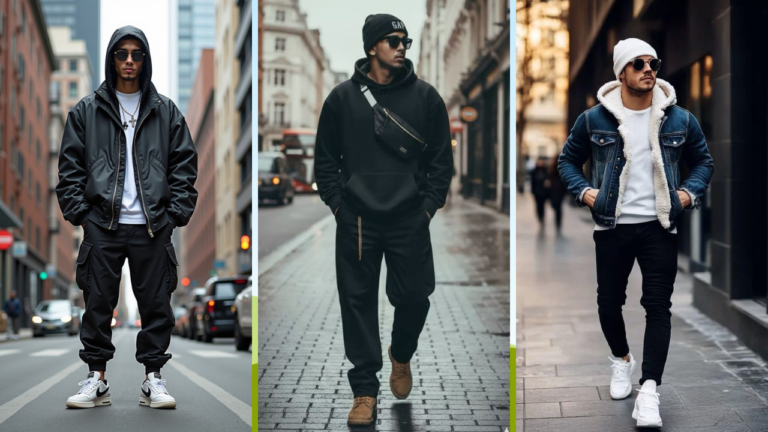
Outfit Ideas Every Man Can Copy
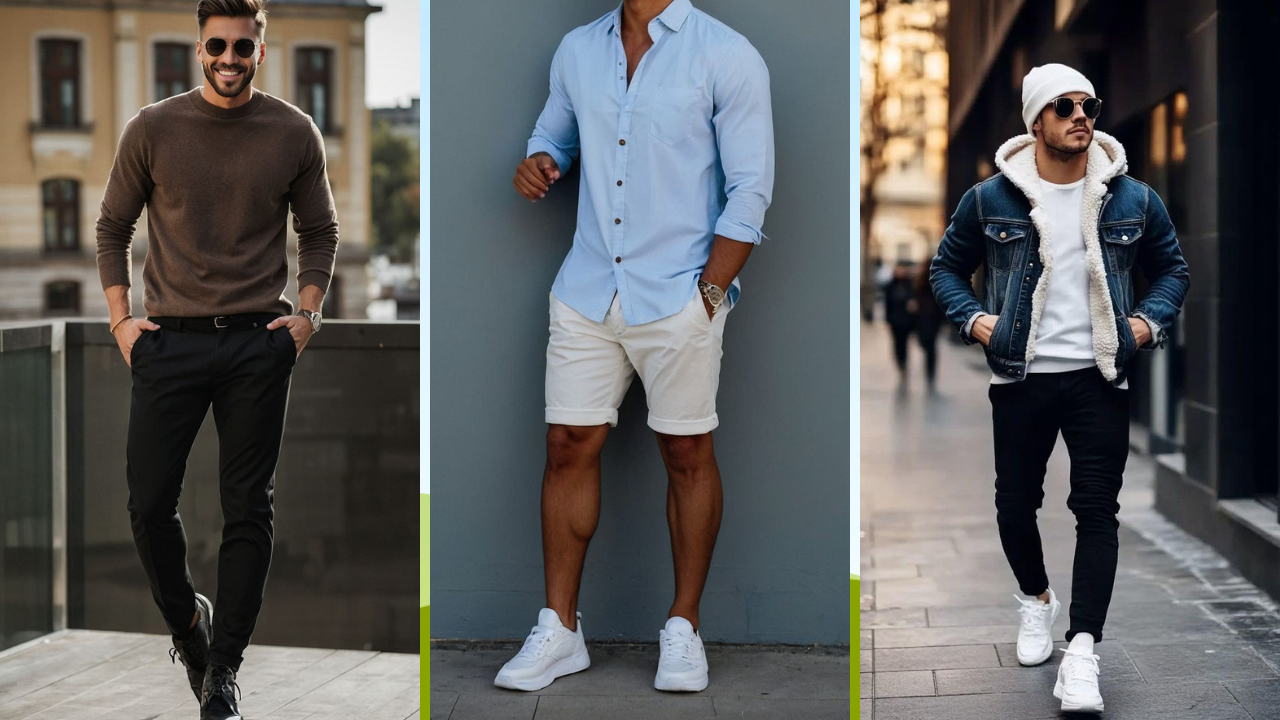
Getting dressed shouldn’t feel like solving a puzzle every morning.
You stand in front of your closet, staring at clothes that somehow never seem to work together, wondering why some guys always look put-together while you’re stuck in the same jeans and t-shirt rotation.
Here’s the truth: style isn’t about having an overflowing wardrobe or spending hours planning outfits. It’s about knowing a few reliable combinations that work for your life and actually make you feel confident.
The men who always look good aren’t fashion experts—they’ve just figured out which outfits work and stick with them.
This guide breaks down real, wearable outfit formulas you can copy immediately, whether you’re heading to the office, meeting friends, or just want to look like you’ve got your life together.
No guesswork, no overthinking—just proven combinations that work.
Why Copy-and-Paste Outfits Actually Work
Think about the most stylish men you know. Chances are, they’re not reinventing their look daily. They’ve discovered a personal uniform—a set of outfit formulas they rotate through with slight variations.
This approach isn’t lazy; it’s strategic. When you have tested outfit combinations ready to go, you eliminate decision fatigue and always walk out the door looking intentional.
The beauty of having copyable outfit formulas lies in consistency. Instead of experimenting with random pieces and hoping they work together, you’re building from proven foundations.
Each outfit in your rotation becomes a template you can adapt with different colors, textures, or accessories depending on your mood or the season. You’re not limiting your style—you’re creating a framework that makes getting dressed effortless.
Modern menswear has shifted away from complicated trends toward timeless simplicity. The outfits that work best are usually the ones built on classic pieces combined in clean, uncomplicated ways.
A well-fitted white oxford shirt, quality denim, and minimal sneakers will always outperform trendy pieces that feel outdated in six months.
When you focus on versatile staples and reliable combinations, your wardrobe works harder with less effort from you.
The Complete Outfit Formulas You Can Start Wearing Today
The Elevated Casual
White crew neck t-shirt + dark wash jeans + white leather sneakers + navy bomber jacket
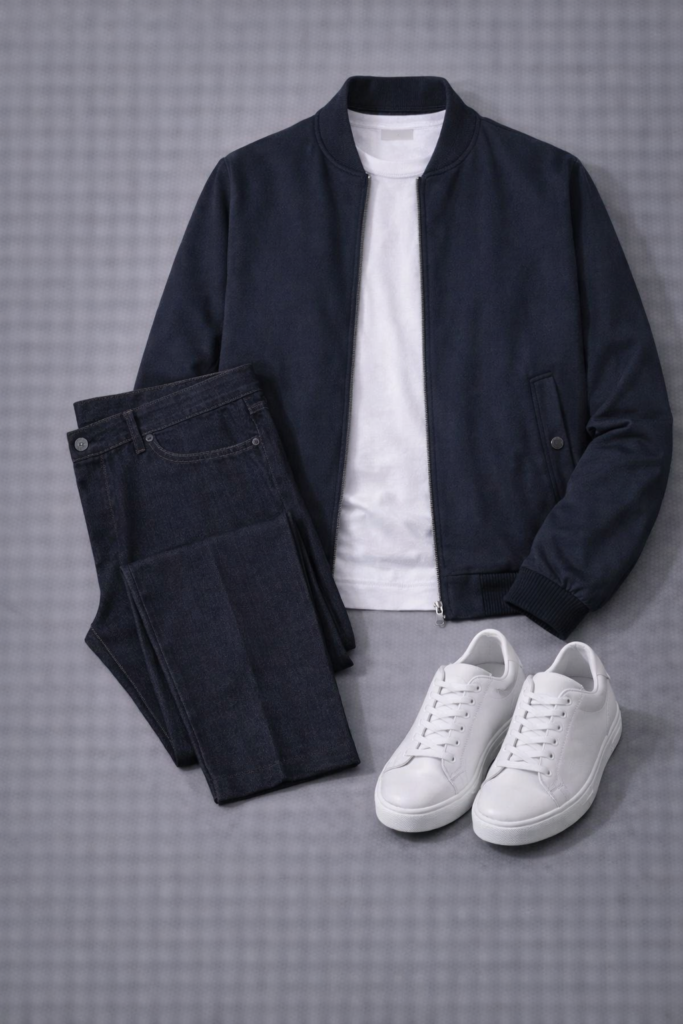
This is the foundation of modern men’s style—simple pieces that look expensive when fitted correctly. The white t-shirt should fit close to your body without being tight, hitting right at your hip bone. Dark indigo or black jeans create a cleaner silhouette than faded denim. White leather sneakers (think Common Projects, Beckett Simonon, or even well-maintained Stan Smiths) elevate the entire outfit from basic to sharp.
Why it works: This combination balances casual comfort with visual polish. The monochromatic lower half creates a streamlined look, while the bomber jacket adds structure without feeling formal. It’s the outfit that says you didn’t try too hard but clearly care about how you present yourself.
When to wear it: Weekend coffee runs, casual dates, running errands, meeting friends for lunch, basically any situation where you want to look good without looking overdressed.
Styling upgrade tip: Swap the crew neck for a well-fitted henley or replace the bomber with a suede trucker jacket for textural interest. Add a simple leather watch or bracelet to complete the look.
The Smart Casual Standard
Oxford button-down shirt + chinos + leather Chelsea boots + lightweight cardigan
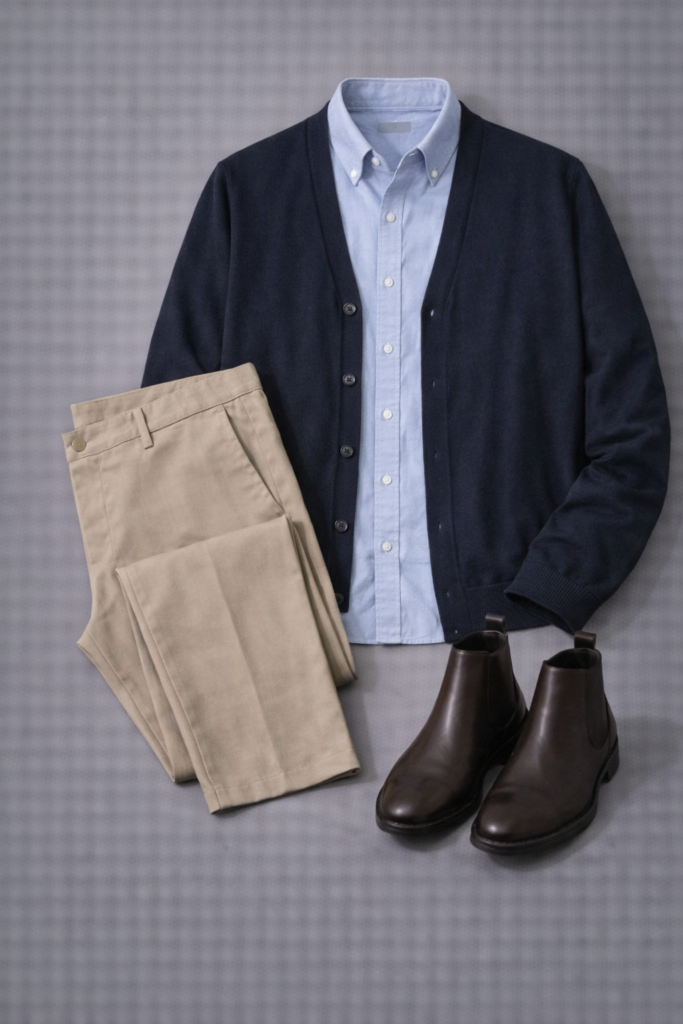
This outfit bridges the gap between casual and dressy, making it incredibly versatile. Choose an oxford shirt in white, light blue, or subtle stripes—nothing too busy. Your chinos should be tailored enough to avoid looking like dad pants; aim for a slight taper from knee to ankle. Chelsea boots in brown or tan leather add sophistication without the formality of dress shoes.
Why it works: The layering creates visual depth, and the mix of textures (cotton shirt, wool or cotton cardigan, leather boots) adds richness to what could otherwise be a basic outfit. It’s polished enough for business casual environments but relaxed enough for social settings.
When to wear it: Casual Fridays, dinner dates, meeting her parents, gallery openings, daytime events, any occasion where “dress nice” feels vague.
Styling upgrade tip: Roll your shirt sleeves to show a bit of forearm and add a casual edge. If it’s warmer, ditch the cardigan and tuck in the shirt with a minimal leather belt. In colder months, replace the cardigan with a tailored overcoat.
The Monochrome Move
Black crewneck sweater + black jeans + black Chelsea boots + gray overcoat
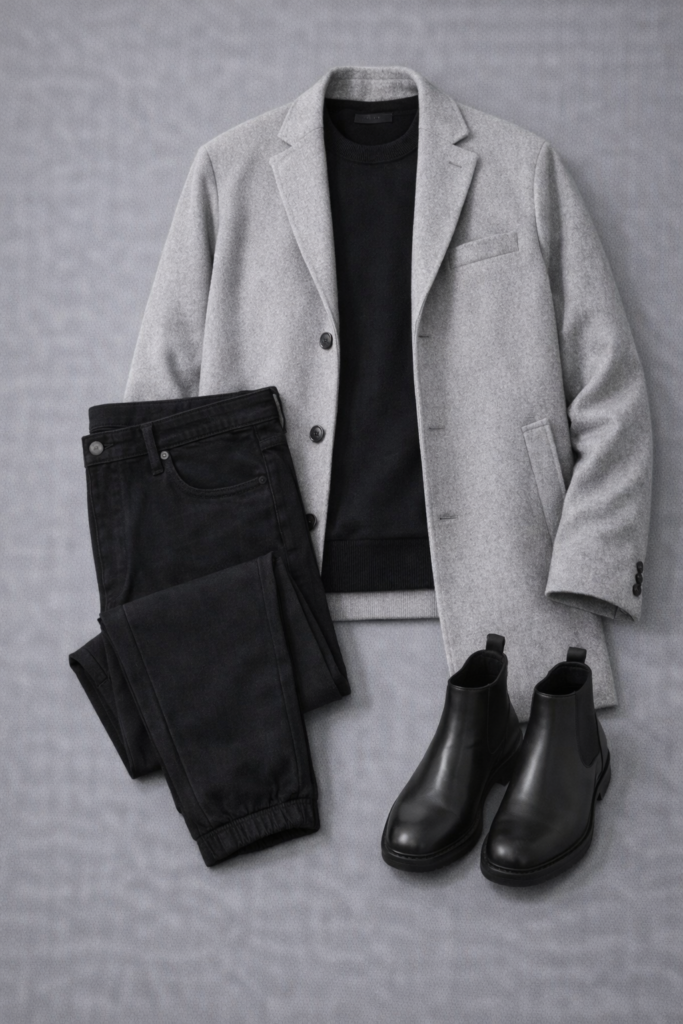
Monochromatic dressing is a cheat code for looking sophisticated. When done in darker tones, it creates a sleek, elongated silhouette that’s inherently flattering. The key is playing with different textures and shades within the same color family to avoid looking flat or costume-like.
Why it works: Wearing one color from head to toe eliminates the guesswork of matching and creates a cohesive, intentional look. The gray overcoat breaks up the black just enough to add dimension while maintaining the monochromatic effect. This outfit makes you look taller and slimmer while projecting confidence.
When to wear it: Evening events, city outings, dinners, concerts, anywhere you want to make a subtle statement without flashy colors or patterns.
Styling upgrade tip: Introduce subtle texture variations—maybe the sweater is merino wool, the jeans are raw denim, and the boots are suede instead of leather. Add a simple silver chain or watch for a touch of contrast against the dark palette.
The Layered Weekend Look
Fitted hoodie + denim jacket + joggers + minimalist sneakers
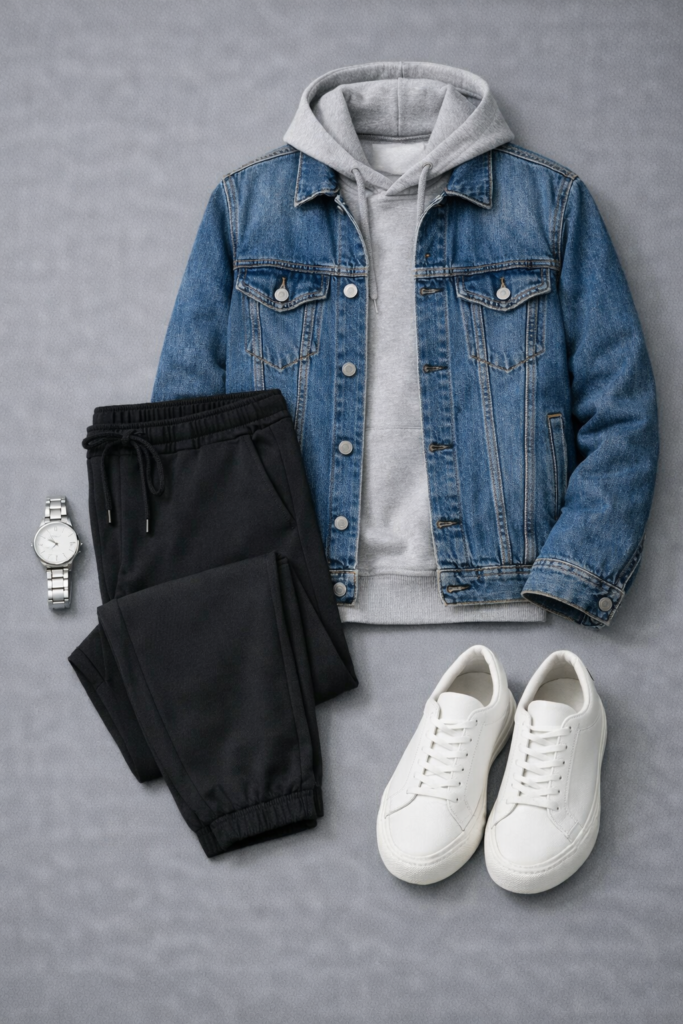
Athleisure meets casual style in this comfortable yet put-together combination. The fitted hoodie should hug your torso—avoid anything baggy or oversized. A medium-wash denim jacket adds structure, while tapered joggers in black, navy, or olive keep things modern. Finish with clean, minimal sneakers in neutral colors.
Why it works: This outfit takes typically casual pieces and elevates them through fit and layering. The denim jacket provides a structured outer layer that makes the hoodie underneath feel intentional rather than lazy. Tapered joggers look exponentially better than straight-leg sweatpants and feel just as comfortable.
When to wear it: Weekend activities, travel days, casual hangouts, grocery shopping, morning workouts followed by brunch, any relaxed setting where comfort is key but you don’t want to look sloppy.
Styling upgrade tip: Choose a hoodie in a muted color like charcoal, burgundy, or forest green instead of basic gray. Add a simple backpack or crossbody bag for functionality and style. In summer, remove the denim jacket and let the hoodie stand alone.
The Effortless Office Look
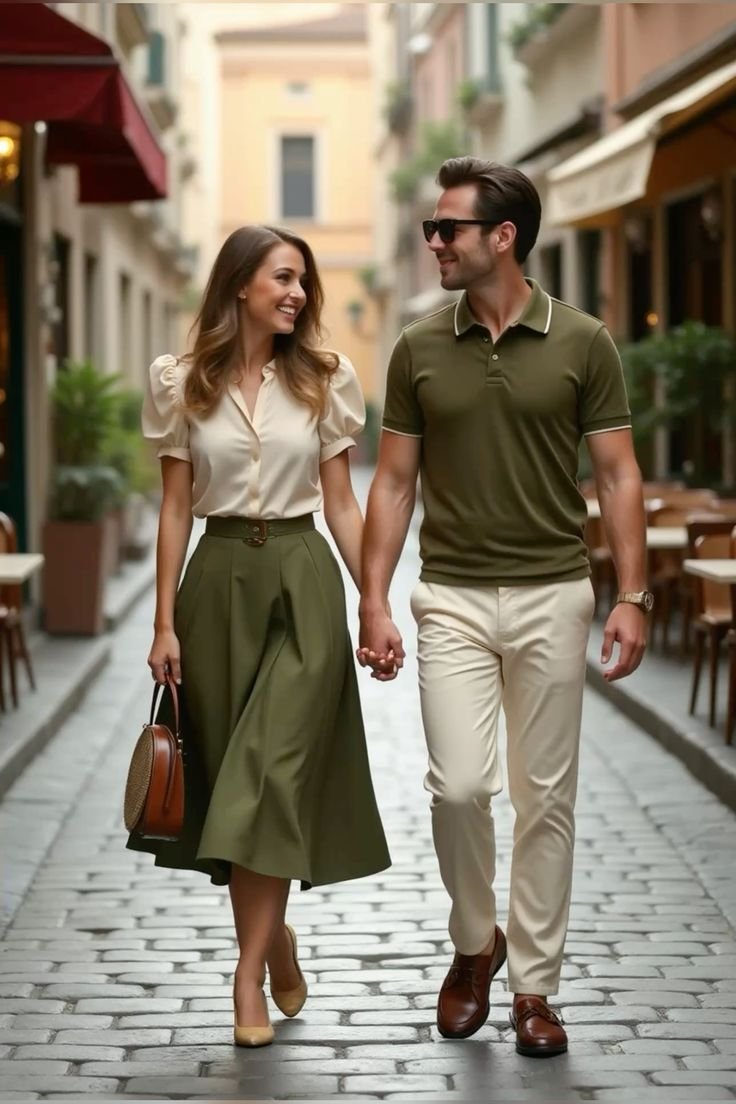
Knit polo shirt + tailored trousers + loafers + leather belt
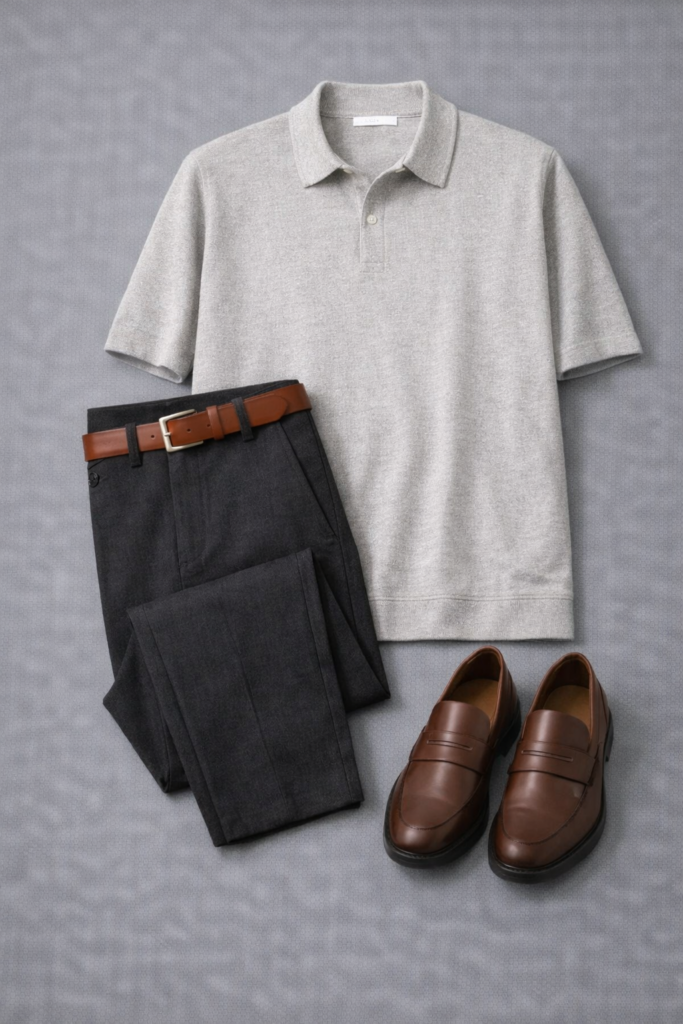
The knit polo strikes the perfect balance between a t-shirt’s casualness and a dress shirt’s polish. It should fit similarly to a well-tailored t-shirt—close to the body but not restrictive. Pair it with tailored trousers in navy, charcoal, or tan that break slightly at the ankle. Loafers in brown or burgundy leather complete the business-casual aesthetic.
Why it works: This outfit feels more relaxed than traditional office wear but maintains professional polish. The knit polo is sophisticated without the stiffness of a button-down, making it perfect for modern workplace environments that value both professionalism and approachability.
When to wear it: Business casual offices, client meetings, professional lunches, networking events, presentations where you need to look sharp without wearing a full suit.
Styling upgrade tip: Add a blazer in a complementary color for more formal occasions. Choose a textured knit polo (think piqué or waffle knit) for added visual interest. Match your belt to your loafers for a cohesive finish.
The Refined Minimalist
White t-shirt + gray tailored trousers + white sneakers + black leather jacket
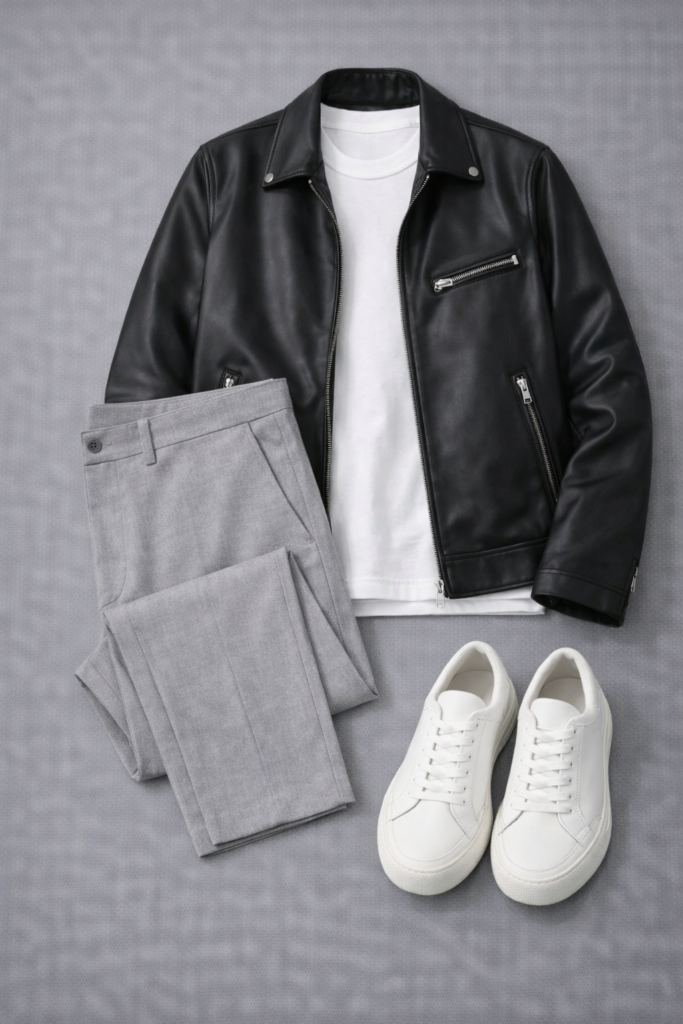
This outfit proves that simplicity done right beats complexity every time. A premium white t-shirt with a substantial weight (avoid thin, see-through fabric) forms the base. Tailored gray trousers should fit slim through the leg with a slight taper. White leather sneakers keep things casual, while a black leather jacket adds edge and sophistication.
Why it works: The neutral color palette creates a clean, modern aesthetic that photographs well and works in virtually any casual setting. The leather jacket introduces texture and personality without overwhelming the minimalist foundation. This is the outfit for guys who appreciate understated style that still makes a statement.
When to wear it: Date nights, evening drinks, concerts, art shows, downtown wandering, anywhere you want to look cool without trying to impress anyone.
Styling upgrade tip: Swap the t-shirt for a crisp white button-down worn untucked for a slightly dressier vibe. Replace the leather jacket with a wool bomber in colder months. Add minimalist accessories like a thin watch or simple silver ring.
The Textured Neutral
Cream cable-knit sweater + brown corduroy pants + suede desert boots + tan trench coat
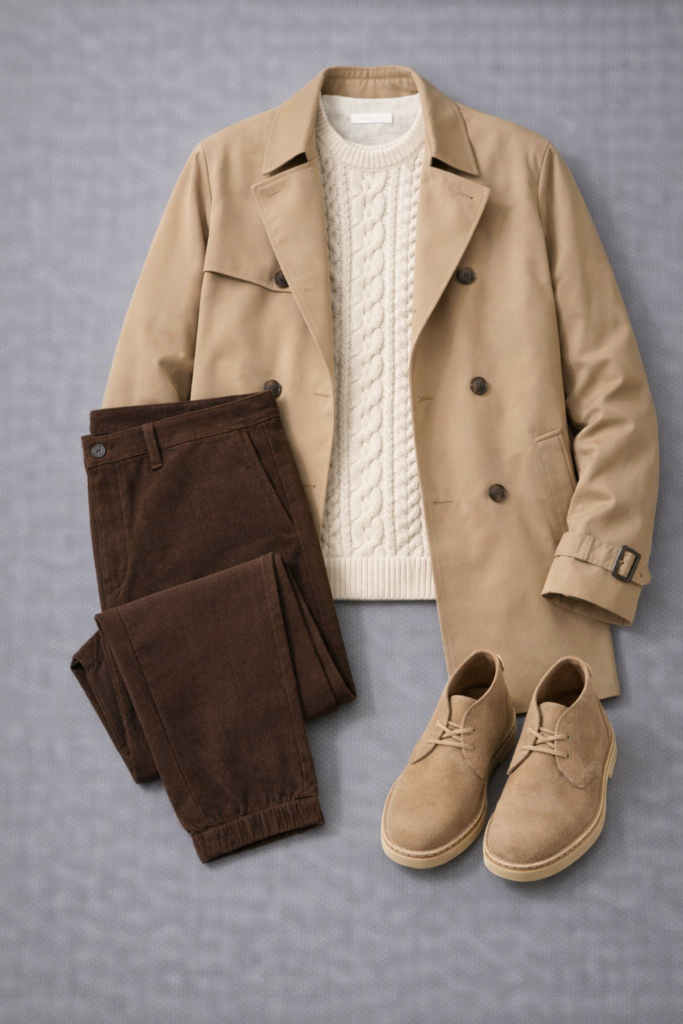
Earth tones and rich textures create warmth and visual interest in this fall-winter outfit. The cable-knit sweater adds dimension, while corduroy introduces a vintage-inspired texture. Suede desert boots in tan or sand complement the neutral palette, and a trench coat provides a sophisticated outer layer.
Why it works: This combination shows how playing with texture within a neutral color scheme creates depth without relying on bold colors or patterns. The tonal approach feels cohesive and mature, perfect for cooler months when layering becomes necessary.
When to wear it: Fall and winter outings, Thanksgiving gatherings, casual work events, coffee shop working sessions, autumn walks, transitional weather when you need versatile layering.
Styling upgrade tip: Add a burgundy or navy scarf for a pop of color against the neutral base. Replace the trench with a camel overcoat for a more structured look. Cuff the corduroy pants slightly to show a sliver of ankle and draw attention to the boots.
The Summer Simple
Linen button-down shirt (short sleeve) + khaki shorts + leather sandals + canvas tote
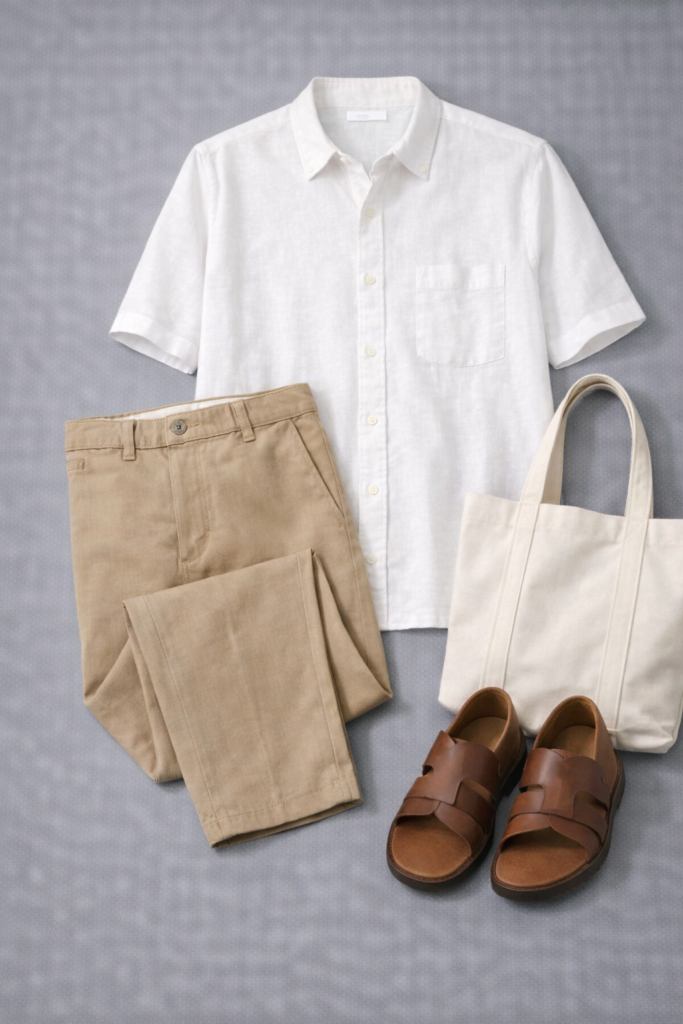
Summer style should prioritize breathability and ease. A short-sleeve linen shirt in white, light blue, or chambray keeps you cool while looking intentional. Well-fitted khaki or navy shorts that hit just above the knee maintain a clean silhouette. Quality leather sandals elevate the look beyond flip-flops, and a canvas tote adds functional style.
Why it works: Linen’s natural texture and breathability make it the ideal summer fabric, while the tailored fit of the shorts prevents the outfit from looking too casual or sloppy. Leather sandals strike the balance between relaxed and refined, working for various summer occasions.
When to wear it: Beach towns, summer vacations, outdoor dining, farmers markets, barbecues, poolside gatherings, warm-weather weekends.
Styling upgrade tip: Choose a patterned linen shirt (subtle stripes or micro-checks) for visual interest. Roll the sleeves once for a more relaxed feel. Add wayfarers or aviator sunglasses and a simple watch to complete the summer-ready look.
Universal Styling Rules That Make Any Outfit Better
Fit is everything. An inexpensive outfit that fits properly will always look better than expensive clothes that don’t fit your body. Your shirts should follow your torso’s shape without pulling or billowing. Pants should sit comfortably at your natural waist and taper slightly toward the ankle. Shoulders on jackets and coats should align with your actual shoulder line. When in doubt, spend money on tailoring—it’s the fastest way to elevate your entire wardrobe.
Stick to two or three colors maximum. Visual simplicity creates sophistication. When you limit your color palette, your outfit automatically looks more cohesive and intentional. Build around one or two neutral colors (black, white, gray, navy, beige, brown) and add one accent color if desired. This rule prevents your outfit from looking chaotic or confused.
Balance proportions thoughtfully. If you’re wearing something relaxed on top, balance it with something more fitted on the bottom, and vice versa. Wide-leg trousers work well with fitted t-shirts or sweaters. Oversized sweaters pair better with slim or tapered pants. Avoid wearing baggy tops with baggy bottoms—it obscures your shape and looks sloppy.
Invest in quality basics first. Your white t-shirts, dark jeans, neutral sneakers, and simple sweaters get the most wear, so they should be the best quality you can afford. These pieces form the foundation of multiple outfits, making them worth the investment. Trendy items can be lower quality since they won’t be in your rotation as long.
Keep accessories minimal and intentional. Less is more when it comes to accessories. A quality watch, simple leather belt, and perhaps one subtle piece of jewelry (chain, ring, or bracelet) is enough. Avoid wearing everything at once—choose one or two accessories that complement rather than compete with your outfit.
Common Outfit Mistakes and How to Fix Them
Wearing clothes that are too big. Many men size up thinking it’s more comfortable or masculine, but oversized clothing just makes you look smaller and less put-together. Fix: Try sizing down or get your clothes tailored. Fitted doesn’t mean tight—it means following your body’s natural shape.
Ignoring the importance of footwear. Your shoes are the foundation of your outfit, literally and figuratively. Beat-up, dirty, or inappropriate shoes ruin even the best-planned outfit. Fix: Keep your shoes clean and in good condition. Invest in versatile pairs that work with multiple outfits: white sneakers, Chelsea boots, loafers, and one pair of minimal dress shoes cover most situations.
Mixing too many patterns or colors. Trying to make too much of a statement with multiple patterns, bright colors, or competing elements creates visual chaos. Fix: Start with one neutral base (solid colored pants and shoes) and add interest through one element—either a patterned shirt, textured jacket, or colorful accessory, but not all three.
Neglecting the details. Wrinkled shirts, visible undershirts, untucked dress shirts with tails hanging out, or mismatched metals in accessories all signal carelessness. Fix: Iron or steam your clothes, choose proper undershirts (v-neck under button-downs), understand when to tuck and untuck, and match your metals (if your watch is silver, keep other accessories silver).
Defaulting to athletic wear for non-athletic activities. Athletic shorts, running shoes, and gym t-shirts have their place, but wearing them constantly gives the impression you’ve given up on style. Fix: Keep athletic wear for actual workouts. For casual comfort, choose joggers instead of basketball shorts, lifestyle sneakers instead of running shoes, and fitted t-shirts instead of moisture-wicking performance tees.
Forgetting about grooming and maintenance. The best outfit in the world can’t compensate for unkempt hair, overgrown facial hair (unless intentionally styled), or neglected personal care. Fix: Establish a simple grooming routine. Keep your haircut fresh, maintain your facial hair intentionally, and ensure basic hygiene is handled.
Quick Upgrade Tips You Can Apply Immediately
Roll your sleeves properly. Don’t just push them up haphazardly. Fold them once to the desired height, then fold again over the first fold. This creates a clean cuff that stays in place and looks intentional.
Pay attention to your collar. If you’re wearing a button-down casually, leave the top button or two undone. If you’re buttoning to the top, add a tie or accept that it reads as a deliberate style choice. Middle ground looks unfinished.
Cuff your pants strategically. A single clean cuff on your jeans or chinos draws attention to your shoes and creates a more tailored appearance. Just don’t make the cuff too wide—one to two inches is plenty.
Tuck in the front only. For a relaxed look with casual button-downs, try tucking in just the front portion and letting the sides and back remain untucked. It’s more styled than fully untucked but less formal than a full tuck.
Layer with different lengths. When layering, ensure each visible layer is a different length. Your t-shirt should peek out slightly under a jacket. Your coat should extend past your sweater. These subtle length variations create visual interest and show intentionality.
Match your leathers. If you’re wearing a brown belt, wear brown shoes. Black belt, black shoes. This simple rule creates cohesion and demonstrates attention to detail. The only exception is when you’re going for a deliberately mixed-metal or eclectic look, which requires more advanced styling knowledge.
Upgrade one element at a time. Instead of replacing your entire wardrobe, upgrade one category at a time. Maybe this month you invest in better jeans, next month quality sneakers, the following month a proper coat. Gradual improvements are sustainable and allow you to learn what works for your style.
Use the smell test for jackets. Outerwear picks up smells even when it looks clean. Air out your jackets regularly, use a fabric freshener, or get them professionally cleaned. A fresh-smelling jacket is part of a polished presentation.
Frequently Asked Questions
What’s the most versatile outfit combination for men?
The white t-shirt, dark jeans, and white sneakers combination is the most universally versatile outfit formula. It works for 80% of casual situations and can be dressed up with a blazer or kept relaxed as-is. The key is ensuring each piece fits well—the t-shirt should have a substantial weight and proper fit, the jeans should be dark and well-tailored, and the sneakers should be clean and minimal. This foundation can be adapted with different jackets, accessories, or footwear depending on the occasion.
How many outfit combinations should I have in my rotation?
Aim for 5-7 core outfit formulas that you can rotate and adapt. This gives you variety without overwhelming your closet or your decision-making. Each formula should serve a different purpose: one for work, one for casual weekends, one for evening events, one for active days, and a few wildcards for specific situations. Within each formula, you can vary colors, textures, and accessories to create dozens of actual outfits from these basic templates.
Can I wear sneakers with everything?
Quality, minimal sneakers in neutral colors (white, black, gray) work with almost everything except formal situations requiring dress shoes. The key is choosing lifestyle sneakers rather than athletic performance shoes—think Common Projects, Stan Smiths, or Converse rather than running shoes or basketball sneakers. However, leather shoes (loafers, Chelsea boots, desert boots, or dress shoes) will always elevate an outfit more than sneakers, so it’s worth having options.
How do I know if an outfit is too casual or too dressed up?
Consider your environment and the people you’ll encounter. If you’d be significantly more dressed up than everyone else, you’ve overshot. If you’d be noticeably more casual, you’ve undershot. When in doubt, it’s generally safer to be slightly overdressed than underdressed—you can always remove a jacket or roll up sleeves to dress down. Pay attention to dress codes (business casual, smart casual, cocktail attire) and when unsure, ask the host or check what similar events typically require.
What’s the difference between cheap-looking and expensive-looking outfits?
Expensive-looking outfits typically feature better fit, quality materials, attention to grooming, and thoughtful coordination. You don’t need to spend a fortune—a $30 t-shirt that fits perfectly and is made from substantial cotton will look better than a $100 designer shirt that fits poorly. Focus on fit first, then fabric quality, then details like clean shoes, pressed clothes, and minimal but intentional accessories. The difference between cheap-looking and expensive-looking is usually execution, not price tags.
Build Your Style With Confidence
Style isn’t about following rigid rules or copying someone else’s look exactly—it’s about understanding what works and making it your own. The outfit formulas in this guide are starting points, not restrictions. Once you understand why these combinations work (fit, color harmony, appropriate layering, balanced proportions), you can adapt them to reflect your personality, lifestyle, and preferences.
Start by choosing two or three outfit formulas from this guide that resonate with your daily life. Build them with pieces you already own or gradually acquire the missing elements. Wear each outfit multiple times, paying attention to how it makes you feel and how others respond. Confidence in your appearance comes from repetition and familiarity—the more you wear outfits that work, the more natural good style becomes.
Remember that developing personal style is a process, not a destination. Your taste will evolve, your body might change, and trends will come and go. What matters is having a reliable foundation of outfit combinations that work for you right now. These formulas eliminate the daily stress of getting dressed while ensuring you always look put-together. Start simple, stay consistent, and let your confidence in your appearance grow naturally. The best-dressed men aren’t those with the biggest wardrobes—they’re the ones who’ve figured out what works and wear it with conviction.
Read also: