How to Choose the Right Watch Size for Your Wrist
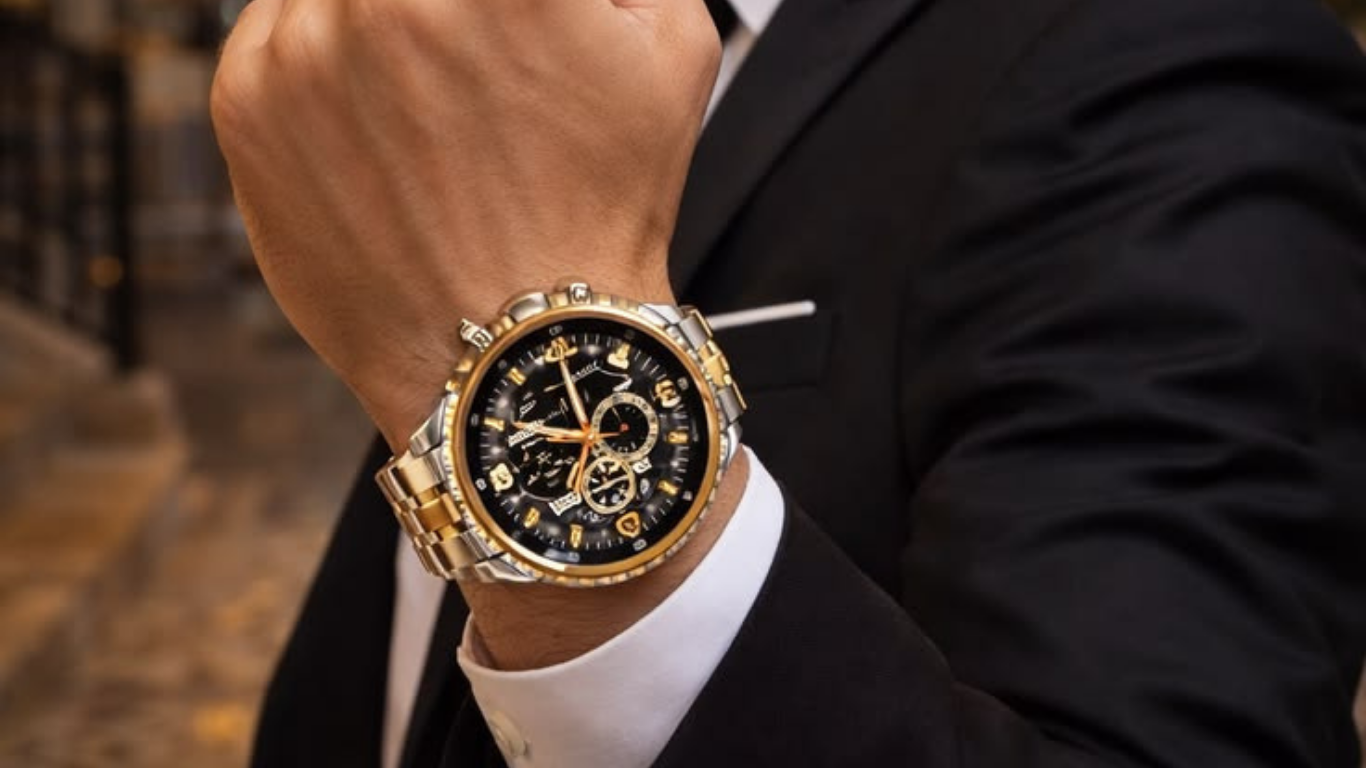
Here’s a scenario that plays out constantly: someone falls in love with a watch online, orders it, straps it on, and immediately feels like they’re wearing a hubcap.
Or the opposite — a watch that looked substantial in photos turns out to look like a coin glued to a strap once it’s actually on. Almost every time, the culprit isn’t taste. It’s math nobody did before clicking “buy.”
Watch sizing trips up more buyers than any other part of the purchase, and it’s not because the concept is complicated — it’s because most retailers only advertise one number (case diameter) when fit actually depends on three or four.
Get this right and a watch disappears onto your wrist, looking like it was made for you. Get it wrong and even a genuinely great watch will bother you every time you look down.
This guide walks through exactly how to measure your wrist, which numbers actually matter, how they interact with each other, and how to translate all of it into a confident buying decision — whether you’re shopping for a dress watch, a diver, or your first automatic.
Why Case Diameter Alone Doesn’t Tell You Enough
Case diameter — the measurement quoted in every product listing, usually somewhere between 34mm and 46mm for men’s watches — is the number everyone fixates on, and it’s genuinely useful.
But it only measures the width of the case, not how the watch actually sits on your arm.
Two watches can both be listed as “40mm” and wear completely differently.
One might have short, tucked-in lugs that keep the whole watch compact; the other might have long, flared lugs that stretch well beyond the case edge in both directions.
On paper, they’re identical. On the wrist, one looks proportioned and the other overhangs noticeably. This is why experienced buyers always check lug-to-lug distance before diameter — it’s the more accurate predictor of how a watch will actually look and feel.
The Four Measurements That Actually Matter
1. Case Diameter
This is the width of the case, measured edge to edge across the dial, not including the crown. It’s the headline number and a reasonable starting point, but treat it as a rough guide rather than the final word.
2. Lug-to-Lug Distance
This is the total length of the watch from the tip of the top lugs to the tip of the bottom lugs — essentially, how much of your wrist the case actually covers vertically.
It’s the single most important measurement for comfort and proportion, and frustratingly, it’s the one most retailers leave off the spec sheet. If you can’t find it listed, check community-run size databases or watch review sites, which usually include it even when the manufacturer doesn’t.
The rule of thumb: lug-to-lug should not exceed your wrist’s width. You can estimate your wrist’s flat width by dividing your wrist circumference by 3.14 (pi). A 7-inch (178mm) wrist circumference works out to roughly 57mm of flat width, so a watch with a lug-to-lug around 50-52mm or less will sit without overhanging the edges.
3. Case Thickness
Thickness affects how a watch fits under a shirt cuff and how it feels during activity, more than it affects visual size.
Dress watches typically run 6-10mm thick; everyday automatics land around 11-14mm; dive watches and chronographs, which need room for extra components and water-resistant seals, often run 13-16mm or more.
If you regularly wear dress shirts with fitted cuffs, a thick case will catch and bunch fabric — worth trying on before committing, especially for automatic or dive watches.
4. Lug Width
Lug width is the gap between the two lugs where the strap or bracelet attaches, typically ranging from 16mm to 22mm on men’s watches, with 20mm being the most common.
It won’t affect how large the watch looks, but it determines every replacement strap you’ll ever buy for it — worth noting even though it’s the least visually important of the four measurements.
Read also: How to Style a Watch with Every Outfit: A Complete Guide
How to Measure Your Wrist
You need two numbers: wrist circumference and, ideally, wrist width (which lug-to-lug should stay under).
To measure circumference: Wrap a flexible tape measure — or a strip of paper you can mark and measure afterward with a ruler — around your wrist just below the wrist bone, where a watch would naturally sit. Pull it snug but not tight, the way a watch strap would actually sit, and record the measurement in millimeters or to the nearest quarter inch.
To estimate width (the flat dimension a case actually spans): Divide your circumference by 3.14. A 6.5-inch (165mm) wrist works out to roughly 52.5mm of width. This is a rough approximation since wrists aren’t perfectly round, but it’s accurate enough to use as your lug-to-lug ceiling.
Most adult men fall between 6.5 and 8 inches (165-205mm) of wrist circumference, with 7 to 7.5 inches being the most common range.
Wrist Size to Watch Size: A Practical Chart
| Wrist Circumference | Wrist Category | Recommended Case Diameter | Lug-to-Lug Ceiling |
|---|---|---|---|
| Under 6.0″ (152mm) | Small | 34–38mm | Under 44mm |
| 6.0–6.5″ (152–165mm) | Small-Medium | 36–40mm | 44–48mm |
| 6.5–7.0″ (165–178mm) | Medium | 38–41mm | 46–50mm |
| 7.0–7.5″ (178–190mm) | Medium-Large | 40–43mm | 48–52mm |
| 7.5–8.0″ (190–203mm) | Large | 42–45mm | 50–54mm |
| Over 8.0″ (203mm) | Extra Large | 44mm+ | 52mm+ |
Treat these as sensible starting ranges, not hard rules — style, case shape, and personal preference can justify going outside them, which is exactly what the next section covers.
When It’s Fine to Break the Rules
Sizing conventions exist for a reason, but plenty of well-regarded watches deliberately ignore them, and it works because the design intends it.
Pilot watches are traditionally oversized — 42-46mm was the historical norm, born from the need for legibility at a glance in a cockpit. A 44mm pilot watch on a 7-inch wrist looks intentional, not oversized, because the whole design language expects that scale.
Field watches and dive watches run a bit larger by convention too, since they’re tool watches meant to be legible and rugged rather than svelte. A 42mm field watch reads as “correctly sized for its purpose” even on a wrist that would look overwhelmed by a 42mm dress watch.
Dress watches, by contrast, skew smaller and thinner by design — 36-40mm with a slim profile is standard, because the goal is understatement, not presence. A 44mm dress watch, even on a large wrist, tends to look like a mismatch of intent.
Vintage and vintage-inspired watches often run smaller across the board, since 34-38mm was the historical norm for most of the 20th century before cases started growing in the 1990s and 2000s. Plenty of enthusiasts specifically seek out smaller vintage proportions because they read as classic rather than dated.
Integrated bracelet sport watches, like those inspired by the Royal Oak or Nautilus, tend to wear larger than their diameter suggests because the bracelet flares out from the case rather than hanging straight down, adding visual width that the diameter spec doesn’t capture.
The takeaway: know the convention for the style you’re shopping, and judge the watch against that convention rather than a single universal size chart.
Common Sizing Mistakes
Trusting case diameter alone. As covered above, this is the single most common mistake, and it’s an easy one to make since it’s the only number most retailers advertise prominently.
Ignoring case thickness with dress shirts. A watch that looks perfectly proportioned from the front can still refuse to fit under a fitted cuff if it’s too thick. If formal wear is a regular part of your life, prioritize thinner cases regardless of diameter.
Buying based on how a watch looks on a model in product photos. Product photography rarely discloses the model’s wrist size, and lighting and camera angle can make a case look smaller or larger than it actually is. Cross-reference with actual measurements, not just how it photographs.
Overcorrecting for a small wrist by going too small. Buyers with smaller wrists sometimes swing too far toward tiny watches, landing on something that reads as a women’s watch rather than a well-proportioned men’s piece. A 38-40mm case with a tight lug-to-lug is usually the better solution than dropping to 34mm.
Forgetting that straps change the equation. A metal bracelet adds visual bulk that a slim leather strap doesn’t. If a watch feels borderline too large on paper, swapping to a slimmer strap can meaningfully soften the look.
Not accounting for crown guards, pushers, and complications. Chronograph pushers, helium escape valves, and prominent crown guards all add functional width beyond the stated case diameter. A 40mm chronograph can wear closer to 42mm once you factor in the pushers sitting at 2 and 4 o’clock.
How to Try Before You Buy (When You Can’t Try It On)
Buying online without handling the watch first is increasingly the norm, so here’s how to compensate:
Cut a circle of paper or cardboard matching the case diameter and lug-to-lug measurements (if published), and tape it to your wrist. It sounds low-tech because it is, but it genuinely works for sanity-checking scale before you commit.
Compare the specs against a watch you already own and know the fit of. If you own a 40mm watch with a 47mm lug-to-lug that fits well, and you’re considering a 40mm watch with a 51mm lug-to-lug, you now have a concrete reference point for how much larger the new one will wear, even though the diameter is identical.
Check community wrist-shot databases and forums, where owners post photos specifically to show fit on wrists of stated sizes — often far more useful than manufacturer product photography for judging real-world scale.
Sizing Advice by Watch Style
Everyday automatic (Seiko 5 Sports, Citizen Tsuyosa, similar): Aim for 38-42mm depending on wrist size; these designs are forgiving thanks to curved case backs and moderate lug-to-lug measurements.
Dress watch: Stay conservative — 36-40mm with a thin profile under 10mm reads as correct regardless of wrist size, since understatement is the entire design goal.
Dive watch: 40-44mm is standard; err toward the smaller end of that range if you have a wrist under 7 inches, since dive watches already run thick and a large diameter compounds the bulk.
Field watch: 38-42mm is the sweet spot; these designs were historically built for legibility on the move, so slightly larger sizing feels appropriate even on smaller wrists.
Chronograph: Account for pushers adding effective width; a “40mm” chronograph often wears closer to 42mm, so consider sizing down one bracket from where you’d land with a simple three-hand watch.
GMT/travel watch: Similar to dive watches — 40-42mm with attention to lug-to-lug, since GMT cases tend to be busier and slightly larger to accommodate the extra hand and bezel markings.
Frequently Asked Questions
What watch size is right for a 7-inch wrist? A 7-inch wrist (about 178mm circumference) typically suits a case diameter between 38-41mm with a lug-to-lug under roughly 50mm. This is the most common wrist size for adult men, so it’s also the size range most watches on the market are designed around.
Is a 42mm watch too big for a small wrist? For a wrist under 6.5 inches, a 42mm case is often too large, especially if the lug-to-lug measurement extends past 48-50mm. It depends heavily on the specific case’s lug-to-lug distance, though — some 42mm watches wear smaller than others due to compact lug design.
What’s more important, case diameter or lug-to-lug? Lug-to-lug is generally the better predictor of comfort and visual proportion, since it determines whether the watch overhangs your wrist. Case diameter still matters for overall visual scale and dial legibility, but treat lug-to-lug as the tiebreaker when comparing two similarly sized watches.
How do I know my wrist size without a tape measure? Wrap a strip of paper around your wrist where a watch would sit, mark where it overlaps, then measure the paper with a ruler. It’s just as accurate as a tape measure for this purpose.
Do women’s and men’s watches have different size standards? Generally yes — women’s watches typically range from 26-34mm and men’s from 36-46mm, though this is a stylistic convention rather than a rule, and plenty of people of any gender choose watches outside the “expected” range based on personal preference.
Should I size up or down if I’m between two sizes? It depends on the style: for dress watches, sizing down tends to look more refined; for sport and tool watches, sizing up tends to look more purposeful. When genuinely torn, lug-to-lug distance should be the deciding factor over diameter.
Why do vintage watches feel so small compared to modern ones? Case sizes have grown significantly since the 1990s and 2000s — a “large” watch in the 1960s was often 34-36mm, while today’s average sits closer to 40mm. This is a cultural shift in taste rather than a change in what actually fits wrists comfortably, which is why smaller vintage and vintage-inspired watches have found renewed popularity.
Does watch thickness matter as much as diameter? For overall visual size, no — thickness is a secondary factor. But for comfort, sleeve fit, and how a watch feels during daily activity, thickness often matters more than buyers initially expect, particularly for automatic and dive watches, which tend to run thicker than quartz dress watches.
Can I adjust a watch that’s technically too big for my wrist? You can adjust the strap or bracelet length, but you can’t change the case diameter or lug-to-lug distance — those are fixed. If the case itself is oversized for your wrist, no strap adjustment will fix the proportion issue.
What size watch is best for someone new to buying watches? A 38-40mm case with a moderate lug-to-lug (46-50mm) is a safe, versatile starting point for most adult men, since it sits comfortably within the range that suits the largest number of wrist sizes and styles.
Final Verdict: How to Actually Decide
Start with your wrist circumference, translate that into a diameter range using the chart above, then immediately check lug-to-lug distance for any specific watch you’re considering — that’s the number that will make or break the fit in practice. If you can try the watch on in person, do it, even if you ultimately plan to buy online for a better price. If you can’t, use the paper cutout method and cross-reference against a watch you already own and trust the fit of.
Would you rather size conservatively and risk a watch reading a touch small, or size generously and risk it reading a touch large? Most people find a slightly smaller, well-proportioned watch ages better than an oversized one — but if you gravitate toward bold, tool-watch styling, leaning larger within your range is a legitimate choice too. There’s no universal correct answer, only the one that matches how the watch will actually sit on your specific wrist, in your specific life.
Read also: